





Victorian Pierced Silver Basket
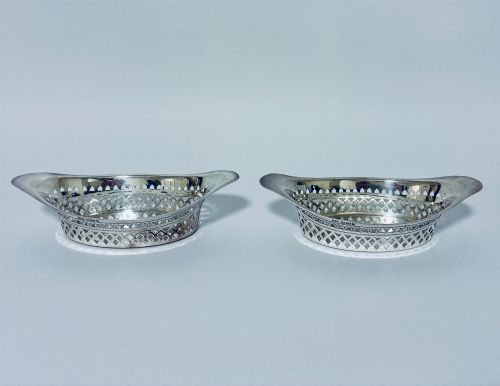
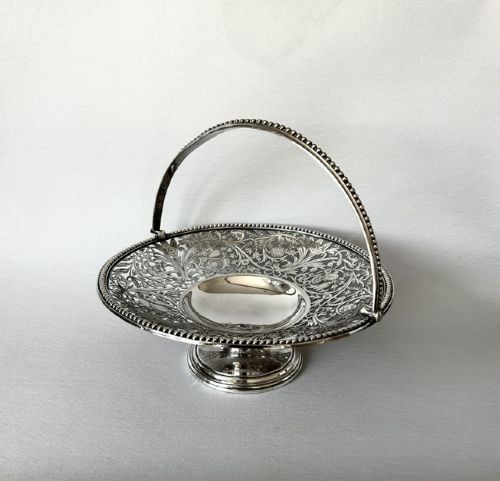
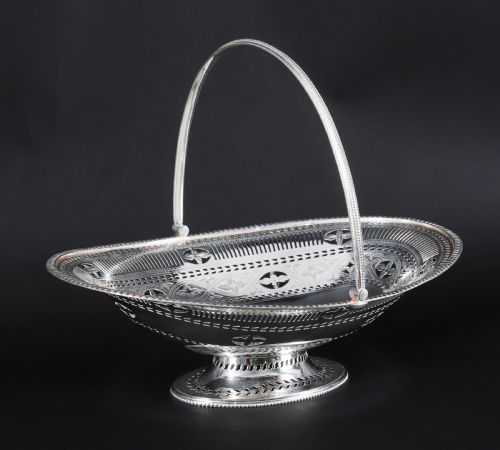
These Victorian pierced silver baskets combine openwork metalwork with functional form, offering elegance to any table.
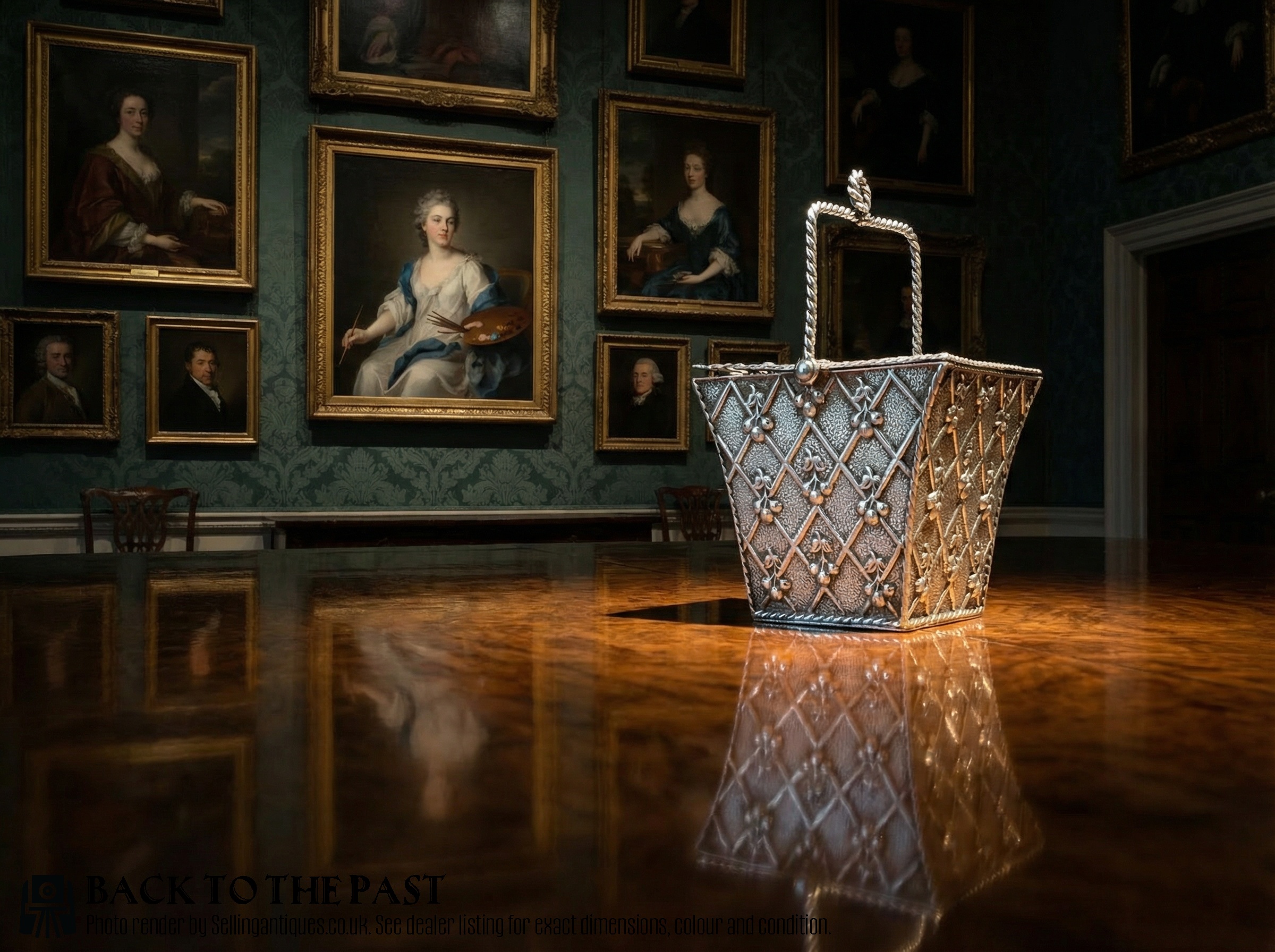
Victorian Pierced Silver Basket
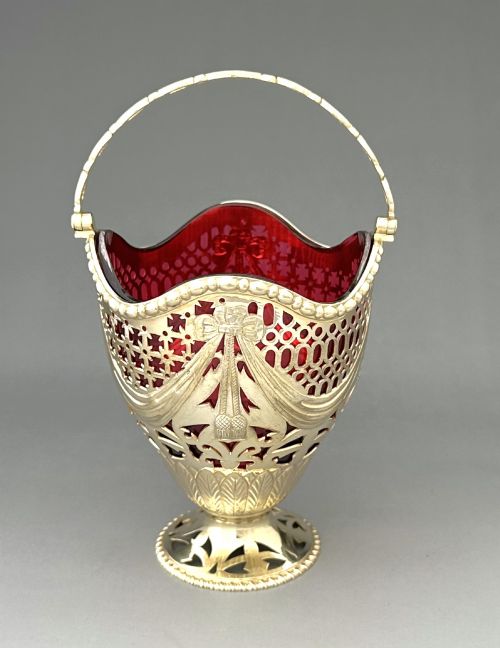
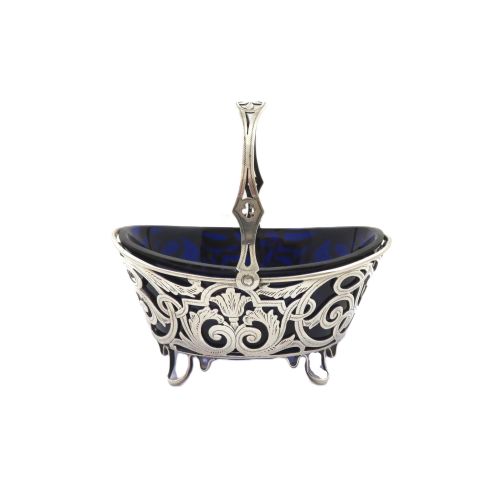
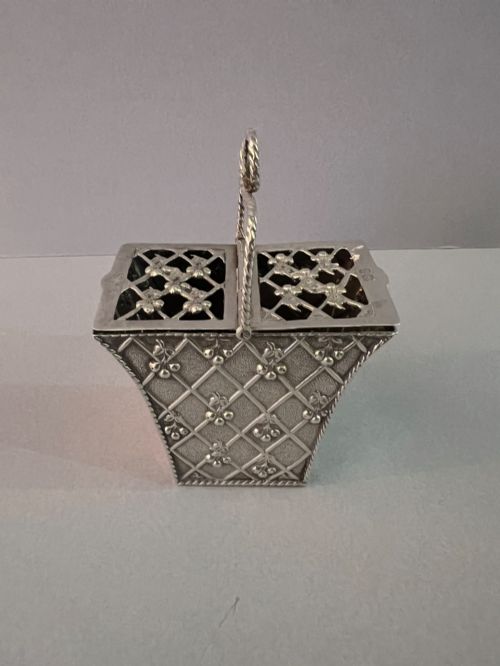
The versions most commonly met on this page include sterling silver and silver-plated fruit baskets, alongside smaller sweetmeat and bonbon dishes. Many examples feature swing handles and coloured glass liners in cobalt, ruby, or cranberry tones.
Makers such as William Comyns, Martin Hall, and Edward H Stockwell produced notable examples recorded in the archive and current listings. Styles range from straightforward Victorian designs to Rococo Revival and Victorian Neoclassical interpretations.
How They Were Made
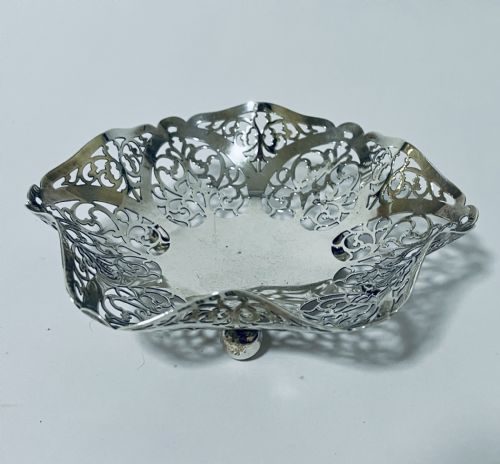
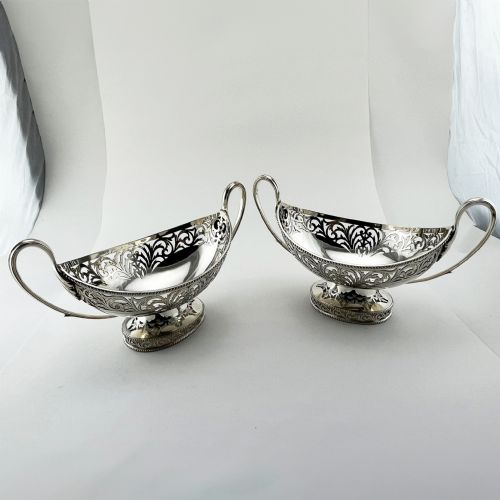
Silversmiths utilised sterling silver and silver plate as the primary structural metals for these baskets, often applying silver-gilt finishes to the interior surfaces. Piercing work required hand-piercing or stamping open motifs through the metal sheet to create intricate geometric and floral latticework.
Makers integrated cast elements such as floral handles, reeded grips, and swing mechanisms to complete the vessels. Liners made from cranberry glass, cobalt glass, or ruby glass were blown and fitted directly into the openwork silver frames.
Victorian Pierced Silver Basket Retail Price Guide 2026
Typical asking prices for victorian pierced silver basket among the pieces listed under this phrase on Sellingantiques today, from the lower quarter to the upper quarter. They describe what is for sale here now, not the wider market.
Some baskets swing both ways, quite literally, thanks to nineteenth-century hinge mechanics.
What Varies in Quality
The refinement of the piercing work separates the finer vessels from simpler production, particularly where hand-pierced detailing achieves crispness and symmetry. Weight and gauge of the silver influence the structural rigidity of the basket and the swing handle.
The presence of undamaged coloured glass liners and well-preserved silver-gilt interiors elevates the integrity of the piece. Maker attribution to established workshops adds distinction to individual items.
William Comyns·Martin Hall·Edward H Stockwell·George Fox·Thomas Bradbury
The Victorian Pierced Silver Basket Glossary
- Pierced work
- Metalwork technique where patterns are cut through the silver sheet to form open lattices or decorative motifs. This method lightened the object visually while maintaining its structural form.
- Bonbon dish
- Small open vessel designed for serving sweets, nuts, or small confections at the table. These pieces frequently match in pairs.
- Sweetmeat basket
- Small decorative basket intended for holding preserved fruits, sweetmeats, or sugar confections. They often feature delicate swing handles.
- Silver-gilt
- Silver object coated with a thin layer of gold on its surface. This treatment protected the interior metal from tarnishing when in contact with acidic foods.
- Swing handle
- Movable handle attached to the rim of a basket by pivots. This allows the handle to rest flat against the sides or stand upright for carrying.
Victorian Pierced Silver Basket: Frequently Asked Questions
What were Victorian pierced silver baskets used for?
These vessels held fruit, sugar, bread, or small sweetmeats during formal dining and drawing room gatherings.
They functioned as both serving dishes and decorative table centerpieces.
How do I identify a Victorian silver basket?
Look for British hallmarks indicating assay offices like London or Sheffield, alongside date letters corresponding to the nineteenth century.
Stylistic cues such as neoclassical piercing and cast floral handles also point to the period.
Why do some baskets have coloured glass liners?
Glass liners protected the pierced silver metal from moisture and acidic contents like fruit juices.
Coloured glass in cranberry, ruby, or cobalt added visual contrast through the open lattice metalwork.
How should I clean a silver basket?
Use a soft cloth and a gentle silver cleaning product suitable for antique items to remove tarnish.
Avoid abrasive materials that can wear down the fine details of the pierced design.
What is the difference between silver and silver plate?
Solid silver pieces consist entirely of precious metal throughout their structure, often marked with standard sterling hallmarks.
Silver-plated items utilise a base metal core coated with a layer of silver.