


Victorian Parlour Games Box
A victorian parlour games box brings home the competitive spirit of nineteenth-century drawing rooms, offering tactile entertainment housed in fitted wooden containers.
Victorian Parlour Games Box
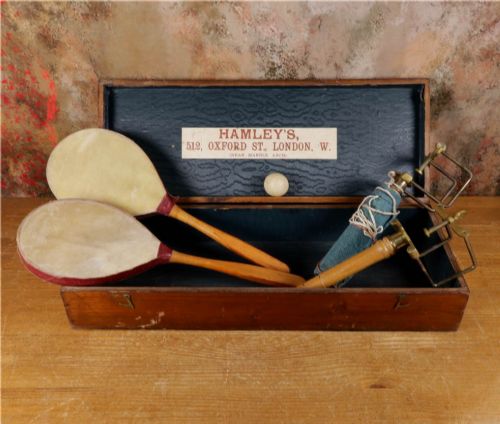
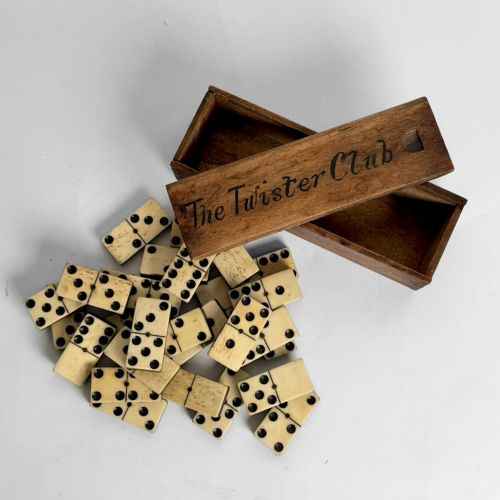
A victorian parlour games box takes many forms across the nineteenth century, ranging from simple pine or oak organiser cases to elaborate rosewood compendiums. These vessels contain the equipment for domestic amusement, such as bone dominoes, table croquet, squails, and table tennis sets like Gossima.
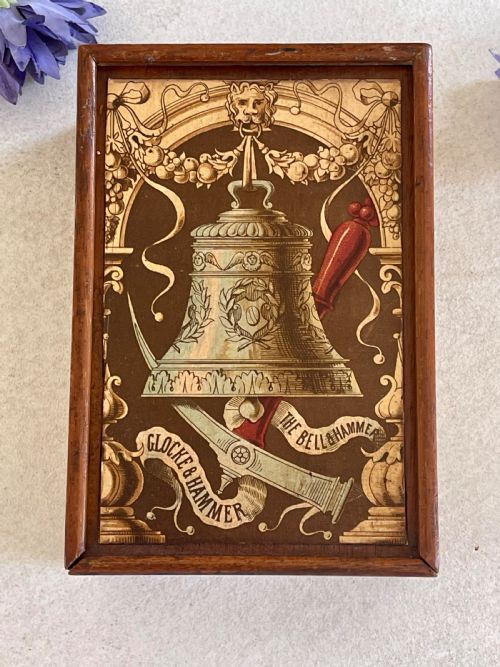
Buyers meet varied iterations on this page, including specialised table tennis sets, chess sets from the British Chess Company, and game bells with instructions. The origins span the Victorian period and around nineteen hundred, reflecting the late nineteenth-century obsession with indoor social pastimes.
Some examples survive as single-purpose containers for dominoes or table tennis bats, whilst others form comprehensive compendiums holding multiple games in one fitted case. The selection mirrors the diverse recreational pursuits enjoyed in English country houses and town residences alike.
How they were made
These items rely on traditional cabinet-making timbers such as oak, mahogany, pine, and rosewood to construct the outer cases. Brass hardware often reinforces the corners and secures the lids, ensuring the containers endured frequent handling during family gatherings.
Internal components utilise diverse materials suited to their specific function, including carved bone for dominoes, vellum and cotton for playing surfaces, and paper for instructions. Wood turning and simple joinery shape the smaller game pieces and bells housed within.
Listings feature items spanning the nineteenth century up to nineteen hundred, constructed from wood, brass, pine, vellum, cotton, bone, paper, and mahogany.
What varies in quality
The choice of cabinet timber sets the baseline for quality, moving from utilitarian pine country house cases to richly grained rosewood compendiums fitted with brass lockets. Finer boxes feature precise internal partitions designed specifically to cradle delicate components like weighted chess pieces or miniature bats.
The integrity of the contents dictates overall merit, distinguishing complete sets retaining original bone dominoes, instructions, and branded makers' equipment from assembled groupings. Superior items demonstrate maker craftsmanship through branded marks such as Jaques and Hamleys, F.H. Ayres, or the British Chess Company.
Jaques And Hamleys Gossima·F H Ayres Ltd London·British Chess Company
The Victorian Parlour Games Box Glossary
- Compendium
- A single fitted box containing the equipment for multiple different games. These multi-tier cases often hold chess, cards, and checkers together.
- Squails
- A traditional table game where players flick wooden discs across a board towards a central target. The discs are typically made of turned wood.
- Staunton
- A standardised style of chess piece created in the mid-nineteenth century and produced by makers like the British Chess Company. The pieces feature distinct, highly recognizable architectural forms.
- Gossima
- An early nineteenth-century proprietary name for table tennis before the term ping pong gained widespread use. Equipment sets often include parchment bats and specialised balls.
- Vellum
- A fine parchment material prepared from calfskin, utilised for durable playing surfaces or game components within these sets.
Victorian Parlour Games Box: Frequently Asked Questions
What games did victorians play indoors?
Victorians enjoyed a wide variety of parlour games, ranging from traditional dominoes and squails to early table tennis and croquet adaptations.
These activities required specialised equipment, which led to the creation of dedicated wooden boxes and compendiums to keep the pieces organised between gatherings.
How do I identify a compendium?
A compendium is distinguished by its multi-layered or compartmentalized interior designed to house several distinct games within one single outer case.
Unlike single-purpose boxes for chess or dominoes, these larger containers typically store cards, gaming boards, and various counters side by side.
Are original instructions usually included?
Original printed instructions survive with some sets, offering direct insight into how nineteenth-century players understood and approached the rules of lesser-known pastimes.
When present alongside the game pieces and branded markers, these paper documents add significant context to the history of the object.