
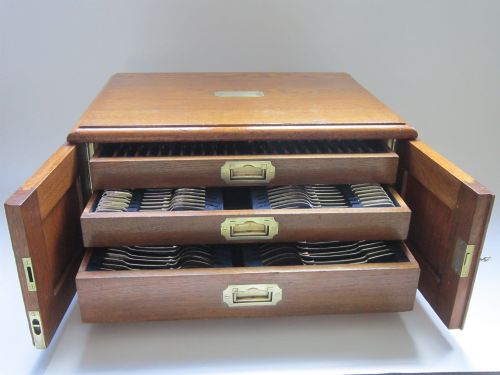
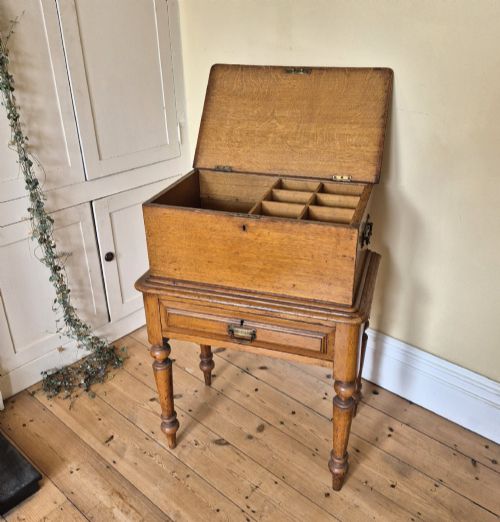


Fitted Oak Storage Box
A fitted oak storage box is a timber chest built to hold silver, flatware or tools, prized for its robust construction and clever internal compartments.
Fitted Oak Storage Box
When you search for a fitted oak storage box, you are looking at sturdy timber chests built to hold silver, cutlery canteens, games or tools. These pieces range from substantial Victorian silver chests to earlier 17th century coffers and specialised 19th century merchant trunks.
The most common examples on this page are Victorian oak silver chests and travelling trunks bound with iron or metal. They combine heavy timber construction with internal compartments designed to organise and protect valuable possessions during travel or in country house settings.
How they were made
Makers constructed these boxes using solid oak, often reinforced with iron banding, brass mounts and corner brackets to withstand heavy use and transit. The timber was selected for its durability and strength, essential for protecting contents like silver flatware or cabinet maker's tools.
Interiors frequently feature fitted trays, compartmentalised sections and linings of velvet. Metal fittings such as carrying handles, locks and strapping were secured by hand to the exterior to ensure structural integrity.
Some oak boxes retain secret compartments originally intended for hiding keys, coins or confidential documents.
What varies in quality
Quality in these pieces depends on the integrity of the timber framing and the original condition of the internal fittings. Superior examples retain their original brass or iron hardware, working locks and complete internal partitions rather than replaced components.
The craftsmanship of the exterior joinery and the presence of retailer or maker details influence the distinction between standard utilitarian trunks and finer commissioned pieces.
Elkington·Walker & Hall
The Fitted Oak Storage Box Glossary
- Silver chest
- A heavy timber box lined to protect silver flatware and tableware during storage and transport. These containers often feature iron bands and reinforced carrying handles.
- Campaign chest
- A portable trunk designed for travel, typically constructed in sections with recessed brass handles to prevent damage in transit. These pieces prioritise practical durability.
- Canteen of cutlery
- A fitted box or chest specifically organised with slots and tiers to hold a complete set of matching flatware. They range in scale from modest service sets to large dining room cabinets.
- Cofer
- A traditional heavy timber chest used for secure storage, usually predating the more specialised compartmentalised boxes of the Victorian era. They display simpler exterior framing.
- Fitted interior
- An internal arrangement of trays, dividers and compartments tailored to hold specific items securely in place. This layout prevents movement and damage during handling.
Fitted Oak Storage Box: Frequently Asked Questions
What were fitted oak storage boxes used for?
These boxes served to transport and store valuable items such as silver flatware, tools, games and personal possessions in large households or during travel. Their reinforced construction protected contents from damage and dampness.
Internal compartments and trays kept individual pieces organised and separated to prevent scratching during movement.
How do I date an oak storage box?
Dating relies on examining the construction methods, hardware materials and overall style of the piece. Earlier examples from the 17th and 18th centuries tend to feature simpler coffer designs and hand-forged ironwork.
Victorian and Edwardian versions often incorporate brass locks, fitted internal trays and specific manufacturer labels or retailer stamps on the hardware.
How do I care for an antique oak box?
Maintenance involves keeping the timber away from direct heat sources and extreme humidity fluctuations to prevent the oak from splitting. Regular dusting with a dry cloth preserves the finish of the wood.
Metal mounts and iron bands benefit from occasional light cleaning to prevent surface oxidation without removing the natural patina.
Are the interiors usually original?
Many surviving boxes retain their original fitted wooden trays and compartmentalised layouts, though fabric linings like velvet often show wear from use. The presence of original dividers adds to the historical integrity of the piece.
Some pieces have had their internal configurations altered or relined over time to suit different storage needs.