
Victorian Paper Stand
A victorian paper stand organises daily reading with a distinct presence, ranging from mahogany canterburys to revolving brass racks.
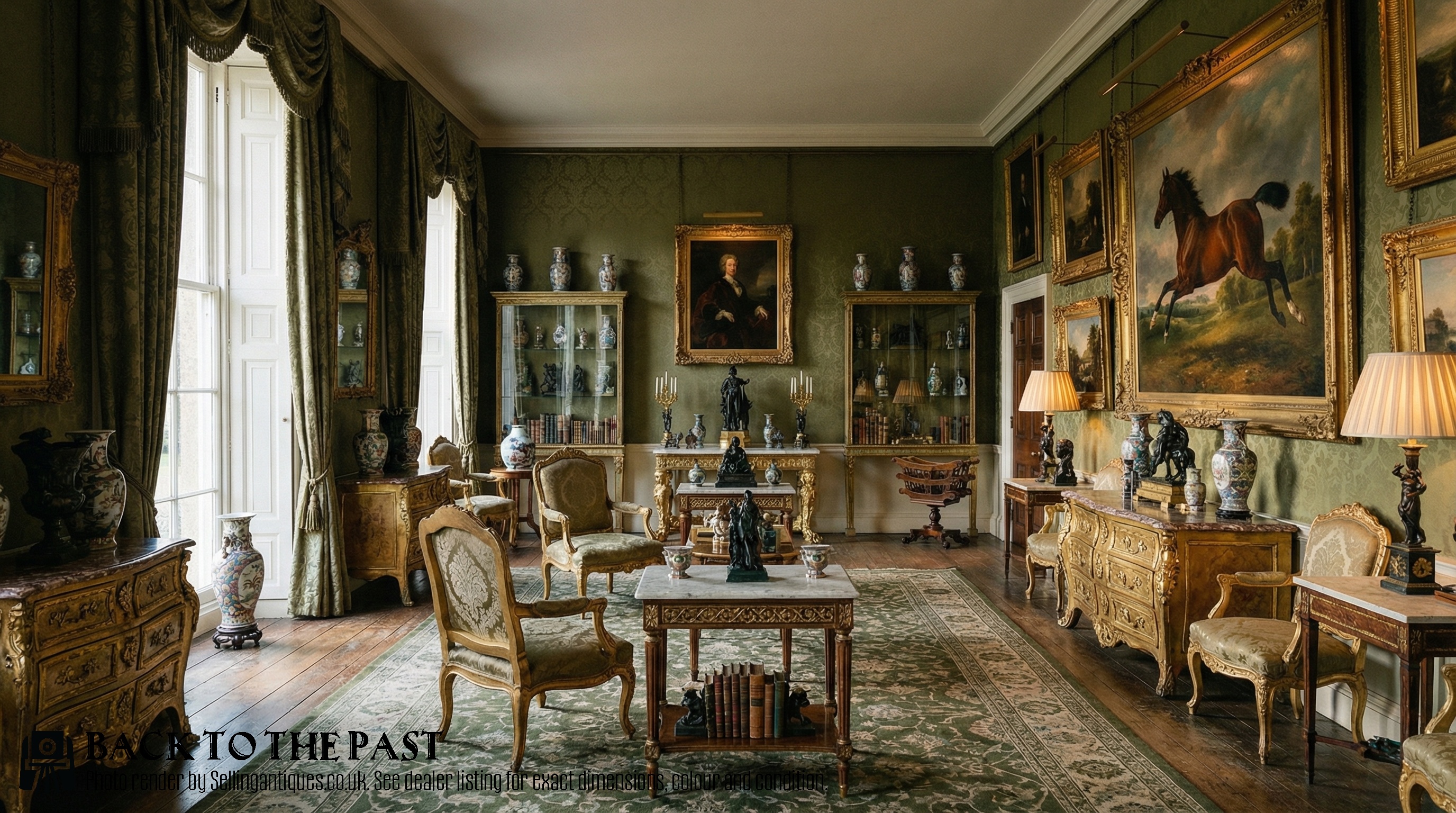
Victorian Paper Stand
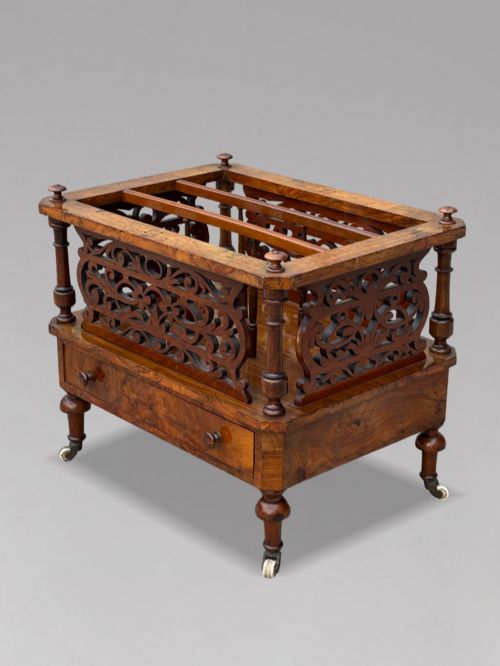
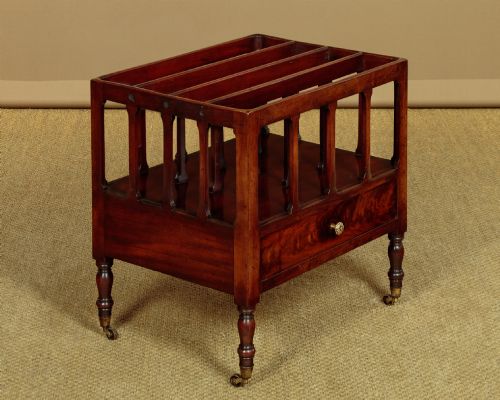
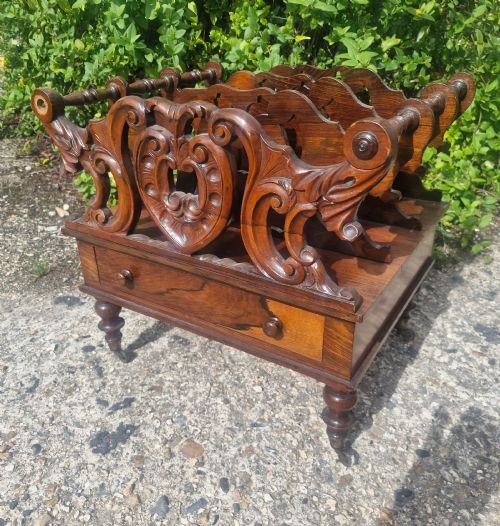
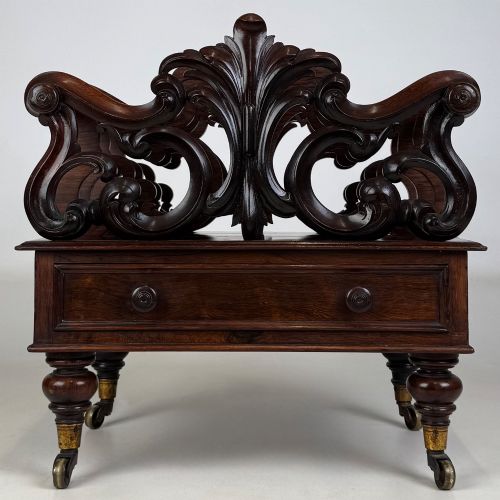
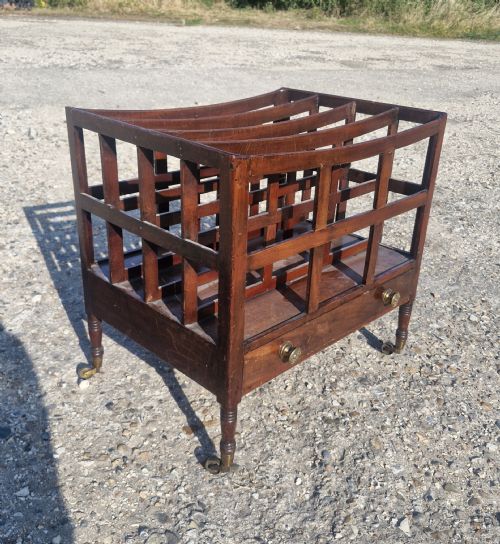
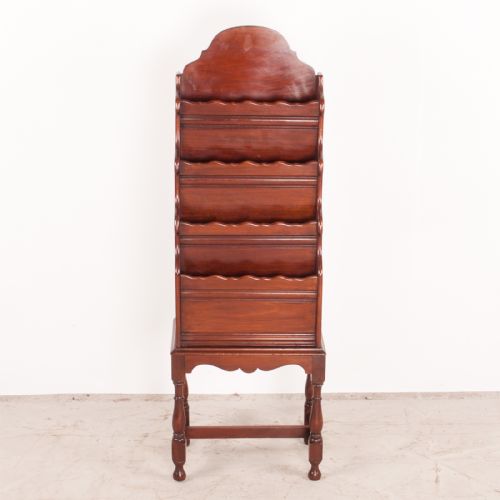
When searching for a victorian paper stand, buyers encounter pieces designed to hold periodicals, letters, and newspapers in nineteenth-century interiors. The selection spans distinct forms, including multi-tiered canterburys, desk accessories, and revolving magazine racks originating from Victorian, Regency, and William IV periods.
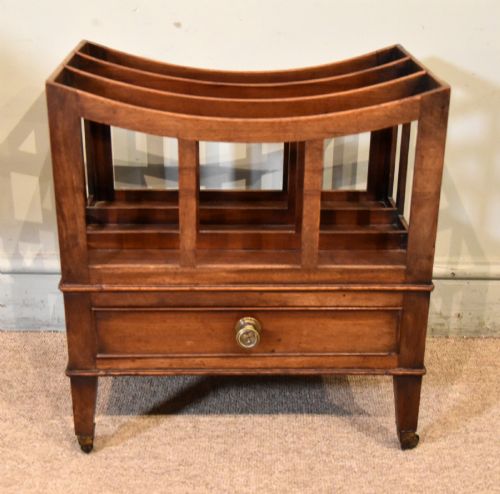
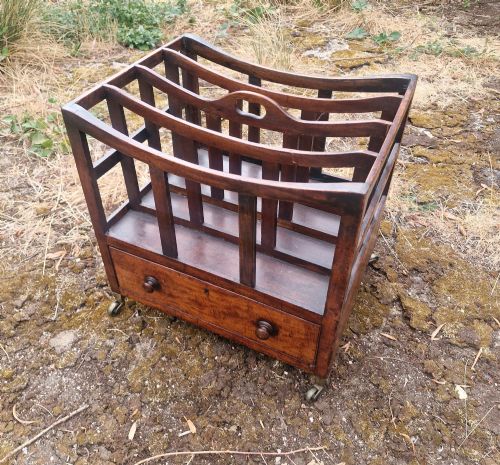
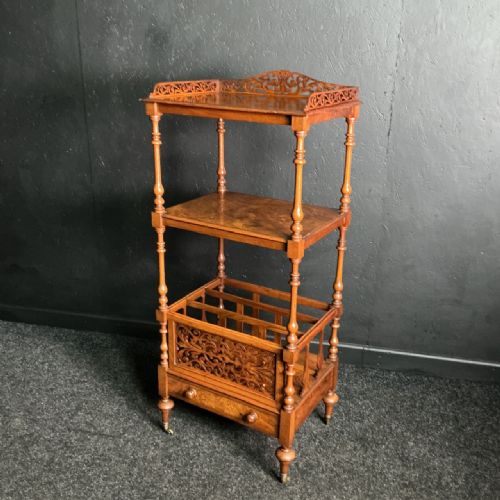
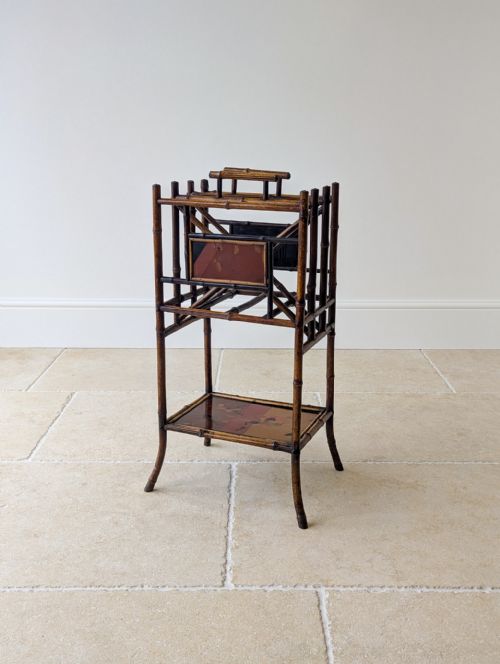
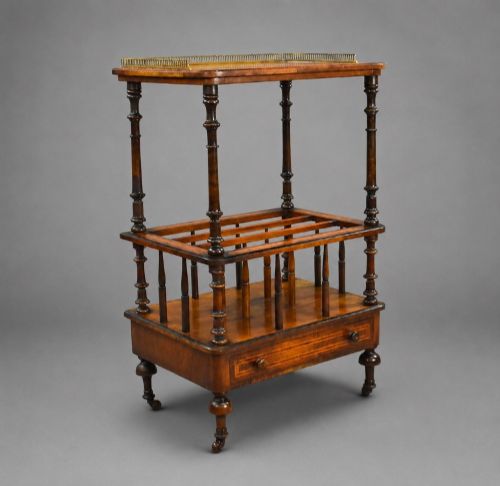
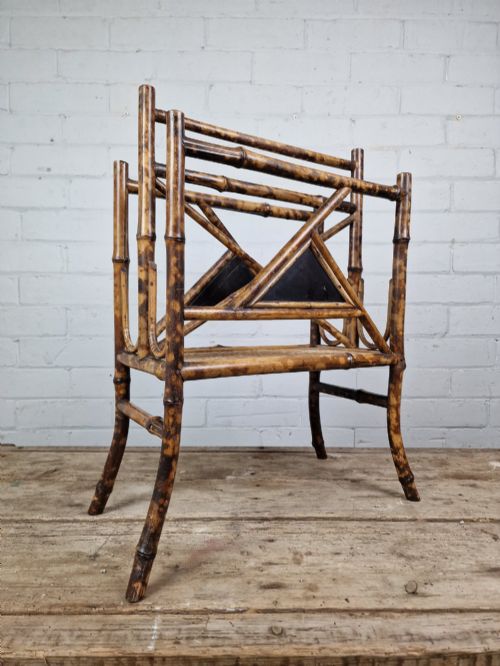
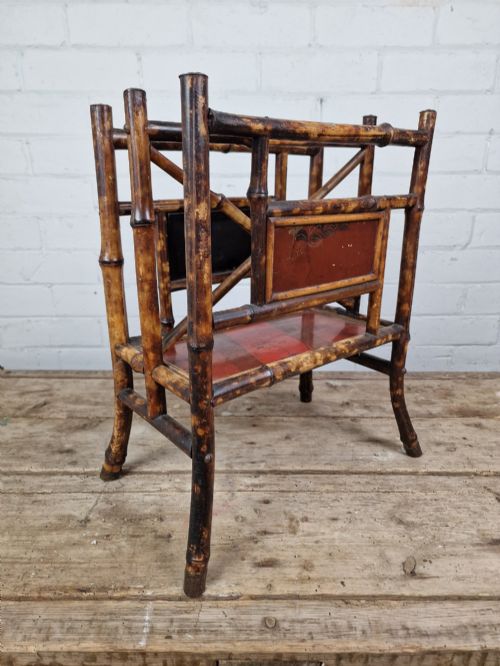
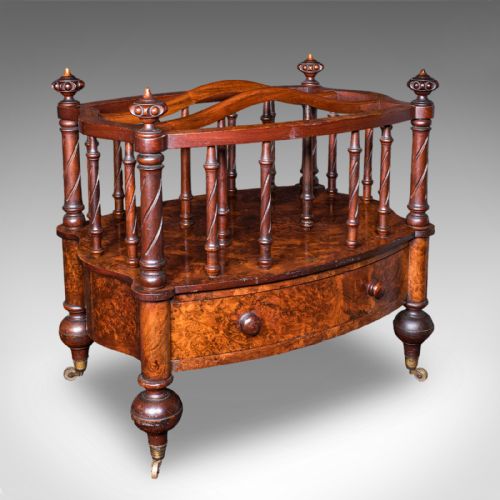
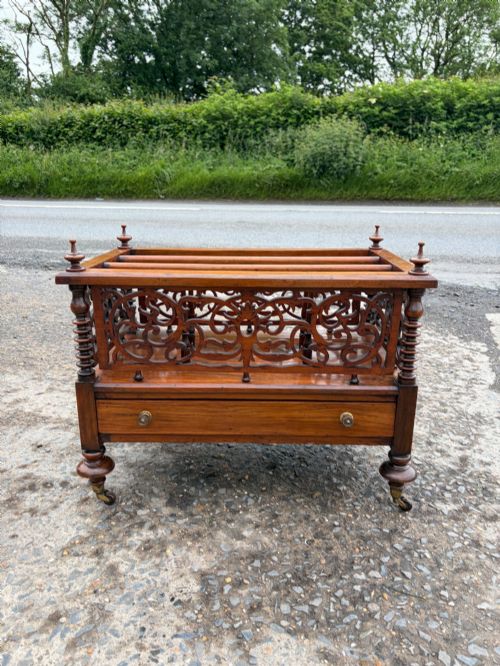
The most common form met on this page is the canterbury, typically constructed in rosewood, mahogany, or burr walnut with slatted partitions and a low drawer. These functional items also appear alongside bamboo frames, copper racks, and specialised oak book presses.
Pieces reflect varied stylistic movements spanning the Aesthetic Period, Chinoiserie, and French design influences. This variety allows collectors to source items that match specific nineteenth-century decorative schemes while serving their original domestic purpose.
Materials and construction
Cabinet makers utilised dense hardwoods such as mahogany, rosewood, and walnut, often selecting burr walnut veneers for figured surfaces and decorative inlay. These timbers provided the structural integrity required for partitioned compartments and weight-bearing legs fitted with castors.
Alternative constructions incorporated natural materials including tiger bamboo and fruitwood, alongside metalwork elements in brass, copper, and sterling silver. Joinery methods combined traditional woodworking techniques with turned uprights, brass spindles, and riveted framework.
Listings feature items spanning the Regency, William IV, Victorian, and Edwardian periods, constructed in rosewood, mahogany, walnut, and bamboo.
Factors determining quality
Quality rests upon the selection of timber figures and the precision of inlaid details, distinguishing standard workshop output from exceptional cabinet work. Pieces featuring highly figured burr walnut or finely turned rosewood spindles demonstrate superior craftsmanship.
Structural complexity also defines the tier, separating simple single-compartment magazine holders from multi-functional side cabinets, revolving brass stands, and combined canterbury whatnots with integrated drawers and castors.
Lebegue & Cie·William Tonks & Sons·Malby's
The Victorian Paper Stand Glossary
- Canterbury
- A low stand fitted with upright partitions for holding sheet music, newspapers, or periodicals. These pieces frequently incorporate a single drawer beneath the main tier.
- Whatnot
- An open set of multi-tiered shelves used for displaying or storing small household items. They appear in walnut and rosewood configurations often combined with canterbury bases.
- Book press
- A heavy mechanical device utilised for flattening paper or binding volumes. Examples are constructed from dense oak or elm timbers.
- Aesthetic Movement
- A late nineteenth-century design style emphasising artistic visual value over narrative function. Pieces from this movement utilise materials like bamboo and lacquered surfaces.
Victorian Paper Stand: Frequently Asked Questions
How were paper stands used?
These stands held daily newspapers, correspondence, and periodicals within domestic living spaces and libraries. Their partitioned compartments kept reading materials organised and accessible.
Larger variations functioned as music racks or combined side cabinets for multi-purpose storage. Smaller desk accessories accommodated writing paper and letters near the inkstand.
What woods were used?
Cabinet makers built stands using dense native and imported hardwoods including mahogany, rosewood, walnut, and burr walnut. These timbers provided durability and attractive grain patterns.
Alternative materials included oak, fruitwood, and tiger bamboo, occasionally accented with brass, copper, and ceramic details.
How do I date a stand?
Dating relies upon stylistic markers, construction methods, and material choices associated with specific nineteenth-century periods. Regency and William IV pieces show distinct classical proportions.
Later Victorian and Edwardian examples incorporate Aesthetic Movement influences, bamboo frames, or revolving brass mechanisms typical of the late nineteenth century.
Where should I place one?
Stands suit placement beside armchairs, sofas, or within studies to hold current reading materials. Freestanding designs function effectively in open room layouts.
Desk accessories and letter stands fit neatly upon writing tables or sideboards, continuing their original function of paper management.