





Pedestal Music Holder
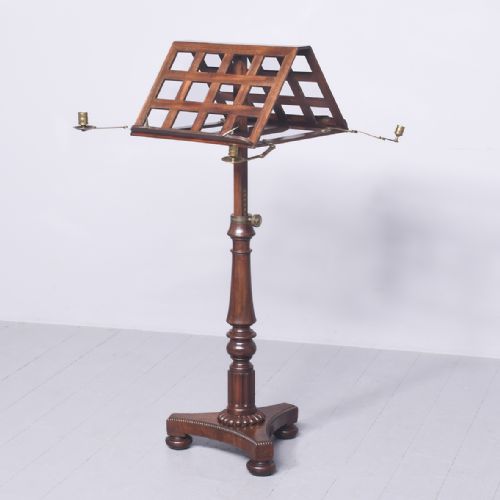
A pedestal music holder brings period elegance and practical score storage to a room, uniting timber craftsmanship with adjustable function.
Pedestal Music Holder
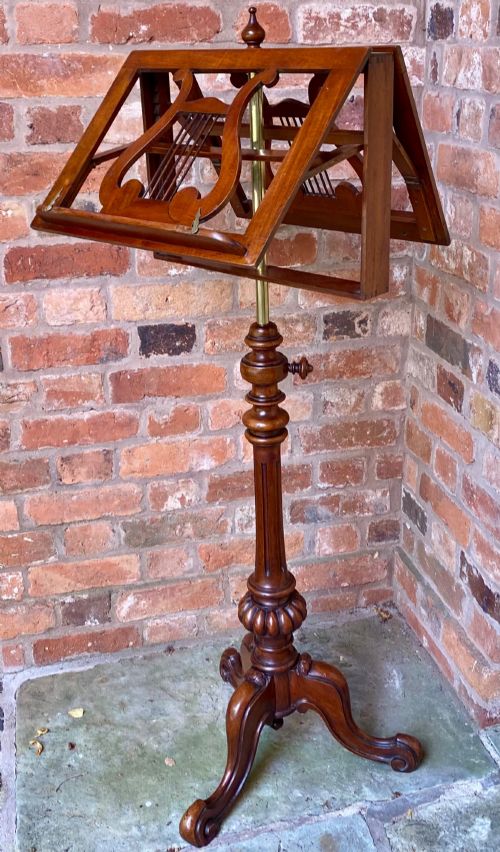
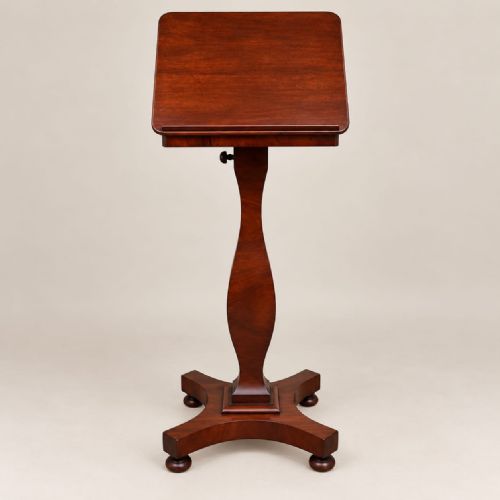
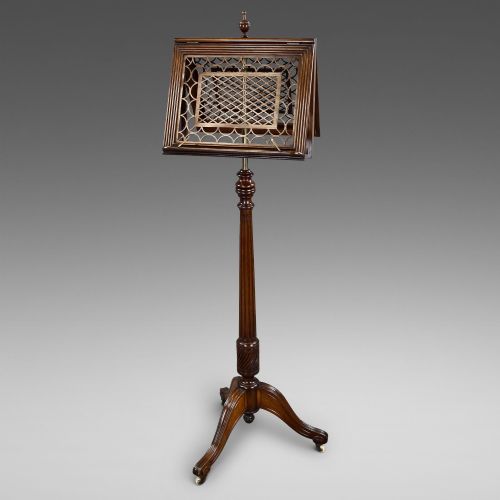
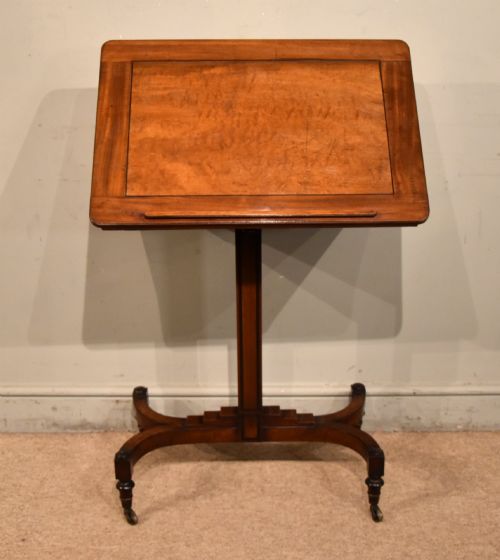
A pedestal music holder gathers freestanding music stands, duet stands, and reading stands designed to support sheets or books at a height. These pieces appear across the Regency, William IV, George IV, Victorian, and 1920 periods.
The most common forms on this page include mahogany duet stands and adjustable music stands, alongside occasional rosewood, walnut, and ebonised variations. Some examples incorporate filing compartments or magazine and music racks into their central columns or bases.
Makers designed these items for parlours and drawing rooms where musicians needed stable, adjustable supports for their scores. The presence of brass fittings and inlaid details often signals the finer domestic ambitions of the nineteenth century.
Materials and construction
Cabinet makers built these stands primarily in mahogany, rosewood, burr walnut, and ebonised wood, sometimes adding decorative inlay to the surfaces. Timber selection determined the weight and visual richness of the pedestal base.
Adjustable mechanisms frequently integrate brass components to allow height changes and tilting desks for the user. Fretted woodwork appears on certain music rests, balancing decorative carving with functional lightness.
Pedestal Music Holder Retail Price Guide 2026
Typical asking prices for pedestal music holder among the pieces listed under this phrase on Sellingantiques today, from the lower quarter to the upper quarter. They describe what is for sale here now, not the wider market.
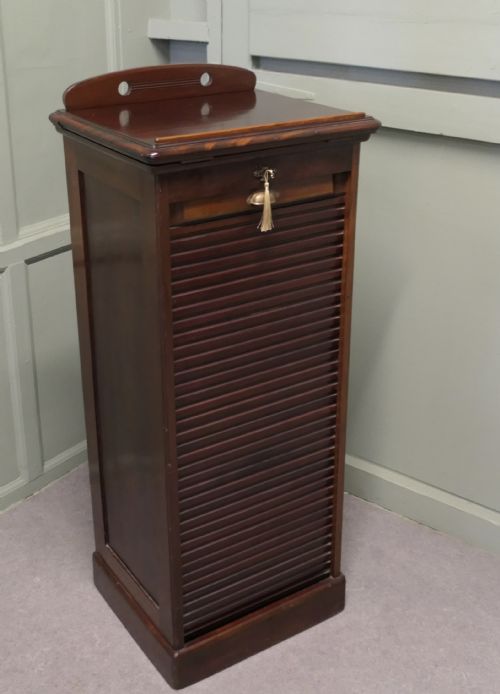
Reception desk greeters occasionally repurpose nineteenth-century filing cabinets originally designed to keep household sheet music in order.
Judging quality in a pedestal music holder
Quality rests in the precision of the adjustable mechanism and the stability of the central pedestal base. Heavier timbers like rosewood and mahogany indicate a commitment to durability that lighter secondary woods lack.
Refined examples show careful attention to fretwork detail on the music stand and clean turning on the column. The integration of storage functions, such as integrated magazine racks or filing compartments, adds complexity to the joinery.
The Pedestal Music Holder Glossary
- Duet stand
- A music stand wide enough to accommodate two musicians reading from the same shared score. These larger desks often feature adjustable angles.
- Canterbury
- A low stand featuring partitions for sheet music, magazines, or books, sometimes incorporated into the base of a pedestal music holder. The form originated in the late eighteenth century.
- Ebonised wood
- Timber treated with a dark finish to imitate the appearance of ebony. This treatment became popular during the nineteenth century for decorative contrast.
- Regency period
- An era of design spanning the early nineteenth century, characterised by classical motifs and architectural proportions. Furniture from this time often utilises rich mahogany.
Pedestal Music Holder: Frequently Asked Questions
How do I adjust a pedestal music holder?
Most stands utilise a brass screw mechanism or sliding rod housed within the central column to alter the height. Turning the screw loosens the shaft, allowing the desk to move before tightening into place.
Users should support the weight of the desk with one hand while loosening the mechanism to prevent sudden drops. Regular inspection of the brass fittings ensures smooth operation without straining the timber.
Where were pedestal music holders used?
These stands occupied drawing rooms, music rooms, and parlours where family members gathered to play instruments or read. Their freestanding design allowed them to sit near pianos or seating areas.
By keeping scores upright and accessible, the stands supported both practice and performance in nineteenth-century homes. Their decorative timber frames also served to display refined interior tastes.
What is the difference between a music stand and a duet stand?
A standard music stand supports a single sheet or book for solo performance, featuring a narrower desk surface. A duet stand provides an extended width designed for two players reading simultaneously.
Duet stands generally require heavier pedestal bases to support the wider desk and the balanced weight of two scores. Both variants frequently include adjustable height and tilt functions.
How do I care for mahogany music stands?
Mahogany surfaces require occasional dusting with a soft, dry cloth to prevent the accumulation of grit in carved or fretted details. Avoiding direct sunlight and extreme temperature changes protects the polished finish from fading or cracking.
Applying a traditional beeswax polish periodically helps maintain the natural lustre of the timber. Metal components like brass adjusters benefit from gentle cleaning to prevent tarnishing.