

Victorian Painting of Children
When you search for a victorian painting of children, you enter a domestic world of portraiture, pets, and play recorded across the nineteenth century.
Victorian Painting of Children
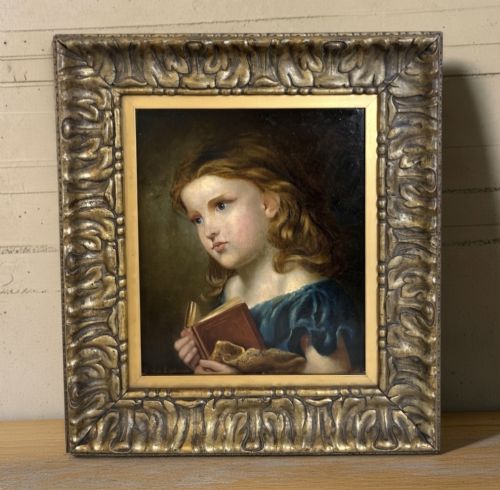
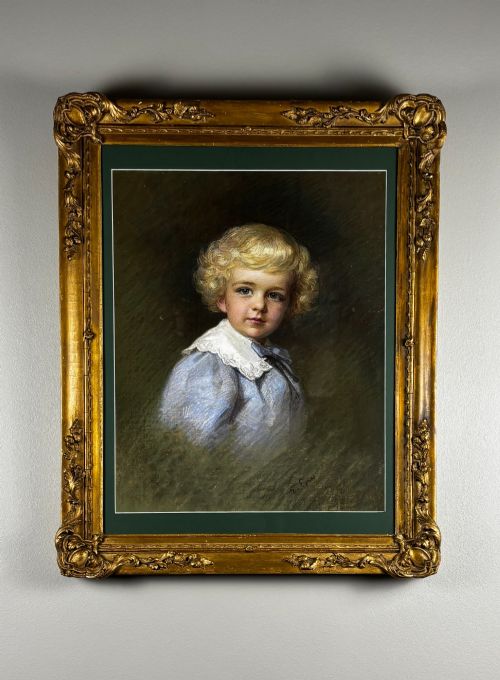
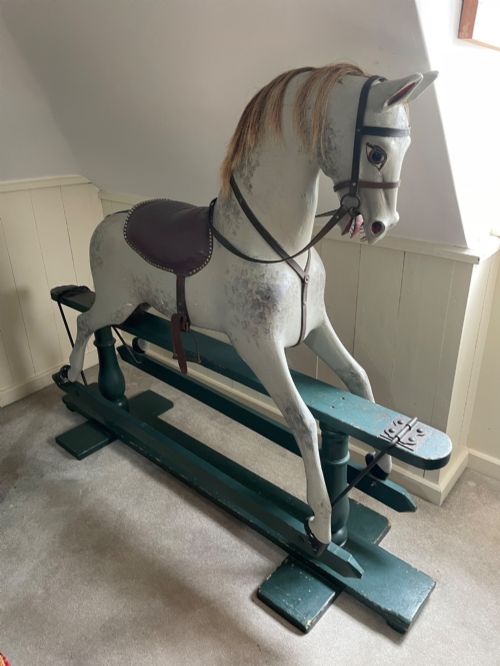
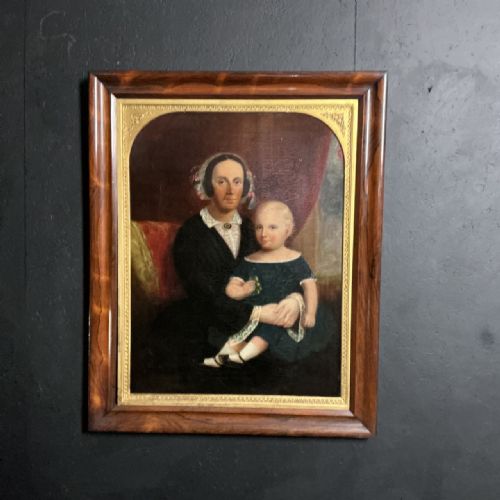
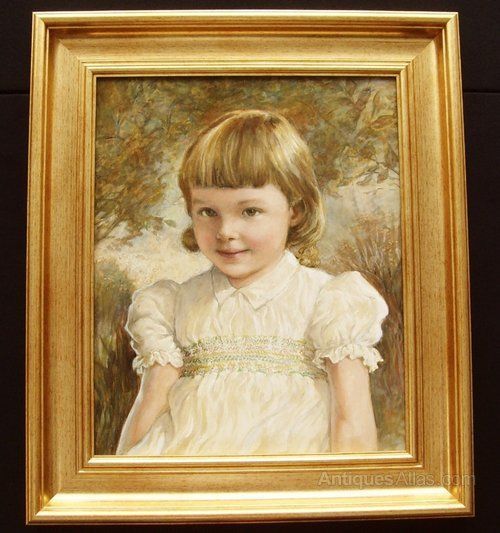
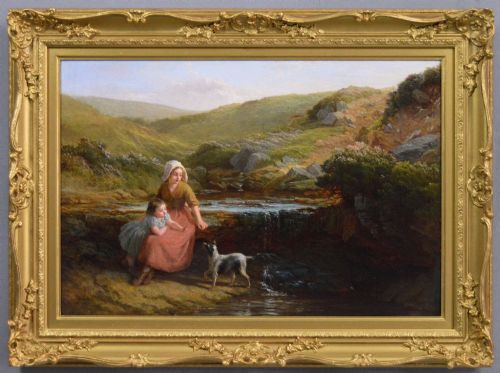
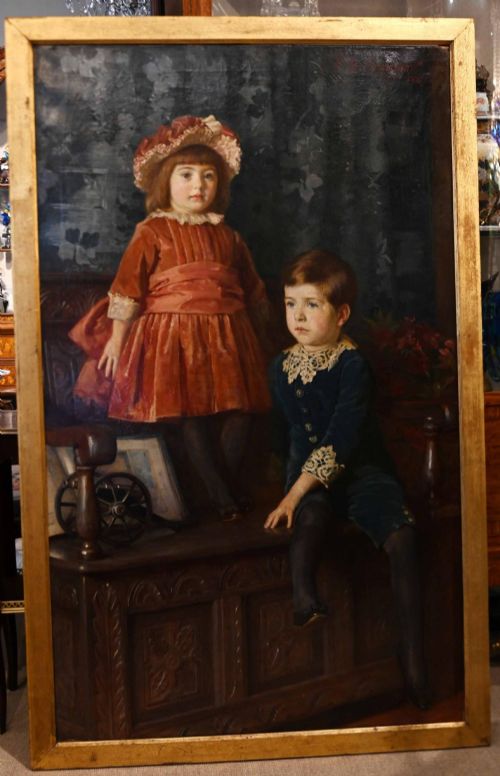
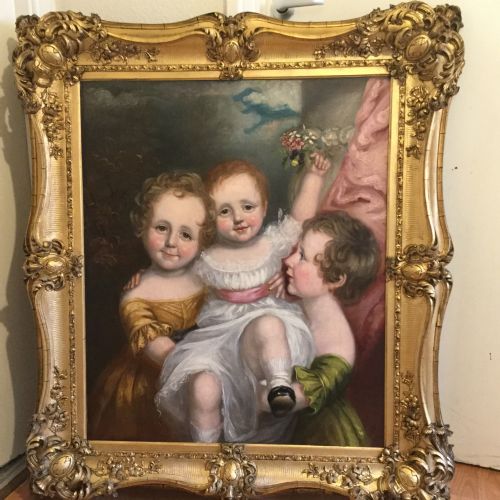
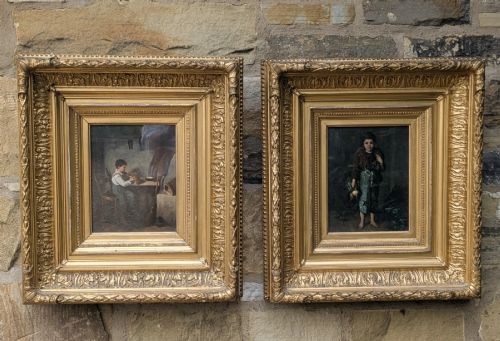
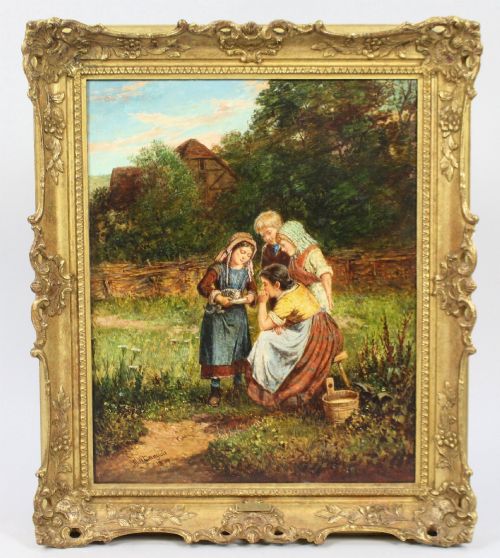
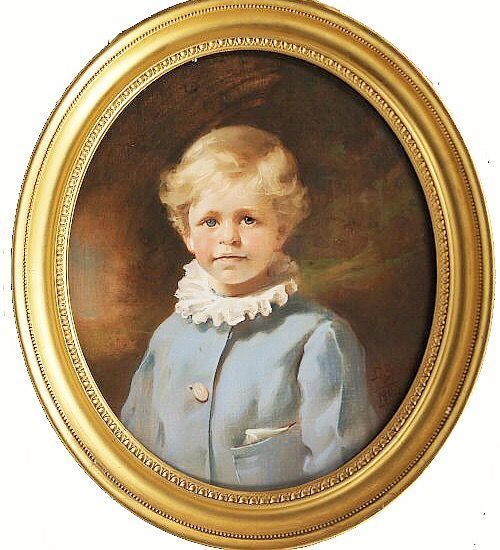
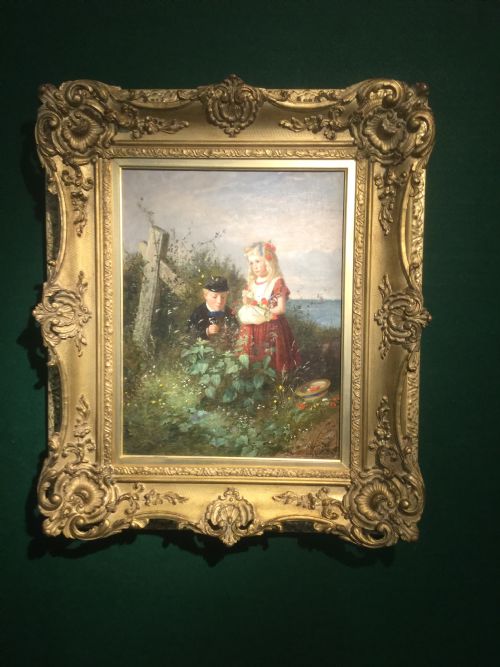
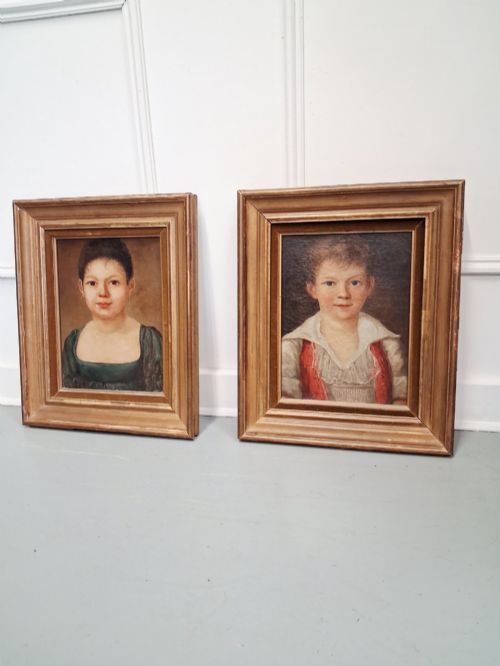
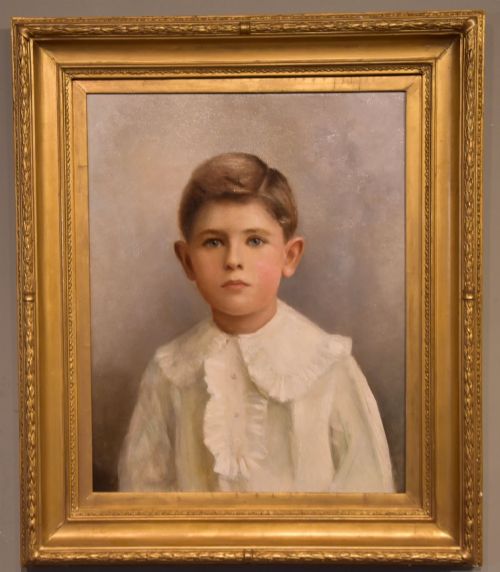
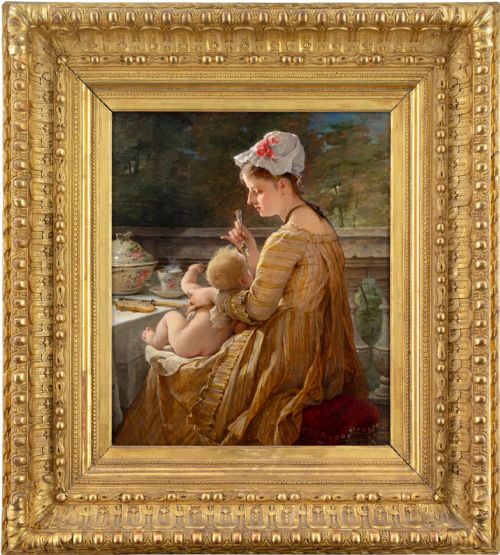
A victorian painting of children typically takes the form of oil on canvas, watercolour, or pastel, capturing young subjects in domestic interiors or rural landscapes. Buyers frequently encounter genre scenes of children feeding animals, playing with toys, or sitting for formal portraits.
The works span from the early nineteenth century through to the Edwardian period, incorporating naive folk art alongside academic portraiture. These pieces reflect contemporary Victorian sentiments regarding childhood, family life, and innocence.
Materials and Technique
Artists painted primarily in oil on canvas or applied watercolour and pastel to paper, often mounting these works within giltwood frames decorated with gesso. The physical structure relies on traditional stretched canvas and wooden stretchers, sometimes protected by glass.
Frame construction involves moulded gesso applied to wood bases, creating ornate gilt borders that complement the palette of the inner artwork.
Victorian Painting of Children Retail Price Guide 2026
Typical asking prices for victorian painting of children among the pieces listed under this phrase on Sellingantiques today, from the lower quarter to the upper quarter. They describe what is for sale here now, not the wider market.
Common recurring motifs include domestic animals such as kittens, piglets, and ponies accompanying young subjects.
Assessing Quality
Quality rests upon the artist's ability to render facial expression, proportion, and texture in hair and fabric, distinguishing academic commissions from naive folk art. The handling of light and narrative detail within genre scenes marks the difference between standard studio output and superior works.
The preservation of the original support, whether canvas or paper, alongside the integrity of the period giltwood or ebonised frame, influences the standing of the piece.
Vittorio Reggianini·Mark William Langlois·Leon Sprinck·Adelaïde Salles Wagner·George Augustus Holmes·Henry Windsor Fry·Charles Hunt·Frederick Tatham·Emily Eyres·Sir Thomas Lawrence·Charles Edward Wilson·Harry Brooker·Byam Shaw·George Bernard O'Neill·James Mallard Bromley·James Hardy·George Smith·Bown Jones·Helena Maguire·William Egley·Linnie Watt
The Victorian Painting of Children Glossary
- Genre painting
- A depiction of everyday subjects and contemporary scenes from ordinary life. These works often show children playing or interacting with domestic animals.
- Gesso
- A plaster mixture applied to wood frames and moulded into decorative reliefs before gilding. It provides the detailed ornamentation seen on Victorian frames.
- Naïve art
- A style characterised by a childlike simplicity in perspective and proportion. It is frequently produced by self-taught artists outside the formal academic tradition.
- Oleograph
- A mechanical colour print designed to imitate an oil painting, utilising lithographic techniques. These appear as reproductions of popular Victorian works.
Victorian Painting of Children: Frequently Asked Questions
What subjects do these paintings show?
These works depict children in various settings, ranging from formal individual and family portraits to narrative genre scenes. Common motifs include youngsters playing with toys, interacting with animals, or gathering firewood in rural landscapes.
Many pieces capture quiet domestic moments, such as feeding pets or sharing a meal, reflecting nineteenth-century ideals of youth and family life.
How do I identify the period?
Dating relies on costume, hair styling, and the materials used for the support and framing. Mid-nineteenth-century works often feature structured Victorian attire, while later pieces move toward Edwardian aesthetics.
Signatures, artist records, and framing styles such as original gesso giltwood also provide firm chronological indicators.
Are watercolours as durable as oils?
Watercolours on paper require protection behind glass to prevent fading and moisture damage, unlike oil paintings on canvas which possess a more resilient surface. Both mediums have survived well when kept away from direct sunlight and damp environments.
Paper works often retain delicate details that differ from the heavier impasto seen in oil genre scenes.
How should I display them?
Hang these pieces away from direct sunlight and extreme temperature fluctuations to protect canvas, paper, and giltwood frames. Pairing them with period walls or traditional interiors allows the ornate frames to complement the room.
Ensure that wall fixings safely support the weight of heavy wooden frames and glass.