
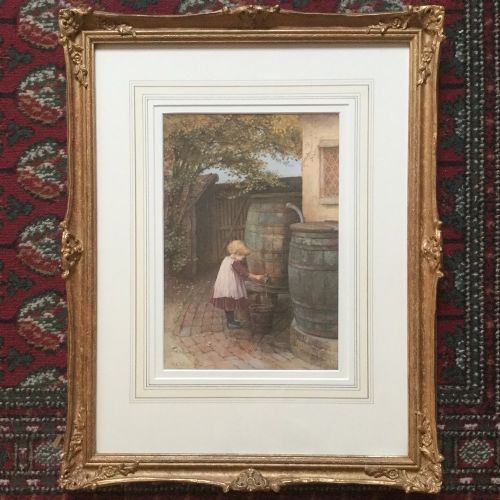


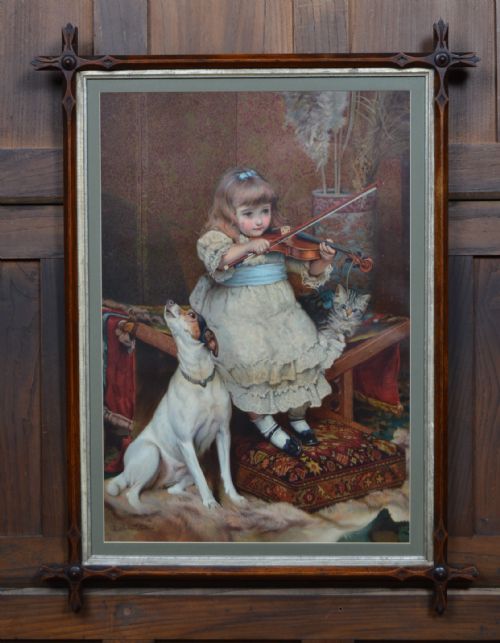


Victorian Child Art Print
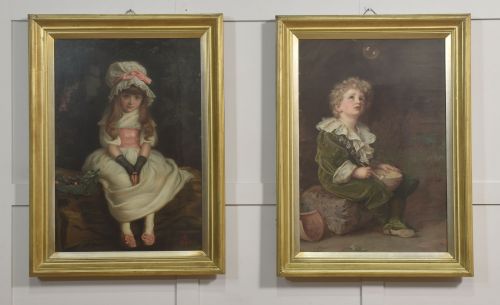
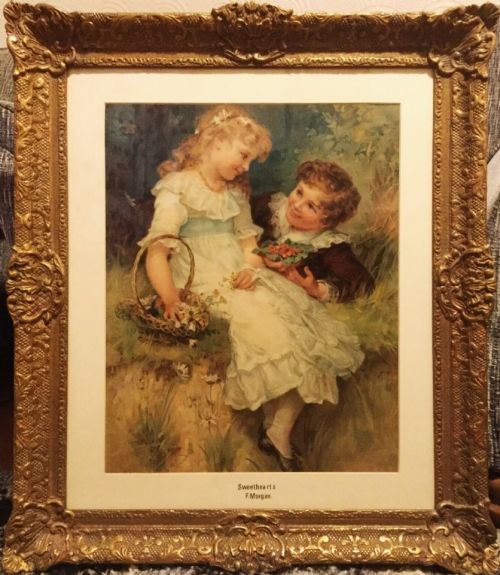
These victorian child art print examples capture sentimental childhood innocence through framed lithographs, oleographs, and advertising prints.
Victorian Child Art Print
A victorian child art print brings charming historical imagery of youth into domestic spaces through framed wall art and paper prints. Buyers frequently find framed prints and oil paintings spanning the nineteenth century alongside later advertising editions.
The selection on this page centres on Victorian genre art and Edwardian pieces depicting children in domestic or pastoral settings. These works often arrive ready to hang in period frames made of wood, gesso, and gilt.
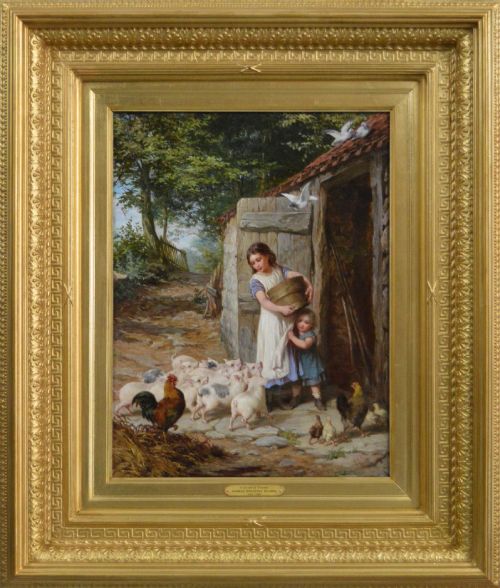
Subjects range from Pears soap advertising prints to portraits of young girls and children feeding animals. The formats include oval portraits, crystoleoms, and chromolithographs produced across several decades.
Materials and production methods
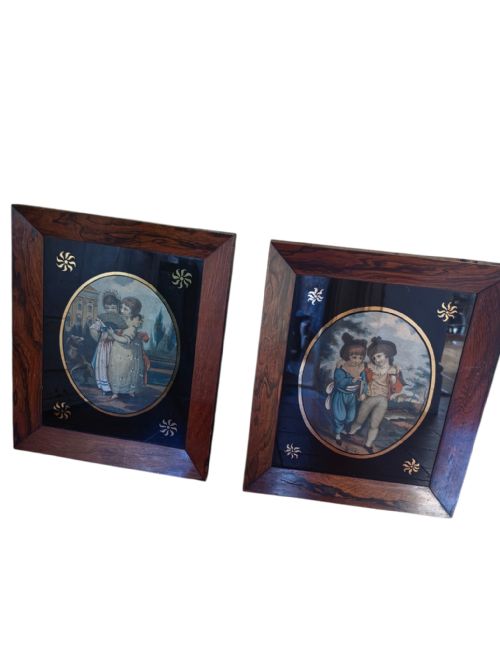
Production relies heavily on paper surfaces carrying lithographic or chromolithographic printing techniques, alongside oil painting on canvas and specialised crystoleom layers. Many examples utilise paper prints mounted beneath glass to protect the delicate imagery.
Frames play a crucial structural and aesthetic role, constructed from wood and finished with gesso, gilt, or gold leaf. Gilt wood and rosewood frames provide the traditional Victorian housing for these portraits and genre scenes.
Children feeding piglets and cheerful soap advertisements remind us that Victorian households loved a chubby cheek and a farmyard animal.
Distinctions in quality and execution
Quality differentiates by the fidelity of the printing technique and the artistic origin, such as works after recognised painters like Frederick Morgans or Charles Burton Barber. Original artist attribution elevates a piece above standard decorative ephemera.
The integration between the artwork and its period frame defines the visual standard, particularly where ornate gilt wood, gesso, or rosewood surrounds enhance the composition. Preservation of the paper beneath glass maintains the integrity of the image surface.
George Augustus Holmes·Charles Edward Wilson·Charles Burton Barber·Emile Vernon·Frederick Morgans
The Victorian Child Art Print Glossary
- Chromolithograph
- A multicoloured print produced through a planographic lithographic process using multiple stone plates for each ink colour. This technique created vibrant advertising images and reproductions during the Victorian period.
- Crystoleom
- A convex glass painting where a paper print is pasted face down onto glass, the paper rubbed away until translucent, and then hand-painted from behind. This creates a luminous, three-dimensional depth.
- Oleograph
- A chromolitholithographic reproduction printed on textured canvas or heavy paper to imitate the surface texture of an oil painting. They gained popularity in the nineteenth century as affordable wall art.
- Gesso
- A plaster-like mixture applied to wooden frame substrates to create sculpted decorative reliefs before gilding. It allows for intricate moulded ornamentation on period frames.
- Genre Art
- Artwork depicting scenes from everyday life, frequently featuring children, animals, and domestic interiors. These narratives formed a cornerstone of Victorian popular taste.
Victorian Child Art Print: Frequently Asked Questions
What is a Pears print?
Pears prints are advertising lithographs issued by the soap manufacturer that reproduced popular academic paintings of children. They became collectable domestic wall art across late Victorian and Edwardian households.
These pieces brought fine art aesthetics into ordinary homes through mass production while maintaining high standards of chromolithographic printing.
How do I date a framed print?
Dating relies on examining the framing materials, paper substrate, and printing technology alongside any typographic markers on the margin. Rosewood frames and specific chromolithography styles often point towards the nineteenth century.
Later Edwardian and early twentieth-century examples frequently feature gesso frames and distinct photographic reproduction techniques.
What are crystoleoms?
Crystoleoms are delicate Victorian pictures created by adhering a photograph or print to glass, thinning the paper, and painting the reverse side by hand. The resulting layered effect gives a soft, glowing dimension to the portrait.
Because of their fragile glass construction, they require careful placement away from direct sunlight and moisture.
How should I hang these framed pieces?
These works suit traditional interior settings where period frames complement wooden furniture and neutral walls. Wall placement should avoid direct sunlight to protect the paper prints and gilt finishes from fading.
Using sturdy picture hooks suited to the weight of wood and gesso frames ensures secure mounting.