




Vintage Farm Animal Painting
These vintage farm animal painting works capture pastoral life with horses, cattle, and poultry in oil and watercolour.
Vintage Farm Animal Painting
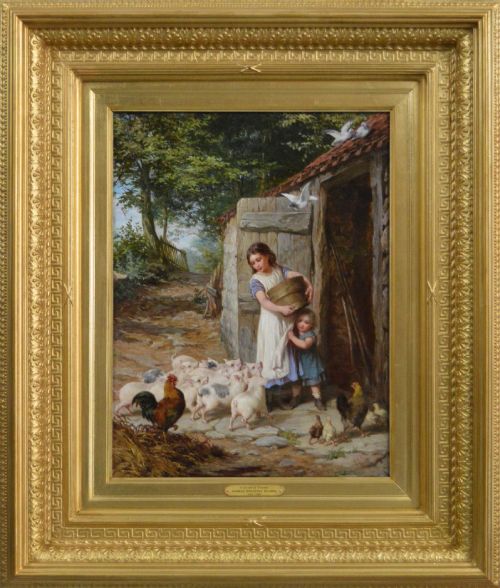
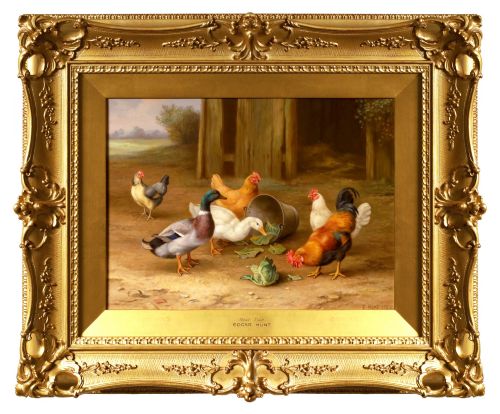
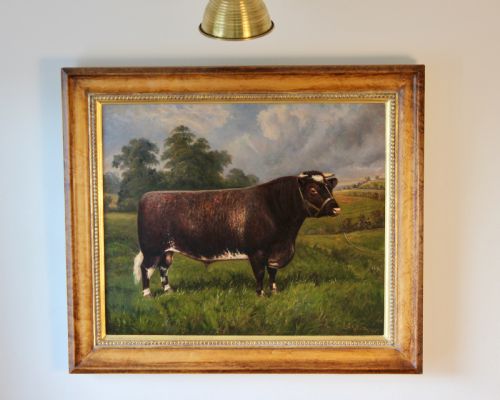
A vintage farm animal painting portrays rural subjects such as prize shorthorn bulls, feeding pigs, and farmyard poultry in oil or watercolour. The pieces span the nineteenth century, the Victorian era, and the Edwardian period, recording domestic livestock and daily rural labour.
Most examples found here utilise oil on canvas or canvas supported by wood frames, often retaining their original giltwood or gesso framing. These works originate from British schools and named realist painters who specialised in agricultural scenes.
How they were made
Artists applied oil paint or watercolour onto prepared canvas or paper surfaces, building form through layered brushwork. Canvases are mounted on wooden stretchers and frequently housed within decorative gilt or gesso frames.
Support materials include wood and paper mache for sculptural or framed items, while traditional gilding techniques finish the surrounding borders with gold leaf.
Listings feature works spanning the nineteenth century, Victorian era, and Edwardian period in oil and watercolour.
What varies in quality
Quality rests in the anatomical accuracy of the livestock and the naturalism of the surrounding farmyard setting. Master hands render texture in feathers and coats with greater precision than routine studio output.
The integrity of the canvas, the preservation of the original pigment, and the condition of the period giltwood or gesso frame separate finer works from ordinary examples.
George Augustus Holmes·Edgar Hunt·John Frederick Herring Jnr·Percival Glenfern·Claude Cardon·George Smith RSA
The Vintage Farm Animal Painting Glossary
- Oil on Canvas
- Pigment bound in drying oil applied to a woven fabric stretched across a wooden frame. This medium defines the majority of these historic rural scenes.
- Giltwood
- Wood carved and coated with gold leaf or a gold-coloured metallic finish. It provides traditional framing for Victorian and Edwardian canvases.
- Watercolour
- Paint consisting of pigment suspended in a water-soluble vehicle, used here on paper. It offers a lighter alternative to heavier oil mediums.
- Gesso
- A paint mixture consisting of a neutral binder mixed with chalk, pigment, or gypsum. This material forms the base for decorative mouldings on picture frames.
- British Animalier
- An artistic tradition focusing on the realistic depiction of animals. Practitioners in this sphere achieved renown for their accurate observation of livestock.
Vintage Farm Animal Painting: Frequently Asked Questions
How do I care for an oil painting?
Keep the canvas away from direct sunlight and dramatic fluctuations in temperature to prevent cracking in the paint layers. Dust the surface gently with a soft, dry brush without applying moisture or cleaning agents.
Ensure the hanging environment remains stable and secure to protect both the stretched canvas and the original frame.
What periods do these artworks cover?
The selection spans the nineteenth century through the Victorian and Edwardian eras up to the nineteen-twenties. Earlier pieces reflect nineteenth-century realism while later examples incorporate impressionist influences.
Each period brings distinct framing styles and canvas preparations that help establish the age of the piece.
Are all these pieces painted in oil?
While the majority utilise oil paint on canvas or wooden supports, a smaller number employ watercolour on paper. Each medium alters the visual texture and framing requirements of the artwork.
Reviewing the material notes in individual listings confirms whether a work is an oil painting or a watercolour.
How should I display a vintage frame?
Giltwood and gesso frames require careful handling to preserve the delicate decorative moulding. Hang them on secure walls away from heat sources that could dry out the underlying wood.
Allow the original character of the frame to remain intact rather than attempting restoration on aged surfaces.