


Victorian Painted Mantel Mirror
A victorian painted mantel mirror brings architectural presence and reflected light to a principal room, anchoring a chimney breast with period character.
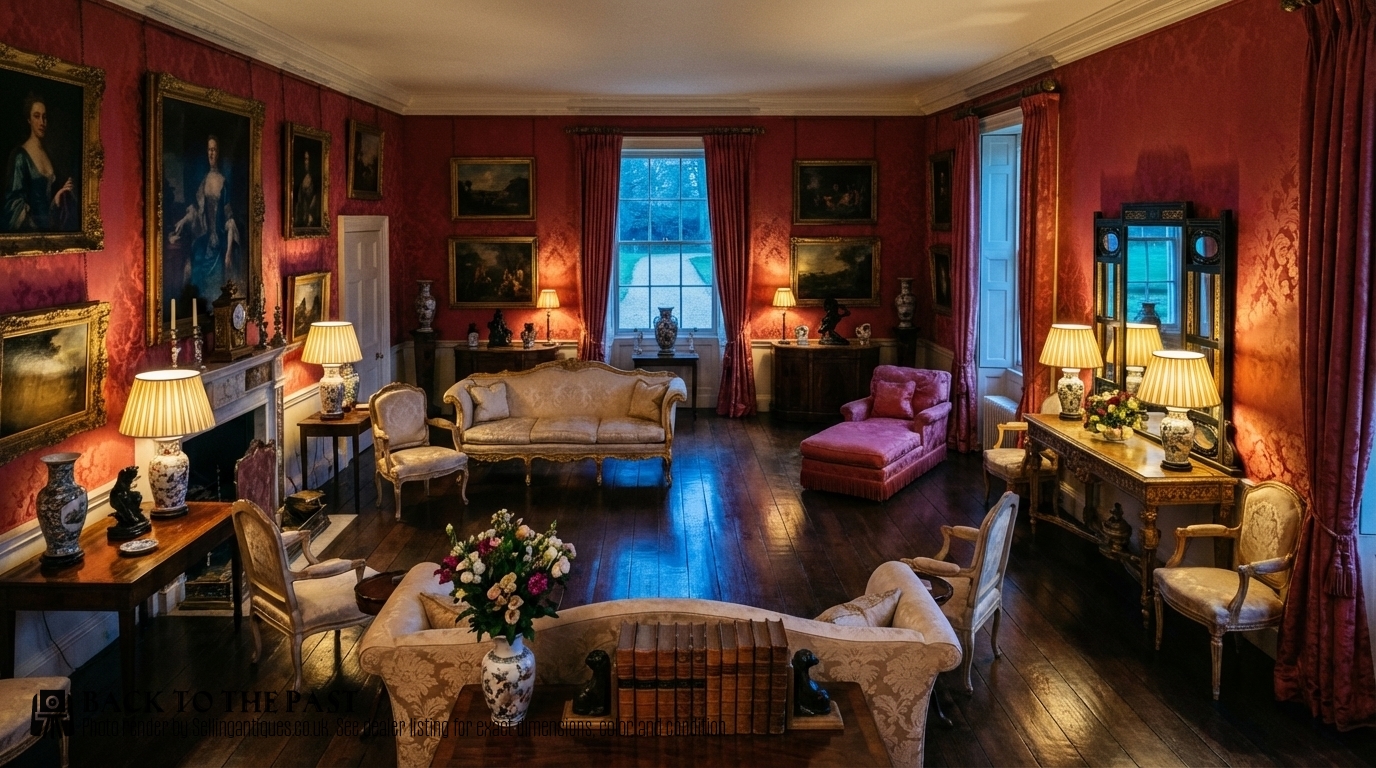
Victorian Painted Mantel Mirror
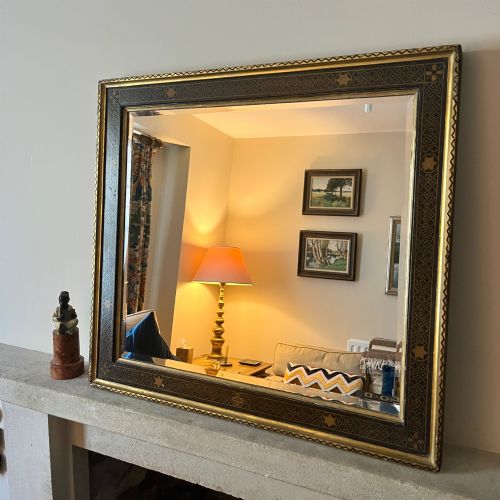
When you search for a victorian painted mantel mirror, you encounter substantial overmantel and wall mirrors designed to sit above a fireplace. The pieces span from the mid-nineteenth century through to the early twentieth century, taking forms such as overmantel mirrors and pier mirrors.
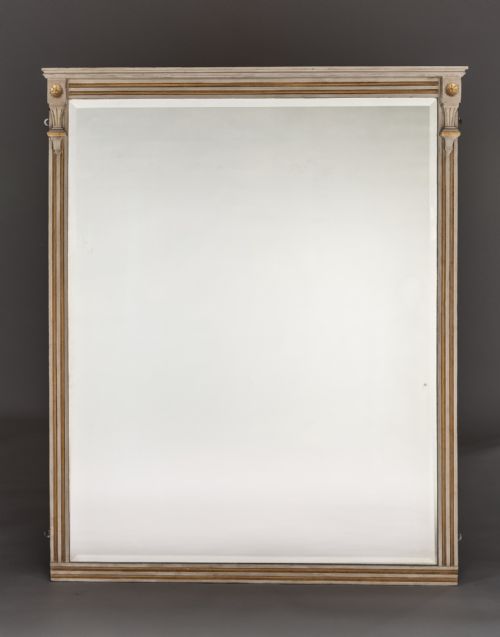
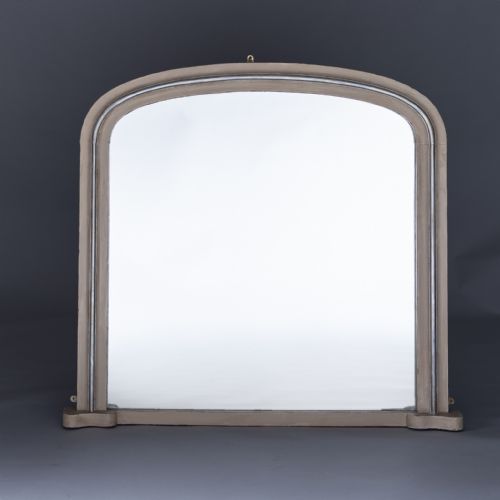
The prevailing examples on this page are large nineteenth-century English pieces, often carrying shaped, arched, or ribbed top frames. Workshops produced these items to command the wall space of reception rooms, frequently combining painted surfaces with parcel-gilt or parcel-silvered details.
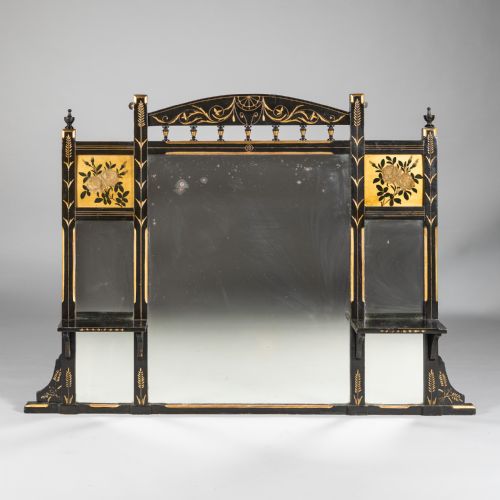
Stylistic variations draw upon Aesthetic Movement, Rococo Revival, French Chateau, and Neoclassical vocabularies. Ebonised frames highlighted with cream or gold appear alongside distressed painted finishes on carved wood.
Materials and Construction
The framework relies primarily on carved wood or moulded gesso built over a timber substrate, providing the relief work necessary for ornate frames. Artisans applied paint directly to these wooden structures, frequently layering it with gold leaf or silver leaf to accentuate raised mouldings.
Mirror glass of the period sits within these decorated housings, sometimes showing the subtle imperfections and foxing associated with nineteenth-century manufacture. The integration of paint, gesso, and gilding defines the visual weight of each frame.
Listings span from the 1860s through the Edwardian era, predominantly featuring carved wood and gesso frames with painted and parcel-gilt finishes.
Distinctions in Execution
The depth and crispness of the carved wood and gesso ornamentation separate standard production from superior examples. Finely modelled relief work retains its definition beneath layers of paint and metallic leaf, whereas lesser pieces rely on simpler mouldings.
The harmony between the painted ground and the parcel-gilt or parcel-silvered highlights dictates the visual success of the frame. Original surface treatments that have aged uniformly carry greater coherence than later repainted interventions.
The Victorian Painted Mantel Mirror Glossary
- Overmantel mirror
- A large mirror specifically proportioned to hang on the wall directly above a mantelpiece or fireplace. These pieces often feature horizontal emphasis or arched tops to suit chimney breasts.
- Gesso
- A plaster-like mixture applied to wood and carved to create raised decorative mouldings and relief details before painting or gilding. It allows for sharp architectural and organic ornamentation.
- Parcel-gilt
- A decoration technique where only specific raised portions or details of an object are gilded with gold leaf, leaving the surrounding painted wood exposed. This method provides contrast against a dark or neutral background.
- Ebonised
- Wood treated with a chemical stain or black finish to imitate ebony. This dark finish gained popularity during the Victorian Aesthetic Movement.
- Pier mirror
- A tall mirror designed to hang on the wall space between two windows, though the term often overlaps with mantel mirrors in nineteenth-century contexts.
Victorian Painted Mantel Mirror: Frequently Asked Questions
Where should I hang an overmantel mirror?
These mirrors suit placement directly above a fireplace mantelpiece, where their scale balances the hearth below. They also function on large expanses of wall in reception rooms to reflect light.
Ensure the wall construction supports substantial weight, as nineteenth-century wooden and gesso frames are heavy.
How do I date a Victorian mirror?
Dating relies on stylistic clues such as the austerity of Aesthetic Movement ebonising versus the curves of Rococo Revival frames. Materials like carved wood and gesso provide context alongside documented production periods.
Frame construction and the character of the mirror glass offer further indicators of nineteenth-century manufacture.
Are painted finishes original to these frames?
Many pieces retain their original painted surfaces, often combined with parcel-gilt or parcel-silvered highlights over gesso. Examining how the paint interacts with the carved wood helps determine originality.
Distressed painted finishes can be authentic to the nineteenth-century aesthetic or the result of later wear and redecoration.
What is the difference between an overmantel and a wall mirror?
Overmantel mirrors are proportioned specifically to sit above mantelpieces, often featuring arched or shaped tops designed to fit beneath high ceilings. General wall mirrors follow broader rectangular or circular formats.
Nineteenth-century makers frequently designed overmantels to work in tandem with the architectural scale of a fireplace.