
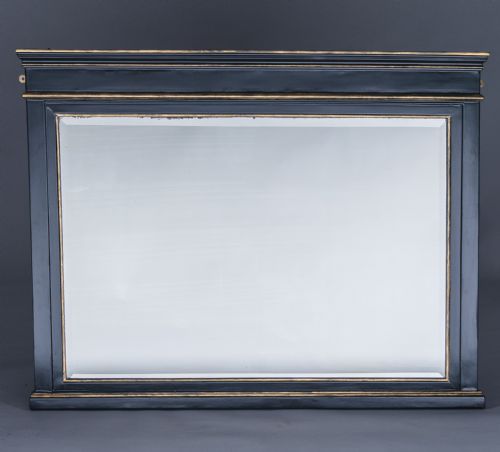


Antique Ebonised Chimney Glass
These antique ebonised chimney glass pieces bring striking dark frames and reflective light into a room, offering both period character and practical depth.
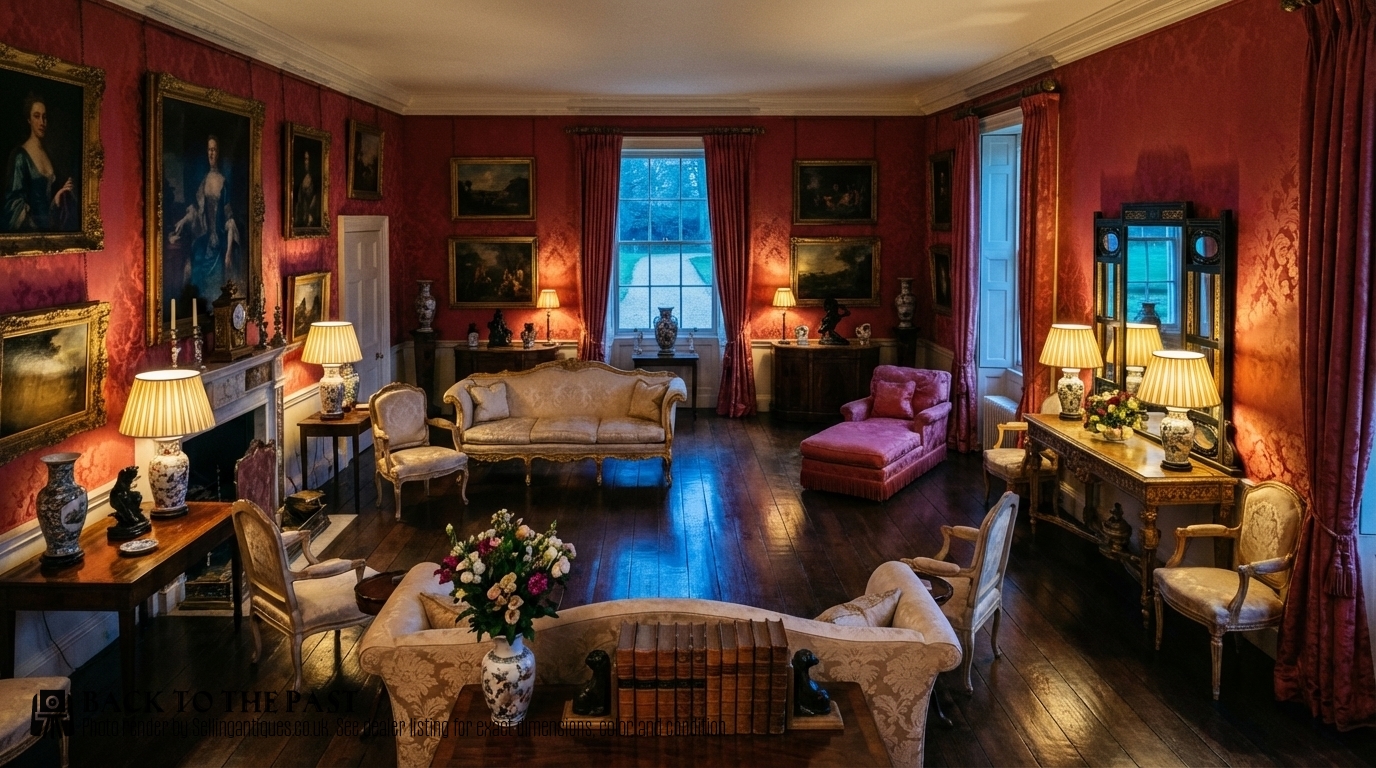
Antique Ebonised Chimney Glass
An antique ebonised chimney glass primarily takes the form of an overmantel mirror designed to hang above a fireplace. The pieces seen here span the 19th Century, Regency, Victorian, and Aesthetic Movement periods, showcasing forms such as overmantel mirrors, wall mirrors, and oil lamps.
The most common formats on this page are generous overmantel mirrors and triptych mirrors designed to catch and multiply the light of a room. These objects combine dark ebonised wood with gilt highlights, paint, and gesso to create a distinct architectural presence on a wall.
How they were made
Maker's workshops built these frames using timber such as pine and ebonised wood, applying layers of gesso and paint to create smooth dark surfaces. Giltwood and composition details were then added to frame the glass and provide contrasting metallic highlights.
Craftsmen shaped these mirrors into large wall-hanging formats, sometimes dividing the glass into triptych sections framed by columns decorated with carved motifs like acanthus leaves. Oil lamps from the same period utilised similar decorative finishes to match the interior metalwork and woodwork of the room.
Among the towering wall mirrors and dark frames sits a lone oil lamp, proving that 19th-century makers were happy to light the room as well as reflect it.
What varies in quality
The distinction between standard and superior pieces rests on the crispness of the decorative moulding and the depth of the gilding against the ebonised wood. Finer examples display carefully balanced proportions, intricate details such as acanthus decorated columns, and well-preserved paintwork.
The integration of the glass within the frame also dictates the overall standard of the object, where older plates show subtle signs of age without compromising the reflection. Superior items maintain a strong visual harmony between the dark timber and the gilt elements.
The Antique Ebonised Chimney Glass Glossary
- Ebonised wood
- Timber treated to resemble ebony, creating a dense black finish that was popular in Victorian and Aesthetic Movement design. This technique provides a sharp contrast against gilt highlights.
- Overmantel mirror
- A large mirror specifically proportioned to hang on the wall above a chimney breast. These pieces often feature horizontal layouts to span the width of the fireplace below.
- Triptych mirror
- A mirror divided into three distinct vertical sections, frequently separated by decorative columns or pilasters. This design originated in classical architecture and remained popular through the Regency period.
- Gesso
- A plaster-like mixture applied to wood frames to create a smooth surface for gilding or painting. Skilled artisans moulded this material into relief decorations before applying gold leaf.
- Acanthus
- A classical leaf ornamentation carved into wood or moulded in gesso on furniture and mirror frames. It reflects the influence of ancient Greek and Roman design on 19th-century makers.
Antique Ebonised Chimney Glass: Frequently Asked Questions
Where should I hang an overmantel mirror?
These mirrors were originally built to sit directly above the mantelpiece in a main reception room, anchoring the fireplace wall.
Placing one at fireplace height allows the glass to reflect light from opposite windows across the entire floor space.
How do I identify a Regency period mirror?
Regency pieces often display classical architectural elements such as gilded wood, columns, and crisp decorative moulding.
They rely less on dark ebonised surfaces and more on bright gilt finishes compared to later Victorian designs.
What is an Aesthetic Movement mirror?
Aesthetic Movement pieces from the late 19th century combine ebonised wood with gilt and painted details for a refined, artistic look.
These designs focused on visual beauty and often discarded heavy classical rules in favour of simpler, striking contrasts.
How do I clean an ebonised frame?
Dust the dark wooden surfaces gently with a soft dry cloth to prevent any buildup on the finish.
Avoid using harsh chemical polishes that might damage the underlying gesso or dull the gilt highlights.