

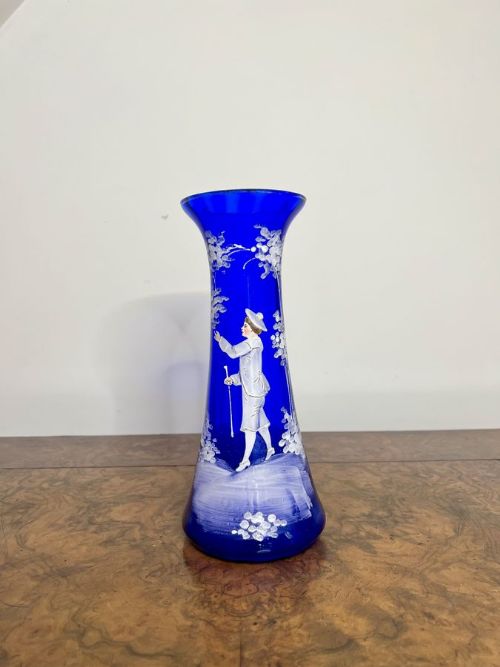


Victorian Painted Glass Vase
A victorian painted glass vase brings rich colour and hand-applied detail to a room, drawing the eye with its vibrant enamels and varied forms.
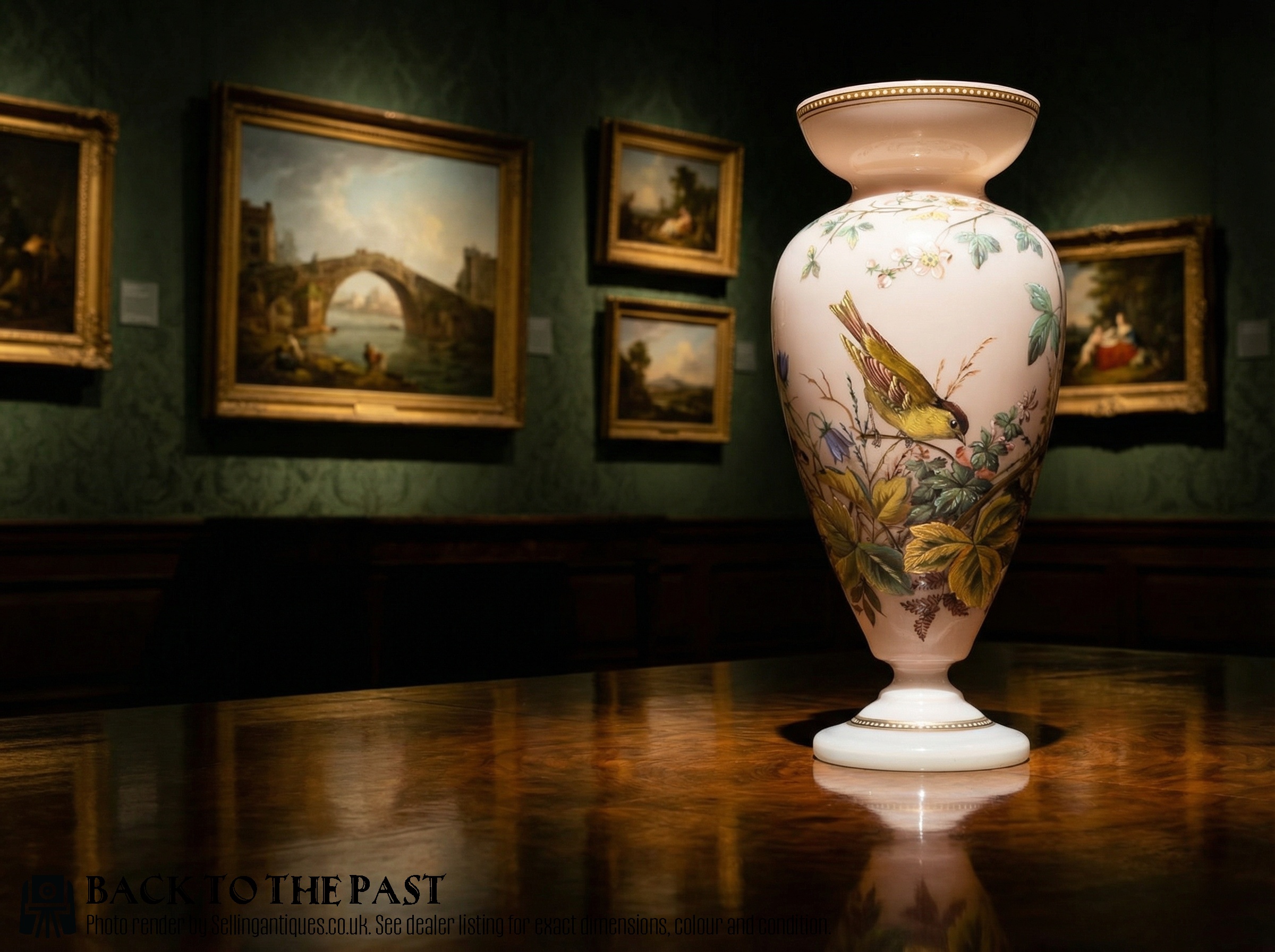
Victorian Painted Glass Vase
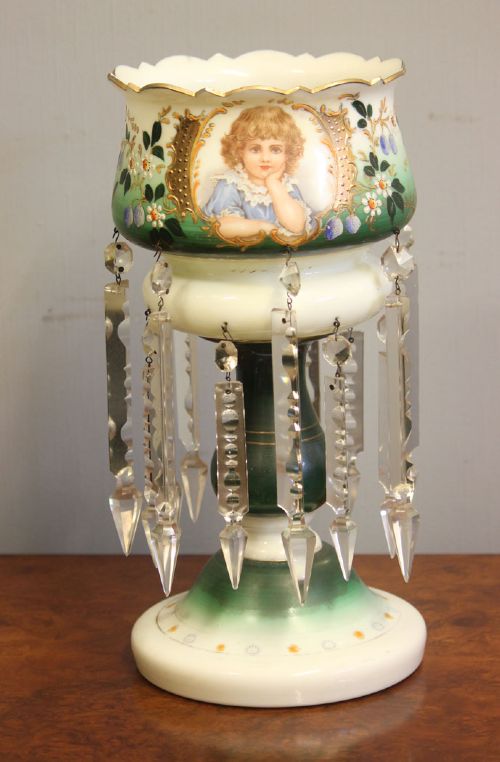
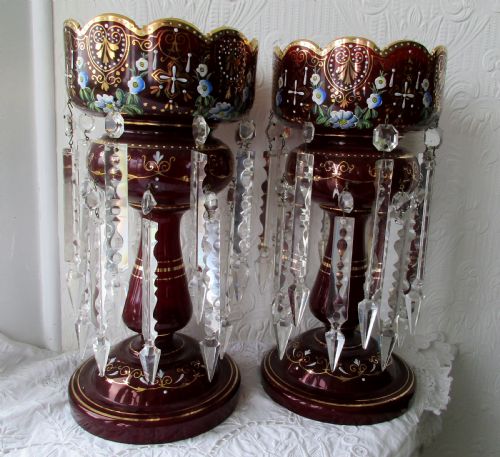
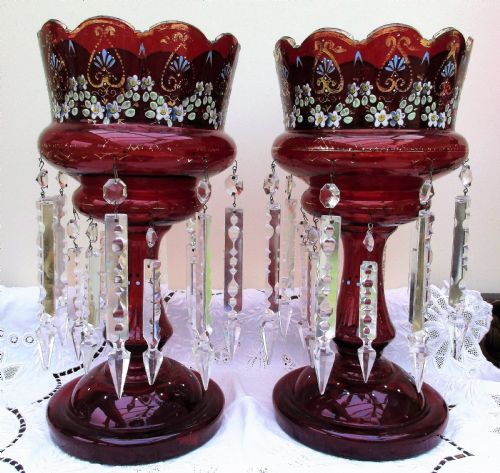
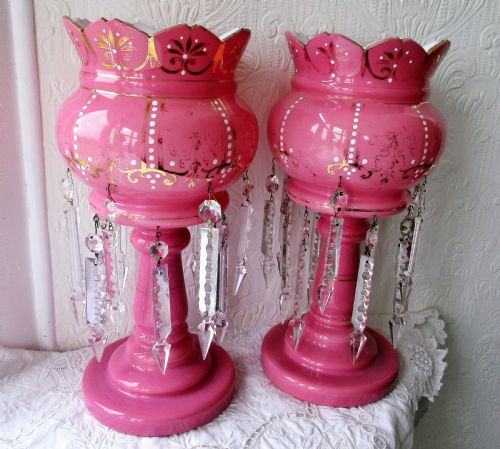
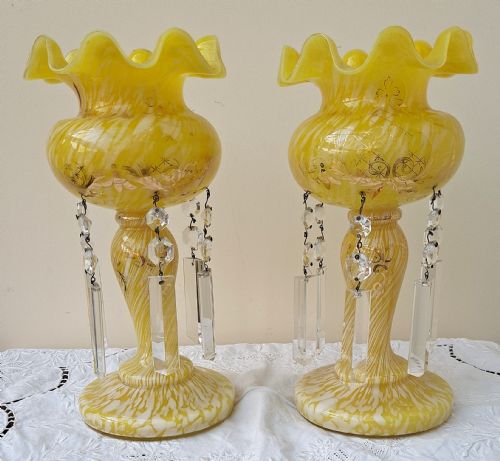
A victorian painted glass vase is a piece of nineteenth century decorative glassware, frequently decorated with enamel or hand-applied pigments depicting flora, figures or classical scenes. When searching this phrase, a buyer encounters coloured, cranberry, ruby, green and opaline glass vessels, alongside pairs of mantel lustres hung with glass prisms.
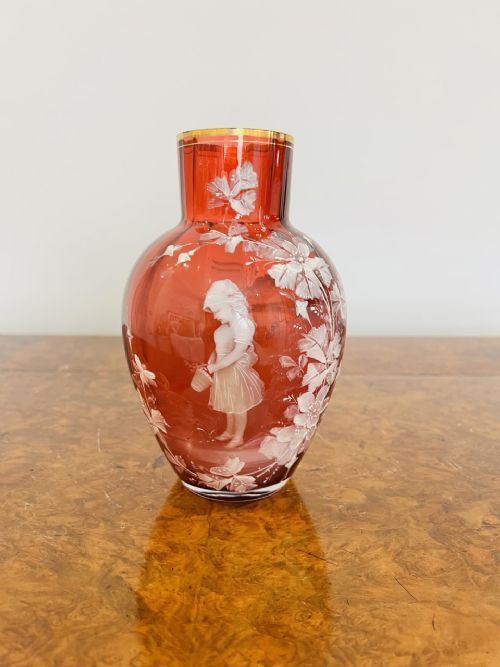
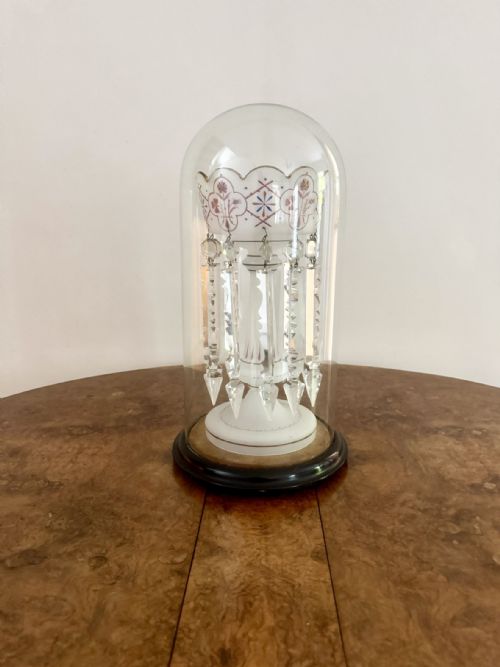
Buyers are most likely to meet coloured glass vases bearing white enamel silhouettes, often associated with the Mary Gregory style, or Bohemian overlay and enamelled pieces adorned with floral or hunting motifs. These range from small cabinet pieces to large decorative table ornaments paired with glass domes or crystal drops.
Materials and Techniques
The base vessels are formed from various types of glass, including cranberry glass, ruby glass, opaline glass, crystal and coloured glass, often shaped by hand blowing. Overlay techniques involve layering contrasting colours of glass before cutting back the outer layer to reveal the colour beneath.
Decoration is applied using enamel, gold leaf and polychromatic paints, fixed to the glass surface through firing. Skilled hands painted floral sprays, classical scenes, portraits and figural silhouettes directly onto the glass body.
Listings feature 19th century Bohemian, English and French glass utilising enamel, gold leaf and overlay techniques.
Factors of Quality
Quality rests in the crispness and complexity of the enamel work, the depth of the coloured glass, and the precision of any gilt highlights or overlay cutting. Superior pieces display delicate, confident brushwork and well-proportioned forms rather than thick, flat application.
The distinction between standard production and the finest output lies in the artistic execution of the painted scenes and the weight and clarity of the glass itself, particularly evident in pieces associated with established makers.
Thomas Webb and Sons·George Tye·Harrach·Konstantin Stoitzner·Moser
The Victorian Painted Glass Vase Glossary
- Cranberry glass
- A rich pinkish-red transparent glass coloured with gold chloride. It is widely seen in nineteenth-century tableware and decorative vases.
- Opaline glass
- An opaque or translucent pale glass, often white, blue or pink, which imitates porcelain. It provides a smooth surface for enamel painting.
- Mantel lustre
- A decorative vase fitted with a rim hung with cut glass prisms or pendants. They were designed to sit on fireplace mantelpieces.
- Overlay glass
- A technique where a layer of coloured glass is fused over a base of another colour. Portions are then cut away to reveal the contrasting layer.
- Enamel
- A fused glass paste applied to the surface of the vessel for decoration. It provides raised, colourful designs that stand proud of the glass.
Victorian Painted Glass Vase: Frequently Asked Questions
How do I clean a painted glass vase?
Dust gently with a soft, dry cloth to protect fragile enamel and gold leaf decorations. Avoid submerging in water or using chemical cleaners.
Harsh scrubbing can remove hand-painted details and ruin the surface of antique glass.
What is Mary Gregory glass?
Mary Gregory pieces feature white enamel silhouettes of children playing amidst foliage or landscapes. They are typically found on cranberry, blue or green glass.
Though named after an American decorator, most of these Victorian items were actually produced in Bohemia and England.
How do I identify Bohemian glass?
Bohemian pieces often utilise heavy overlay colours, rich gilding and deep cuts. They frequently depict nature, portraits or hunting scenes.
Their robust construction and ornate style reflect the prominent nineteenth-century glassworks of the region.
What are mantel lustres used for?
Mantel lustres served as decorative mantelpiece ornaments during the Victorian era. The hanging glass prisms caught the light of candles or gas lamps.
They functioned primarily to add sparkle and visual symmetry to formal rooms.