


Enamelled Glass Urn
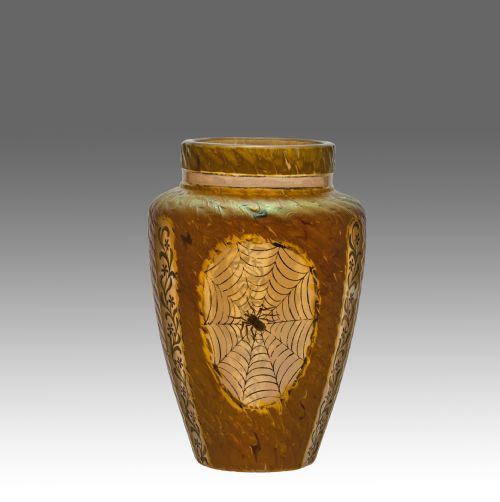
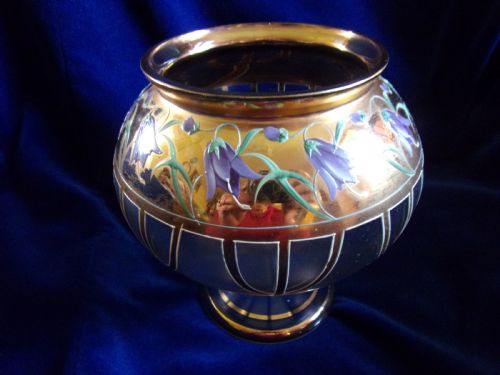
These enamelled glass urn pieces bring rich colour and detailed surface work to a room, ranging from vibrant cranberry glass to iridescent finishes.
Enamelled Glass Urn
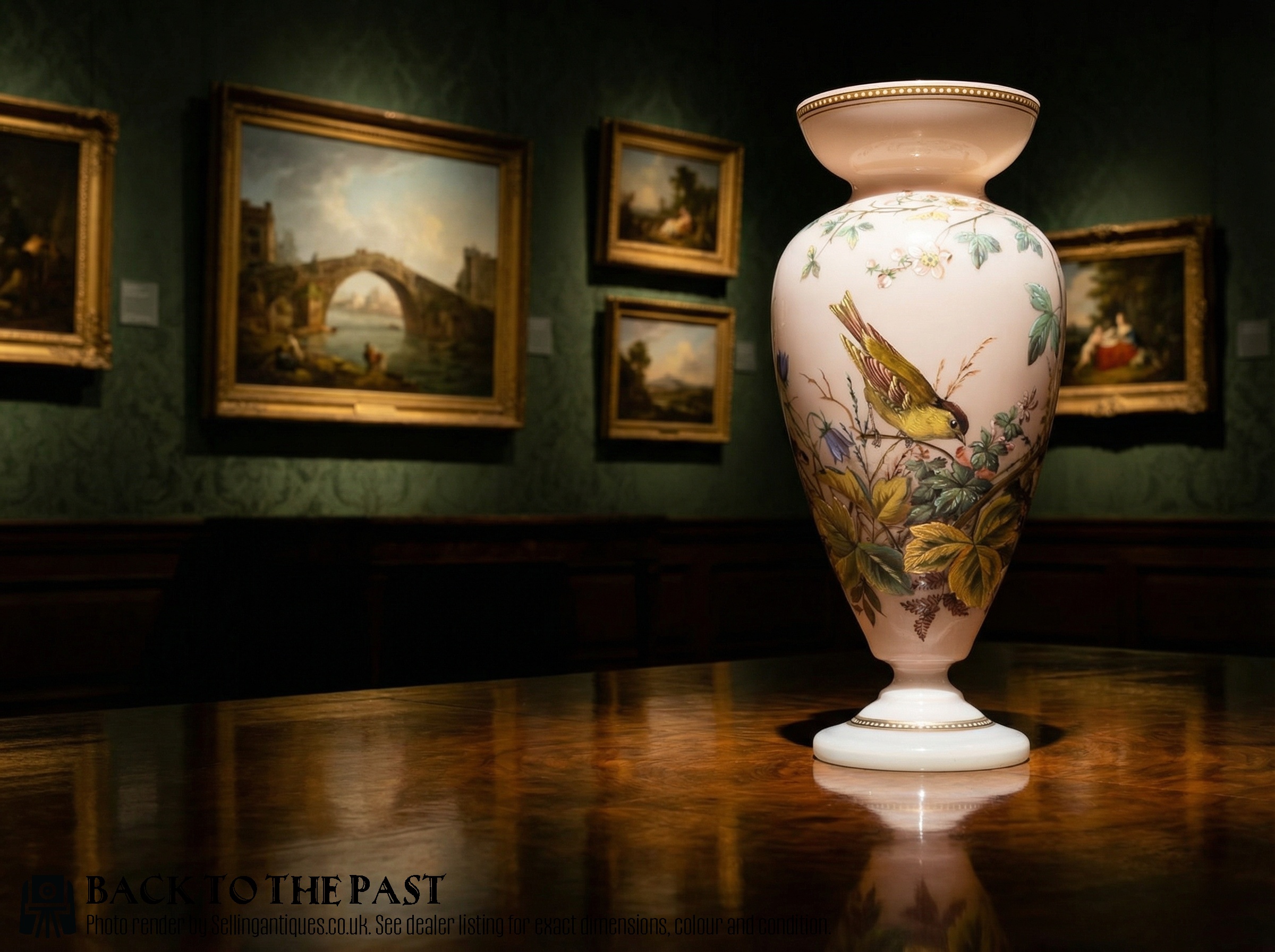
When you search for an enamelled glass urn, you are looking at decorative vessels that combine blown glass bodies with painted or raised enamel decoration. These pieces arrive in various forms across this page, including table lamps, garniture sets, and individual vases.
The selection spans from Victorian and Victorian Aesthetic Movement examples through Art Nouveau and Art Deco periods. You encounter works originating from English, Scottish, and Bohemian makers, alongside specific outputs from continental glasshouses.
How they were made
Makers shaped glass while hot, utilising cranberry, green, amber, black, and opaque white grounds. They frequently applied gold leaf gilding and polychromatic enamel paint to the cooled surfaces.
Certain vessels received crystal overlay treatments where layers of contrasting glass were cut away to reveal the colour beneath. Others incorporated iridescent finishes achieved through metallic salt vapours applied during cooling.
What varies in quality
Quality rests in the crispness of the enamel painting and the precision of the gilding applied to the glass body. Finer examples display meticulous hand-painted detail such as fish, water plants, or portrait overlays rather than generic decoration.
The weight and clarity of the base glass, alongside the depth of the iridescent or overlay treatment, distinguish standard production from exceptional pieces.
Kralik Glass·Mary Gregory·Moser·Daum·Monart·Harrach
The Enamelled Glass Urn Glossary
- Cranberry glass
- A rich red transparent glass coloured with gold chloride during production. It is frequently seen in Victorian examples on this page.
- Iridescent glass
- Glass treated with metallic oxides to create a shimmering, rainbow-like surface sheen. This finish is characteristic of early twentieth-century pieces.
- Garniture set
- A matching group of three ornamental vases designed to sit together on a mantelpiece or sideboard. They share coordinated enamel and glass styles.
- Overlay
- A technique involving layers of different coloured glass fused together, where parts of the outer layer are cut away to expose the base colour.
Enamelled Glass Urn: Frequently Asked Questions
How do I clean an enamelled glass vase?
Dust the surface gently with a soft dry cloth to protect the raised enamel and gilding from abrasion.
Avoid submerging pieces in water, particularly those with gold leaf or delicate painted details that might loosen.
Are these pieces purely decorative?
Most items function primarily as decorative display objects, garniture sets, or table lamps.
Their delicate enamelwork and specialised glass forms mean they are unsuited for heavy daily utility.
How can I tell a Victorian piece from an Art Deco one?
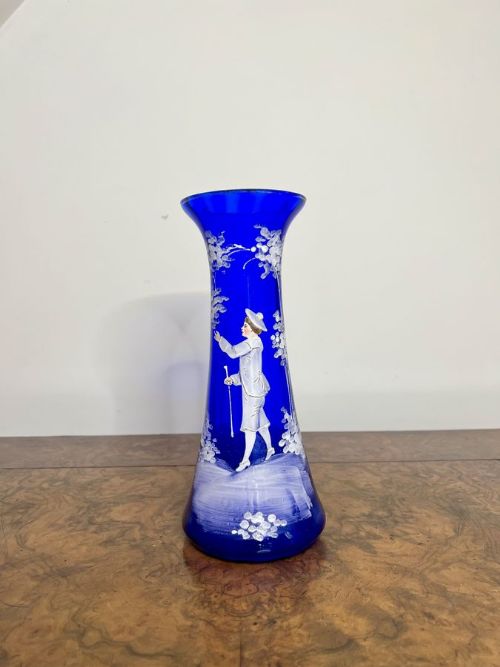
Victorian examples often feature Mary Gregory style figures, opaque white painting, and rich cranberry or green glass bodies.
Art Deco items typically display geometric patterns, etched lines, and the characteristic forms of the nineteen-thirties.
What is Mary Gregory glass?
It is glass decorated with white enamel silhouettes, usually depicting children in natural Victorian settings.
Pieces bearing this attribution span from the mid-nineteenth century into the early twentieth century.