




Victorian Page Turner
A victorian page turner is a desk accessory designed to separate uncut book leaves, and collectors value them for their tactile materials and period craftsmanship.
Victorian Page Turner
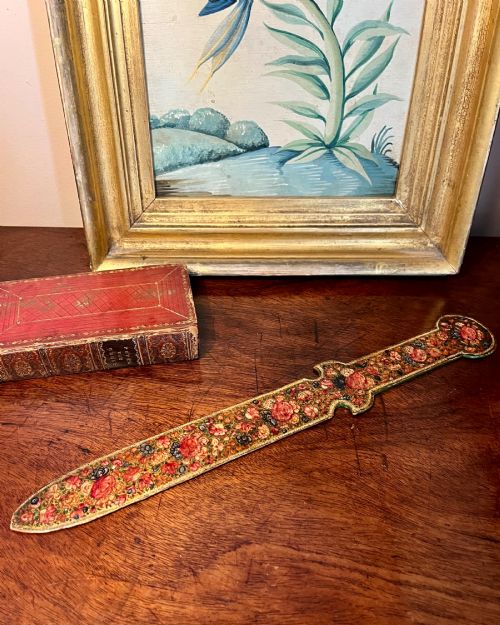
When you search for a victorian page turner, you encounter desk accessories and letter openers that span the nineteenth century and into the Edwardian era. The pieces listed combine practical reading tools with ornamental design, originating from periods such as the Victorian and William IV eras.
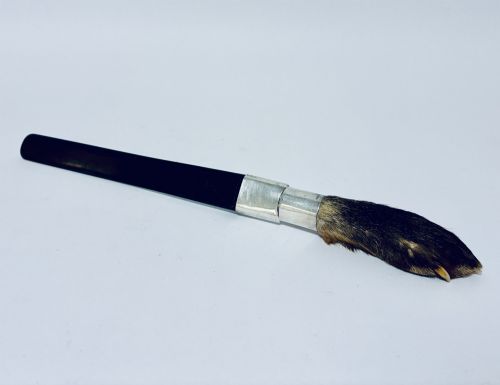
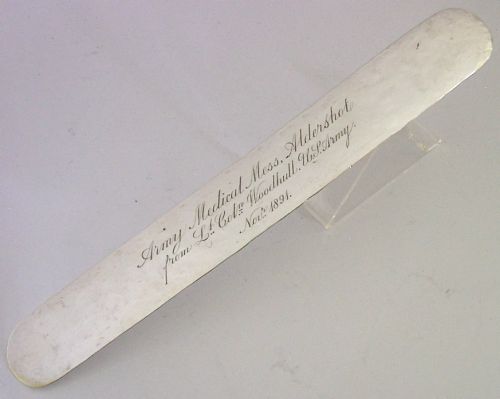
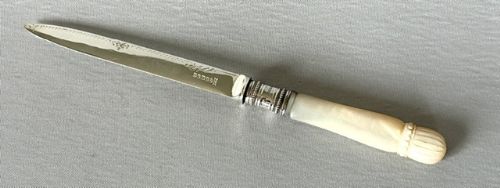
You meet various forms on this page, including combined page turners and letter openers, bookmarks, and specialised music leaf turners. Materials range from sterling silver and tortoiseshell to bone, mother-of-pearl, and wood.
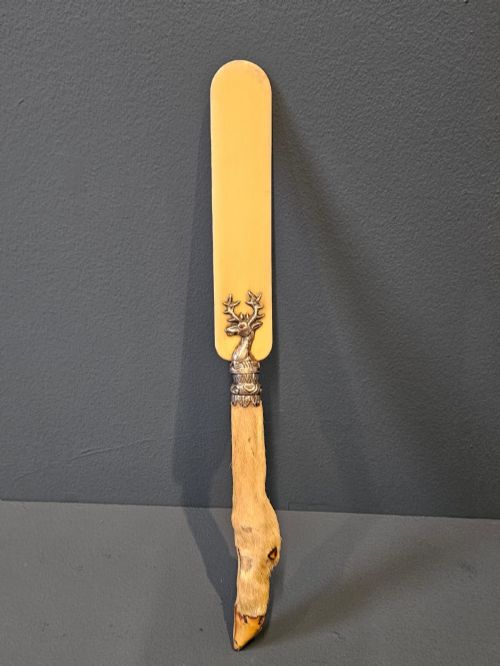
The selection reflects both standard desk implements and commemorative items, such as jubilee pieces or sporting motifs like greyhound and horse riding designs. These objects served the libraries and writing desks of past households.
Materials and construction
Maker techniques unite precious metals with organic materials. Sterling silver mounts and handles attach to blades formed from tortoiseshell, mother-of-pearl, bone, and yew wood.
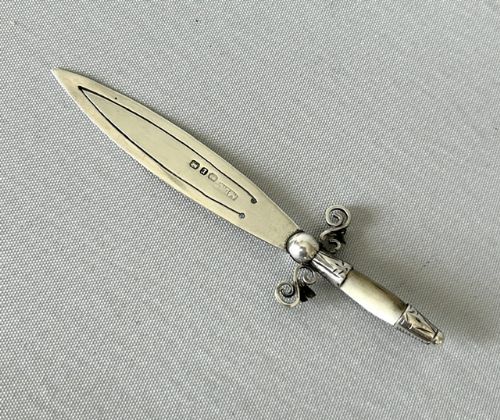
Silversmiths shaped metal handles, often incorporating hallmarks from assay offices like Birmingham and Chester. Blades were shaped, polished, and joined securely to the handles using pins or adhesives appropriate to the period.
Materials in these listings include tortoiseshell, mother-of-pearl, bone, and pewter alongside sterling silver.
Factors of quality
Quality rests in the harmony of materials and the crispness of detail in the metalwork. Pieces combining sterling silver with substantial tortoiseshell or polished mother-of-pearl display higher craftsmanship than simpler wooden or pewter variants.
The presence of figural handles, such as animals or carved faces, alongside clear hallmarks elevates a piece. The thickness and integrity of the blade material also define the upper tier of the range.
Levi and Salaman·Padbury
The Victorian Page Turner Glossary
- Sterling silver
- A silver alloy containing 92.5 percent pure silver by mass and 7.5 percent other metals, usually copper. This standard appears frequently in the handles and mounts of desk accessories.
- Tortoiseshell
- A material derived from the shell of larger sea turtles, utilised for its mottled amber and brown appearance. It forms the thin, flat blades of many desk tools.
- Mother-of-pearl
- An iridescent inner layer of pearl oyster shells, employed for its smooth texture and pearlescent sheen on handles and blades.
- Hallmark
- An official mark stamped on items made of precious metals, indicating the standard of purity, the assay office, and the date letter.
- Music leaf turner
- A mechanical or hinged device designed to turn the pages of a sheet music score without using hands.
Victorian Page Turner: Frequently Asked Questions
What is a victorian page turner used for?
These implements were utilised to cut the folded pages of newly published books and periodicals during the nineteenth century. They also served to turn pages without damaging paper.
Over time, they transitioned from utilitarian library tools into decorative desk ornaments and tactile collectibles.
How are silver mounts identified?
Silver mounts typically bear hallmarks that indicate the metal standard, the town of assay, and the year of manufacture. These stamps help verify the period of origin.
Checking the handle and collar areas usually reveals these small stamped impressions.
What materials make up the blade?
Blades are constructed from organic materials such as tortoiseshell, mother-of-pearl, bone, ivory, and wood. Each material offers a distinct weight and texture.
Silver is also used for the entire object in solid metal examples.
How do I care for antique tortoiseshell?
Tortoiseshell requires gentle handling and protection from direct sunlight and extreme temperature fluctuations to prevent warping or drying out. Wiping with a soft, dry cloth maintains the surface.
Harsh chemical cleaners should be avoided entirely.
Are letter openers and page turners different?
Letter openers feature shorter, sharper blades designed for slicing open envelopes. Page turners have longer, broader, and blunter blades suited for sliding between uncut book pages.
Many Victorian examples combine both functions in a single tool.