




Victorian Silver Paper Knife
A victorian silver paper knife is a functional desk accessory designed for slicing envelopes and turning pages, combining practical utility with period craftsmanship.
Victorian Silver Paper Knife
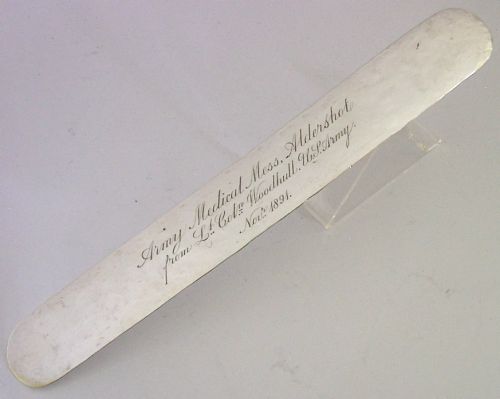
A victorian silver paper knife is encountered on this page under descriptions such as letter openers, page turners, and desk accessories. The selection spans the Victorian period alongside Georgian, William IV, Edwardian, and early twentieth-century examples.
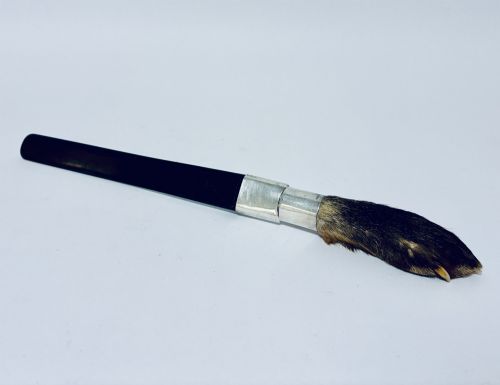
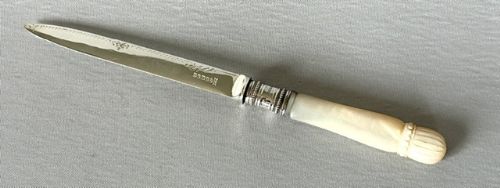
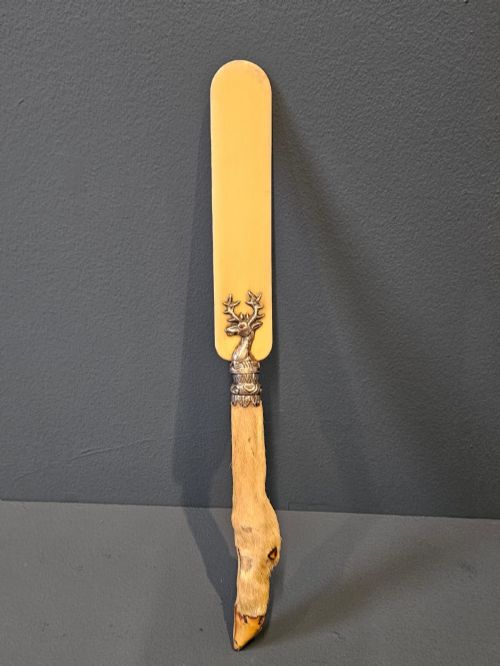
Forms range from simple silver blades to elaborate novelties incorporating animal motifs, swords, and commemorative designs. Materials extend beyond plain metal to include tortoiseshell, mother-of-pearl, bone, agate, deer hoof, and ebonised wood.
Origins include provincial English assay towns such as Chester and Birmingham, alongside unmarked pieces and commemorative issues. Collectors find both standard desk implements and whimsical novelty shapes designed to sit on a writing table.
Materials and construction
Silversmiths combined sterling silver or silver plating with organic materials like tortoiseshell, mother-of-pearl, bone, agate, and deer hoof to form the handles and blades. Metal components were shaped, chased, or engraved, whilst natural shells and stones were polished and fitted into mounts.
Some examples utilise ebonised wood or incorporate novelty elements such as carved animal heads, greyhounds, ducks, and lizards attached to metal hilts.
Periods represented on the page include Georgian, William IV, Victorian, Edwardian, and the early twentieth century.
Assessing quality in desk implements
Quality rests upon the execution of the handle material and the precision of the metalwork, whether plain sterling silver or an ornate novelty form. The integration of fragile organic elements like tortoiseshell or mother-of-pearl with the silver mount demonstrates the maker's skill.
Figural novelties and commemorative pieces show greater detail in modelling, whilst standard letter openers rely on balance, clear hallmarks, and clean lines.
Sampson Mordan and Co
The Victorian Silver Paper Knife Glossary
- Sterling silver
- A silver alloy containing 92.5 percent pure silver by weight, widely used for British desk wares.
- Hallmark
- An official stamp applied to precious metals indicating the standard of purity, the assay office, and the date of manufacture.
- Tortoiseshell
- The mottled shell of certain turtle species utilised for handles and panels on desk accessories.
- Mother-of-pearl
- The iridescent internal layer of pearl oyster shells, carved into flat sections for handles and blades.
- Page turner
- A long, flat implement designed to separate uncut pages in books and documents.
Victorian Silver Paper Knife: Frequently Asked Questions
What is the difference between a paper knife and a letter opener?
A paper knife often refers to a longer blade traditionally used for slicing open the folded pages of uncut books. A letter opener is typically shorter and designed specifically for opening envelopes.
Both terms are frequently used interchangeably in historical listings for these desk accessories.
How can I date a silver desk implement?
Dating relies heavily on official hallmarks stamped into the silver, which indicate the specific assay office and year letter. Stylistic clues such as Victorian motifs or Edwardian forms also help narrow the period.
Unmarked pieces are judged by the materials used and the manufacturing techniques visible on the handle and blade.
Were these items used for writing letters?
They were essential implements on nineteenth-century writing desks, used alongside inkstands and blotters to handle incoming correspondence and publications. Their presence reflected the formal nature of personal and business communication.
Today, they function as decorative desk ornaments or practical tools for modern mail.
What organic materials were paired with silver?
Silversmiths frequently combined silver with tortoiseshell, mother-of-pearl, bone, agate, and deer hoof. These materials provided contrasting textures and colours against the polished metal.
Natural elements were shaped to form the main body of the blade whilst silver provided structural mounts and collars.