


Victorian Oval Toilet Mirror
These Victorian oval toilet mirror pieces sit upon your dresser to catch the morning light, offering both practical utility and period charm.
Victorian Oval Toilet Mirror
A victorian oval toilet mirror is a tabletop glass designed for grooming, commonly encountered in mahogany and walnut across this selection.
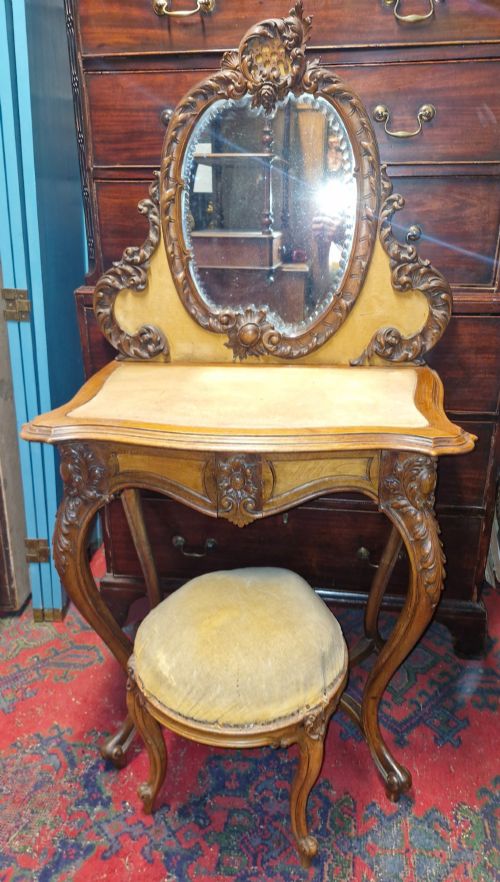
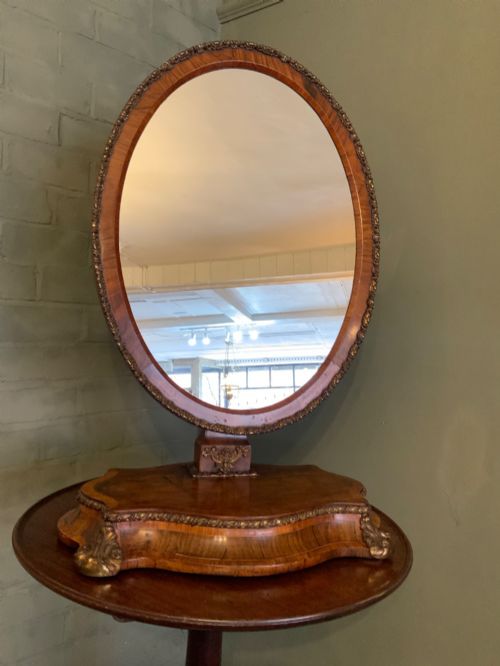
The evidence shows these pieces span the nineteenth century, featuring swinging frames supported by upright arms above small bases or drawers.
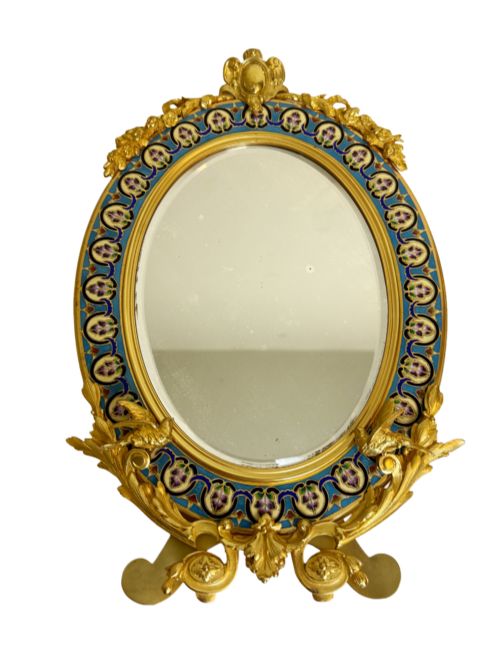
Most examples rely on classical Victorian proportions, while occasional French Napoleon III or Rococo Revival influences bring elaborate cast bronze, champleve, and ormolu decoration.
Materials and construction
Cabinetmakers built these frames primarily in solid timbers like mahogany and walnut, frequently selecting figured flame veneer for the principal surfaces.
Metal elements such as brass, gilt bronze, and ormolu provide structural pivots, decorative mounts, and candle sconces where applicable.
Glass plates rest within adjustable wooden or cast metal surrounds, allowing the user to tilt the reflection at will.
The materials recorded across these listings include glass, mahogany, brass, walnut, gilt bronze, enamel, fabric, and ormolu.
Distinguishing better examples
Quality rests upon the selection of timber, where rich flame mahogany grain and deeply carved walnut scrolls elevate a piece above plain utility.
The integration of functional drawers in the base, supported by turned feet and balanced side brackets, demonstrates superior cabinetwork.
Finishes range from simple turned frames to complex ensembles incorporating champleve enamel and heavy gilt bronze castings.
The Victorian Oval Toilet Mirror Glossary
- Swing mirror
- A glass plate mounted on pivots between two upright arms, allowing the user to adjust the angle of reflection.
- Flame mahogany
- A distinct wood grain pattern resembling flickering flames, highly prized by nineteenth-century cabinetmakers for decorative surfaces.
- Ormolu
- Gilded bronze ornamentation applied to furniture and mirror frames, popular in revivalist nineteenth-century design.
- Champleve
- An enamelling technique where troughs are dug into metal and filled with coloured vitreous paste before firing.
Victorian Oval Toilet Mirror: Frequently Asked Questions
How do I date a toilet mirror?
Examine the timber, construction joints, and framing style to align the piece with nineteenth-century periods.
Heavier mahogany frames often point to mid-Victorian decades, whilst ornate gilt bronze and champleve lean towards the late nineteenth century.
What is a swing mirror used for?
These tabletop glasses were placed upon dressing tables to assist with personal grooming, hair styling, and adjusting attire.
The pivoting mechanism allowed the user to direct the reflection precisely as needed.
Where should I place a toilet mirror?
They sit securely on top of chests of drawers, dressing tables, or sideboards within a bedroom or dressing room.
Ensure the surface is level and deep enough to support the footprint and weight of the frame.
Are these mirrors fixed in place?
The glass plates tilt back and forth on brass or metal pivot screws set into the upright support arms.
This mobility remains a defining characteristic of the tabletop dressing mirror form.