
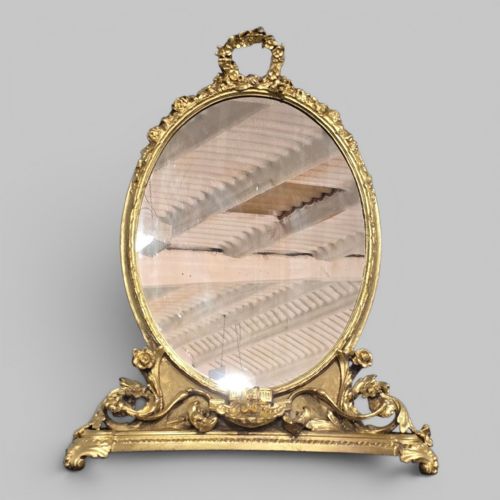


Table Standing Oval Mirror
These table standing oval mirror pieces offer charming and practical dressing table adornment for any room.
Table Standing Oval Mirror
A table standing oval mirror serves as a functional and decorative item for a dressing table or vanity, often referred to as a toilet mirror or dressing mirror. These items sit upon furniture surfaces to provide a moveable glass reflection for grooming and dressing.
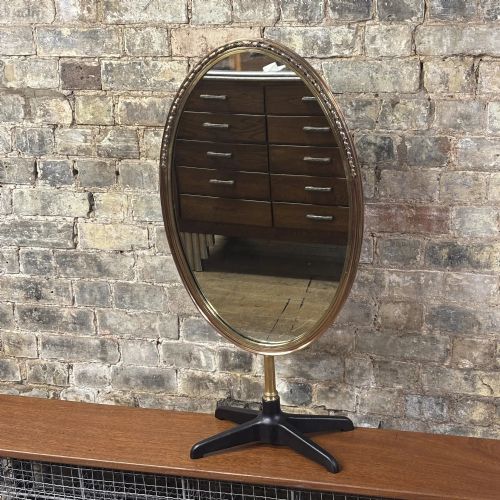
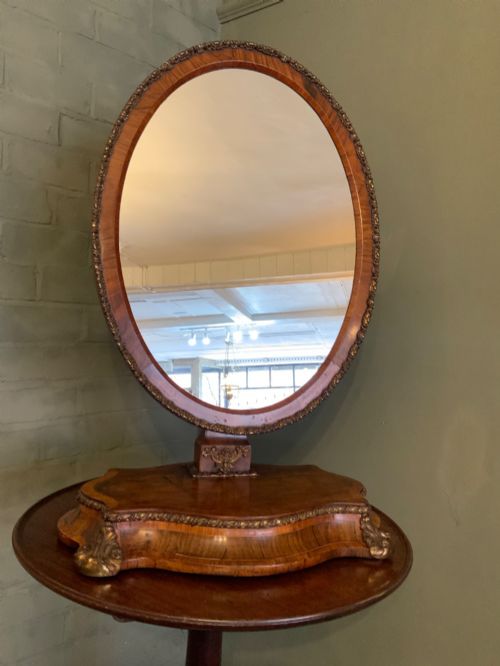
The versions most likely to be met on this page range from Victorian mahogany examples to brass and gilt bronze creations from the late nineteenth century and early twentieth century. Pieces span various historic periods including the eighteenth century, nineteenth century, and early twentieth century.
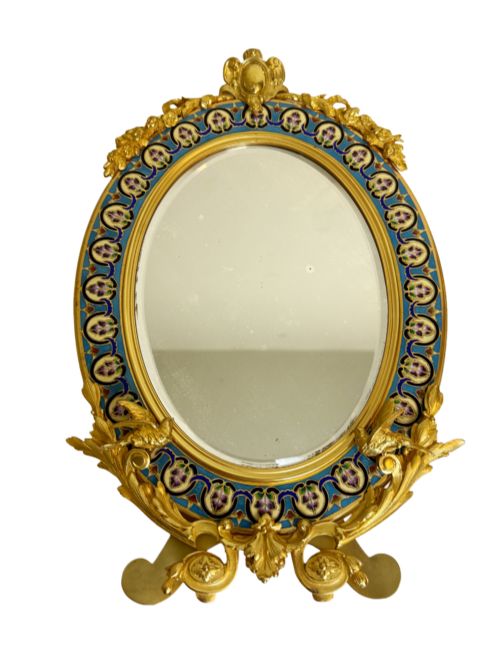
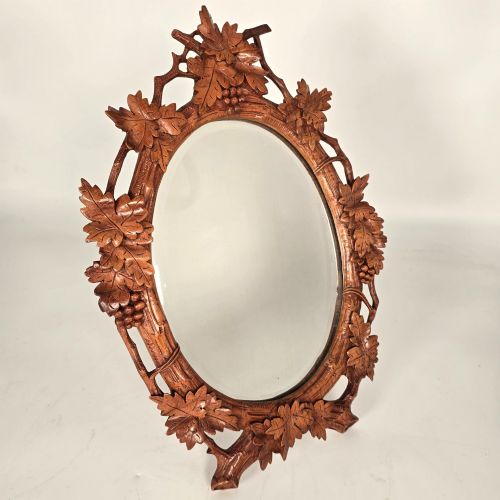
Makers and artisans produced these mirrors in diverse styles such as Rococo revival, French Napoleon III, and Black Forest lime wood carving. Forms include simple swivelling table mirrors and more elaborate frames featuring champleve enamel, ormolu, and carved walnut or lime wood.
How they were made
Craftsmen shaped these mirrors using traditional woodworking techniques, often employing solid mahogany, walnut, and lime wood to construct sturdy frames and supporting stands. Carvers applied detailed ornamentation by hand, visible in pieces featuring intricate foliate motifs and baroque flourishes.
Metalworking techniques played a significant role in many examples, utilising cast bronze, brass, chrome, and gilt bronze alongside champleve enamel inlay. Gilded finishes, gesso, and ormolu mounts added decorative splendour to metal and wood frames alike.
Some wooden frames feature intricate Black Forest carvings of woodland flora that appear to peer right back at you.
What varies in quality
The standard of carving and metal casting sets individual examples apart, where crisp detailing in lime wood or cast bronze indicates superior workmanship. Finer pieces display careful proportioning in the oval frame and robust construction in the supporting pivots and stands.
The choice of primary materials influences the overall character of each mirror, from richly grained mahogany and walnut to finely chased ormolu and gilt bronze. Superior execution in decorative elements like champleve enamel or carved baroque frames distinguishes the most accomplished items.
The Table Standing Oval Mirror Glossary
- Toilet mirror
- A smaller mirror designed to sit on top of a dressing table or chest of drawers. These items were essential for morning routines before fitted bedroom wardrobes became common.
- Ormolu
- Gilded bronze mounts applied to furniture and decorative objects. This French technique imparts a bright golden finish to cast metal details.
- Champleve
- An enamelling technique where troughs are dug into a metal surface and filled with vitreous enamel. The piece is then fired and polished smooth.
- Gesso
- A plaster-like mixture applied to wood surfaces as a base for gilding or painting. It allows craftsmen to model crisp decorative reliefs.
Table Standing Oval Mirror: Frequently Asked Questions
Where should a table standing oval mirror be placed?
These mirrors sit easily upon dressing tables, chests of drawers, or vanity units to assist with daily grooming.
Their compact scale allows them to move between different rooms and surfaces as needed.
How do I identify the period of a mirror?
Examining the wood types, casting techniques, and decorative styles helps determine the age of each piece.
Victorian and Georgian examples often feature mahogany, while later twentieth-century items utilise chrome or brass.
Are these mirrors adjustable?
Many traditional designs incorporate pivoting side screws that allow the oval glass to tilt.
This mechanism lets the user adjust the angle of reflection easily while seated.
What materials were commonly used?
Makers utilised a variety of woods including mahogany, walnut, and lime wood for the frames and stands.
Metal components frequently include brass, cast bronze, gilt bronze, and chrome.