

Victorian Oval Breakfast Table
When you search for a victorian oval breakfast table, you step into a world of finely figured wood and generous hospitality.
Victorian Oval Breakfast Table
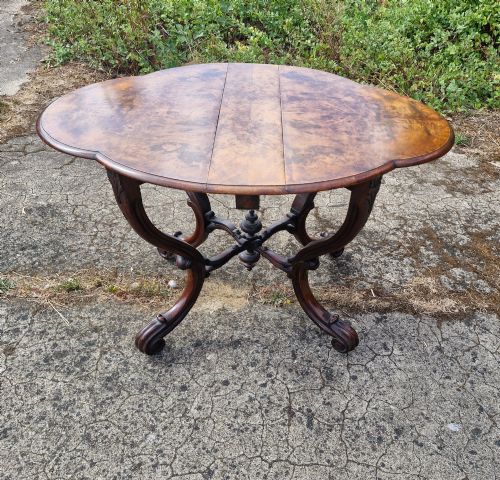
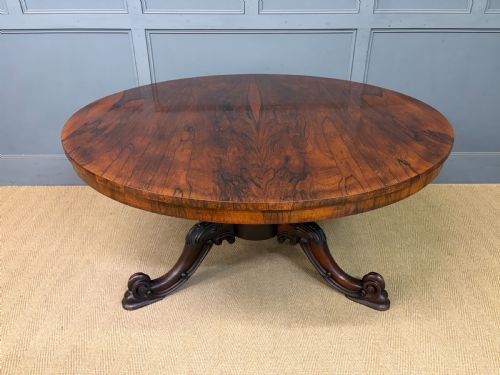
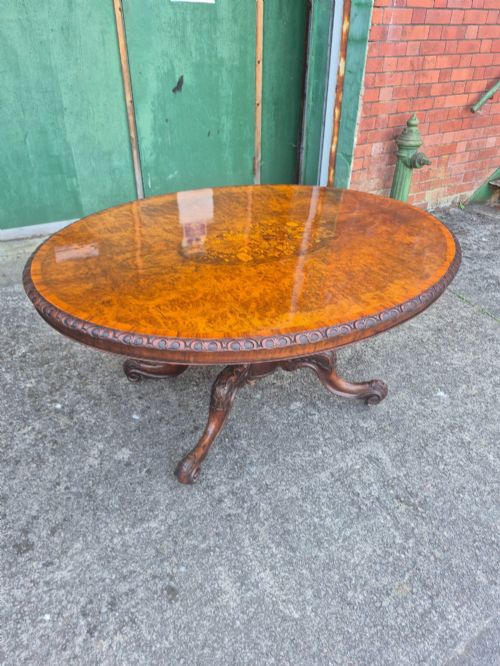
A victorian oval breakfast table is a substantial piece of nineteenth-century seating furniture, designed primarily for morning dining and central placement in larger rooms. The pieces appearing in this selection date consistently from the middle decades of the nineteenth century, spanning the eighteen-fifties through to the eighteen-eighties.
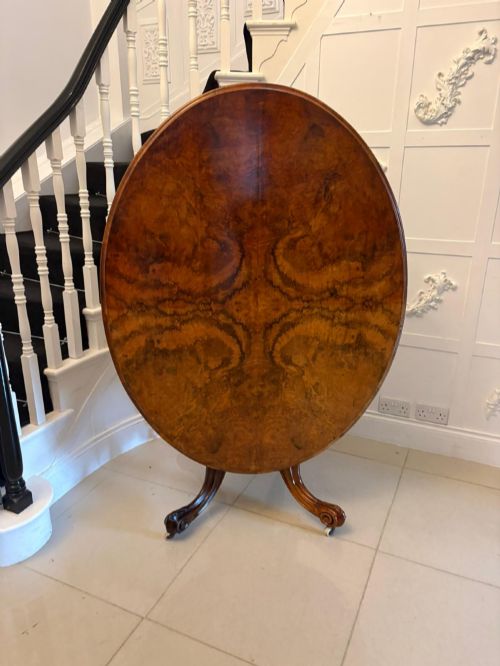
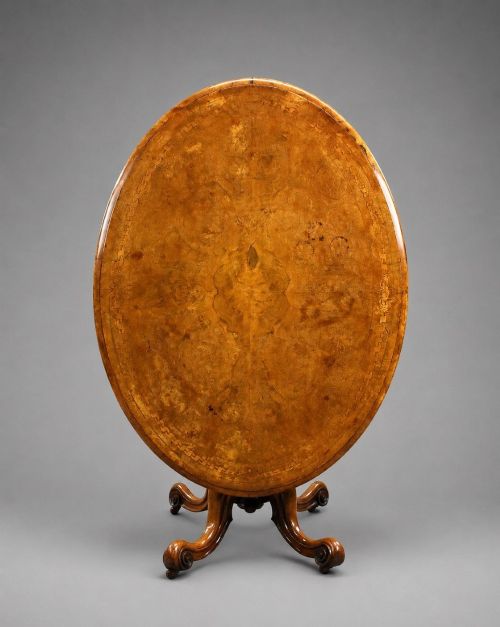
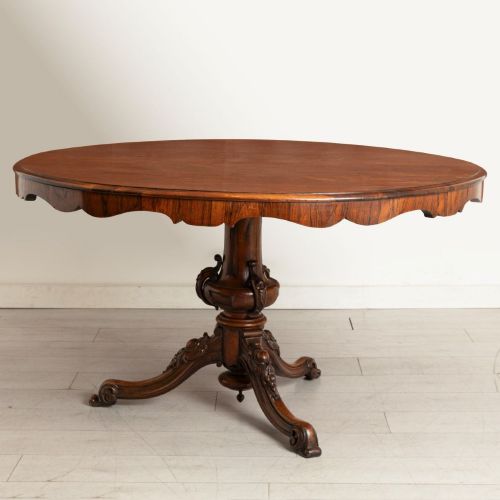
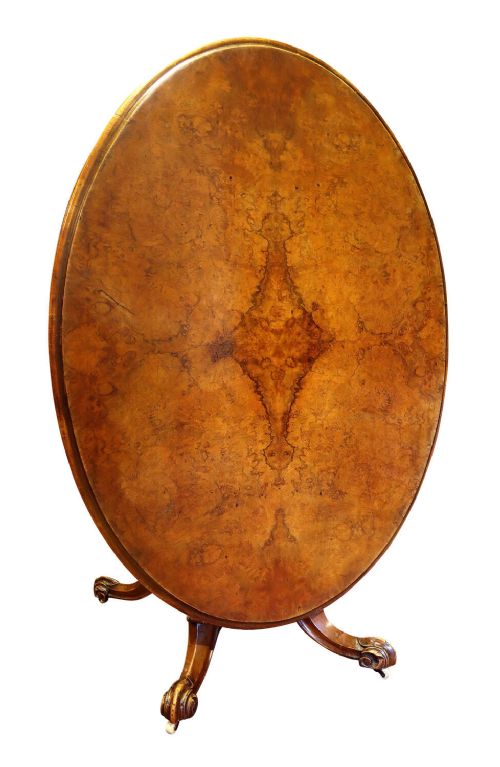
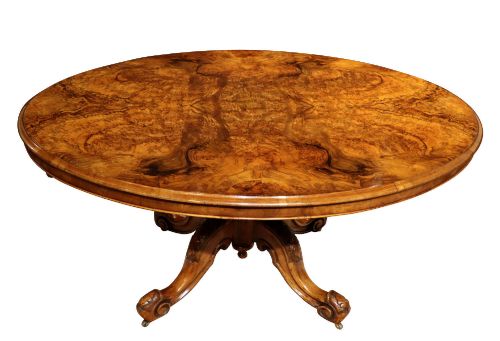
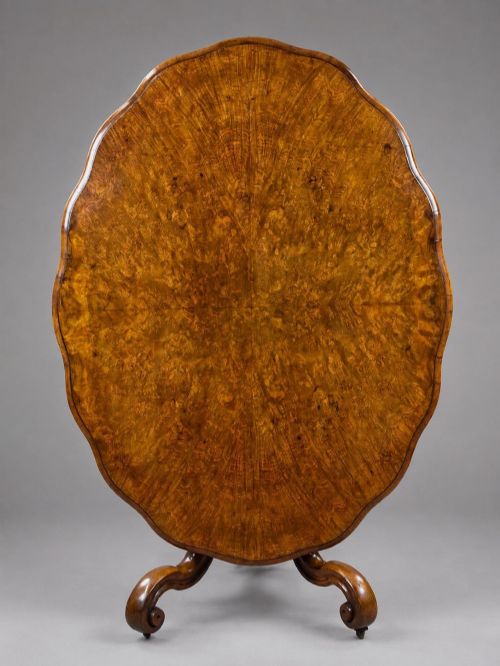
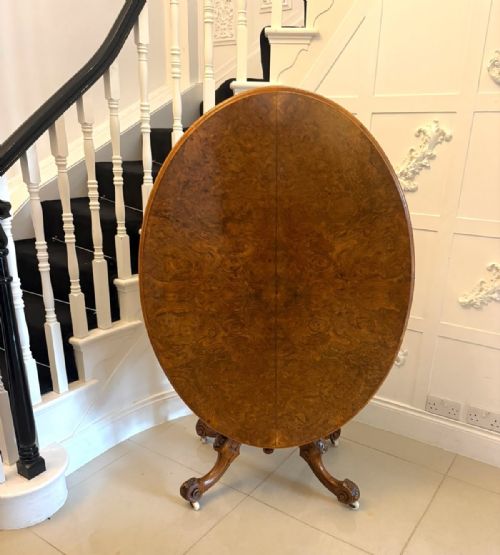
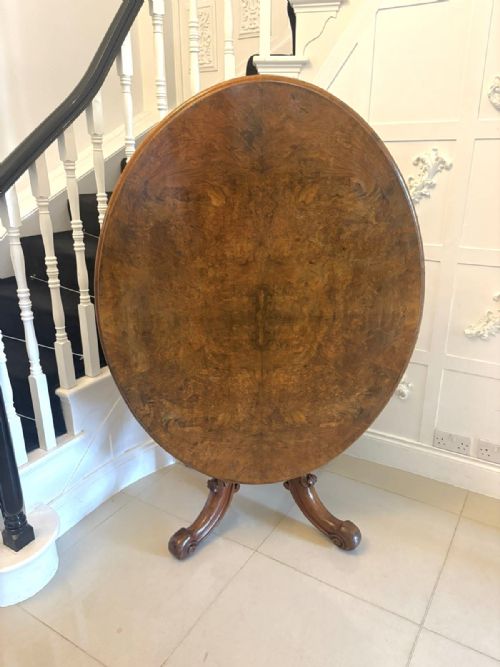
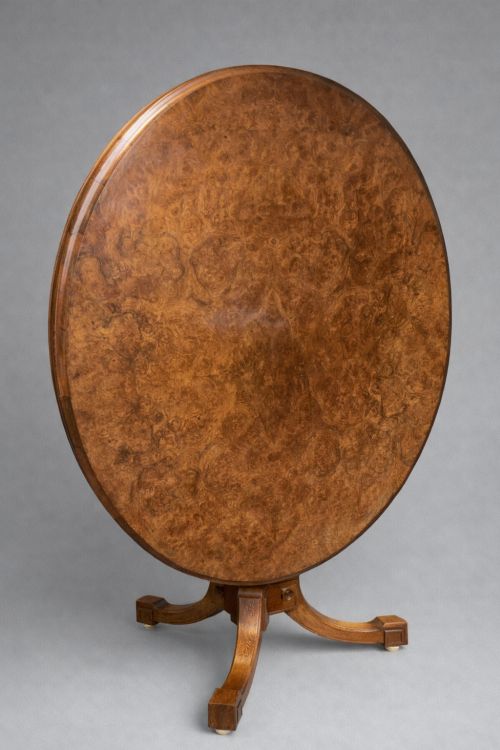
The most common form met here is constructed from burr walnut, featuring a tilting top mechanism supported on a carved pedestal base. Many examples function equally as loo tables or centre tables, reflecting the versatile domestic habits of the period.
Makers and cabinet-makers of the era utilised rich timbers to create four to six seater formats suited to both formal dining and drawing-room display. The oval silhouette softens the geometry of Victorian interiors while providing ample elbow room for seated guests.
How they were made
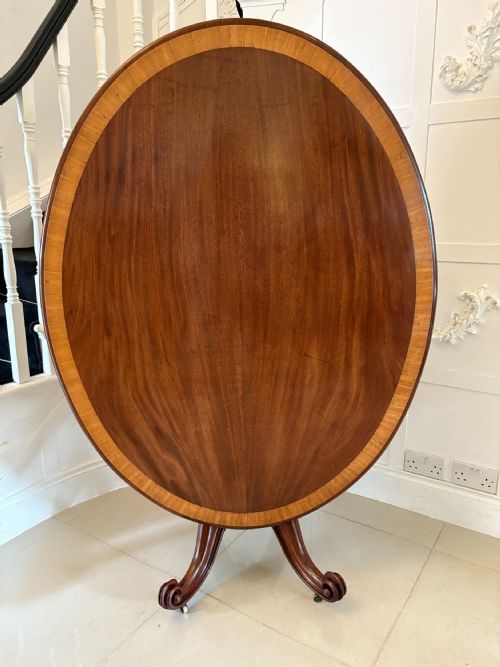
Cabinet-makers relied heavily on burr walnut veneers applied over solid secondary woods, creating dramatic swirling grain patterns across the expansive oval top surfaces. Boxwood and marquetry inlay frequently accentuate the borders, demonstrating high levels of marquetry skill during the mid-Victorian decades.
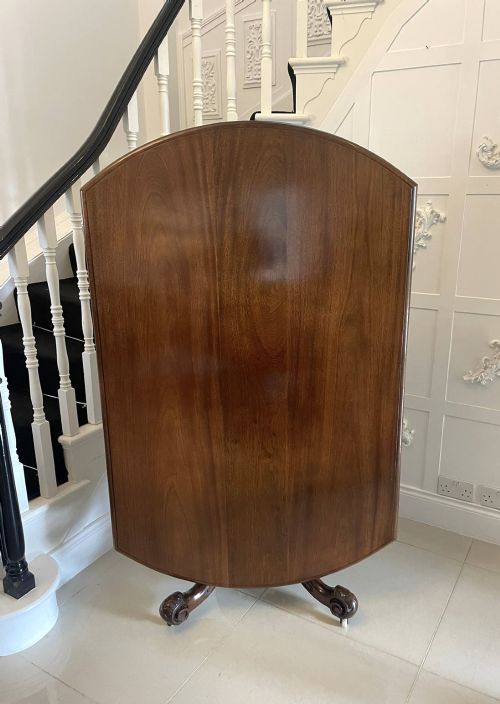
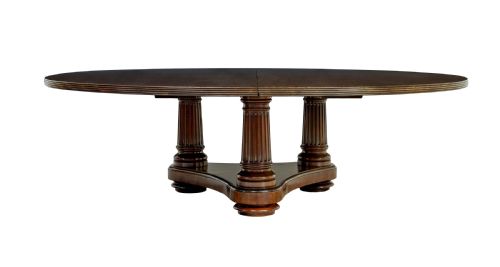
Structural integrity depended on heavy central pedestals, often carved in quadrapod or pillar configurations from solid mahogany, rosewood or walnut. The ingenious tilt-top mechanism allowed the heavy tabletops to pivot upright on brass hinges for storage against room walls when not in use.
Listings feature pieces spanning the mid-nineteenth century, predominantly utilising burr walnut, mahogany, and rosewood.
What varies in quality
The selection ranges from utilitarian dining surfaces to exhibition pieces displaying meticulous marquetry and sculptural carving on the pillar and base. Figuration of the walnut veneer dictates visual impact, with tighter burr patterns commanding greater presence in a room.
Engineering precision in the snap-top mechanism and the stability of the quadrapod base separate standard workshop output from exceptional cabinet-making. Original surface patina and crispness in hand-carved foliage motifs further define the upper tier of surviving examples.
Edwards & Roberts·Jackson & Graham
The Victorian Oval Breakfast Table Glossary
- Burr walnut
- A highly prized timber harvested from walnut tree growths, yielding intricate, swirling grain patterns. It forms the primary decorative surface on finer Victorian tables.
- Tilt top
- A pivoting table mechanism allowing the surface to rotate vertically via a catch release. This clever design saved valuable floor space in Victorian townhouses.
- Quadrapod base
- A heavy four-legged pedestal support system providing stability for large oval tabletops. These bases frequently feature elaborate hand-carved scrolls.
- Loo table
- A nineteenth-century multi-purpose table originally designed for the popular card game loo. These pieces share identical proportions and tilt mechanisms with breakfast tables.
- Marquetry
- Decorative veneer work forming pictorial or geometric patterns using various coloured woods. Craftsmen embedded these intricate designs directly into the table surface.
Victorian Oval Breakfast Table: Frequently Asked Questions
What is a tilt top table used for?
The tilt top mechanism allowed nineteenth-century households to pivot the heavy wooden surface into a vertical position against the wall. This practical feature cleared floor space when the table was not in active use.
In modern rooms, this historical function remains useful for cleaning or repositioning the furniture without heavy lifting.
How many people do these tables seat?
Most examples comfortably accommodate between four and six diners around the oval top. The curved perimeter removes sharp corners, making it easier to fit additional chairs when hosting guests.
Dimensions vary across the nineteenth-century range, so checking the exact length and width ensures proper clearance in your dining space.
Are breakfast tables and loo tables the same?
Breakfast tables and loo tables share very similar forms, materials, and tilt-top mechanics from the Victorian era. The primary distinction lies in their original domestic function for morning meals versus evening card games.
Today, collectors use both terms interchangeably for these large pedestal-supported oval centrepieces.
How do I care for a walnut surface?
Polishing with traditional beeswax maintains the natural moisture and rich lustre of nineteenth-century wood veneers. Avoiding direct sunlight and extreme temperature shifts protects the timber from splitting.
Using coasters and placemats safeguards the polished finish against moisture rings and heat marks during everyday meals.