



Victorian Ornate Brass Andirons
Victorian ornate brass andirons are heavy hearth furnishings built to hold logs above the hearth floor, offering both utility and decorative presence.
Victorian Ornate Brass Andirons
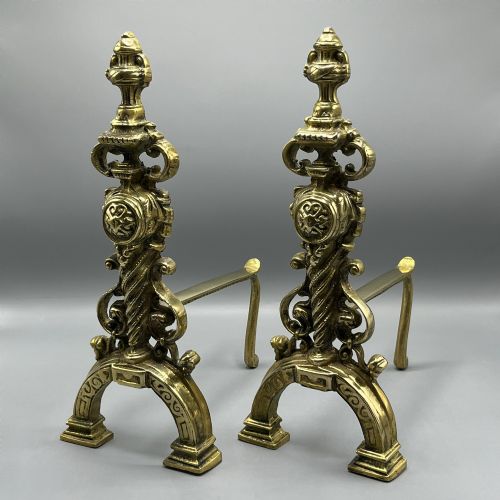
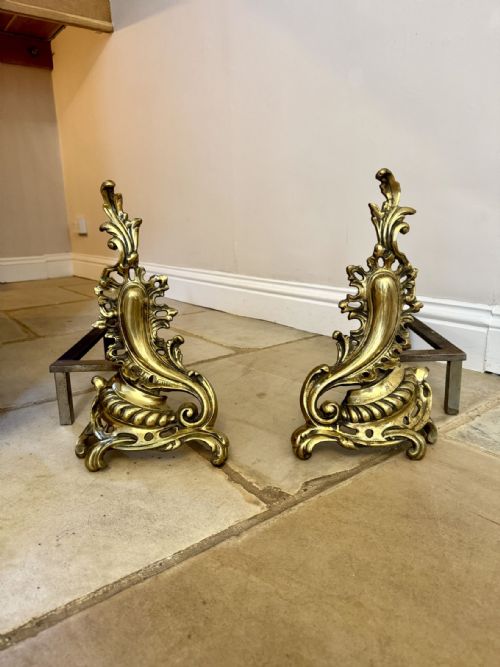
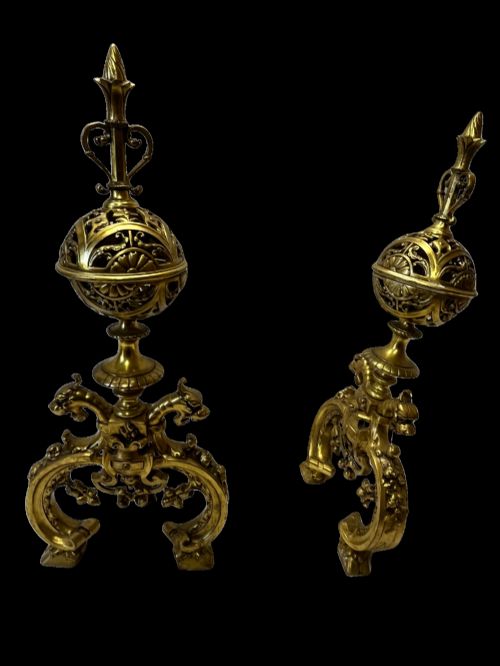
Victorian ornate brass andirons are substantial fireplace accessories designed to support firewood while adding significant decorative weight to a fireplace opening. When searching for victorian ornate brass andirons, a buyer encounters matching pairs intended for hearth use, often featuring elaborate cast decoration derived from historical revival styles.
The pieces appearing on this page span the nineteenth century into the early twentieth century, encompassing items described as fire dogs, firedogs, and andirons. French rococo, Victorian Gothic Revival, Victorian Neo-Classical, Baroque Revival, and Victorian Classical Revival styles dominate the visual language of these hearth furnishings.
Most examples consist of brass, solid brass, or cast brass components combined with iron or wrought iron structural elements. Buyers are most likely to meet large pairs designed for substantial fireplaces, reflecting the decorative ambitions of nineteenth-century domestic interiors.
Materials and Manufacture
Makers utilised brass and cast iron as primary materials, combining the bright appearance of brass with the structural strength of iron. Cast brass components allowed for intricate decorative motifs, while wrought iron provided the necessary rigidity for supporting heavy logs within a fireplace.
Foundries employed casting techniques to create the ornate facades characteristic of the period, producing finely detailed surfaces through skilled mould work. Individual elements were then assembled securely to withstand the high temperatures and physical demands of an active hearth.
Even when the fire goes out, ornate brass fire dogs ensure the hearth retains a formidable presence in the room.
Assessing Quality
Quality in these hearth furnishings rests upon the crispness of the casting and the thickness of the metal used throughout the structure. Finer examples display sharp, deep relief in their decorative ornament without the softening of detail often found in secondary reproductions.
Substantial weight and solid construction separate the superior pairs from lighter alternatives, indicating a higher proportion of solid brass and robust iron support. The integration between the decorative front standard and the iron dog leg reveals the care taken during assembly.
James Cartland & Sons
The Victorian Ornate Brass Andirons Glossary
- Andirons
- Supports for logs in an open fireplace, consisting of a horizontal bar on legs with an upright decorative standard at the front. Also known as fire dogs.
- Cast Brass
- Brass poured into a mould to achieve complex decorative shapes. This technique allows for elaborate surface ornamentation.
- Wrought Iron
- Iron beaten or bent into shape while hot, valued for its tensile strength. It forms the durable structural billets behind the decorative brass fronts.
- Gothic Revival
- An architectural and decorative style drawing inspiration from medieval design. It incorporates pointed arches and ecclesiastical motifs into domestic hearth furniture.
Victorian Ornate Brass Andirons: Frequently Asked Questions
What is the purpose of andirons?
Andirons hold logs up off the hearth floor to allow air to circulate underneath for a better fire.
They also prevent rolling logs from spilling out onto the floor of the room.
How do I clean brass andirons?
Gentle dusting and occasional cleaning with a mild soap solution preserves the metal without stripping its character.
Avoid harsh chemical abrasives that can damage the historical surface of antique brass.
Can these andirons be used in a working fireplace?
Most pairs are constructed from solid brass and iron, making them suitable for supporting wood in an active hearth.
Buyers should ensure the size matches the depth and scale of their specific fireplace opening.
How do I identify the style?
Stylistic clues include the presence of French rococo curves, Gothic revival arches, or classical revival motifs on the upright standards.
Comparing the decorative details against known nineteenth-century design periods helps determine the exact aesthetic.