


Vintage Brass Log Holders
These vintage brass log holders bring functional fireside warmth and polished metal character to a hearth.

Vintage Brass Log Holders
Vintage brass log holders encompass a variety of fireside vessels including log bins, coal buckets, jardiniere vessels, and coal scuttles designed to store fuel near an open fire. These items emerge primarily from Victorian, Edwardian, and nineteenth-century periods, alongside Regency and eighteenth-century examples.
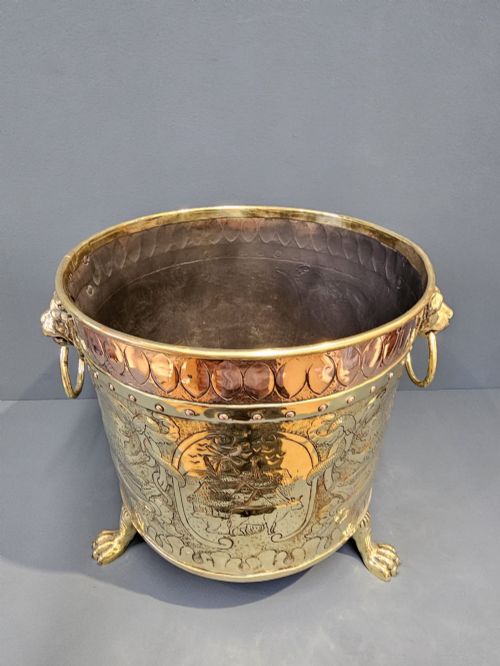
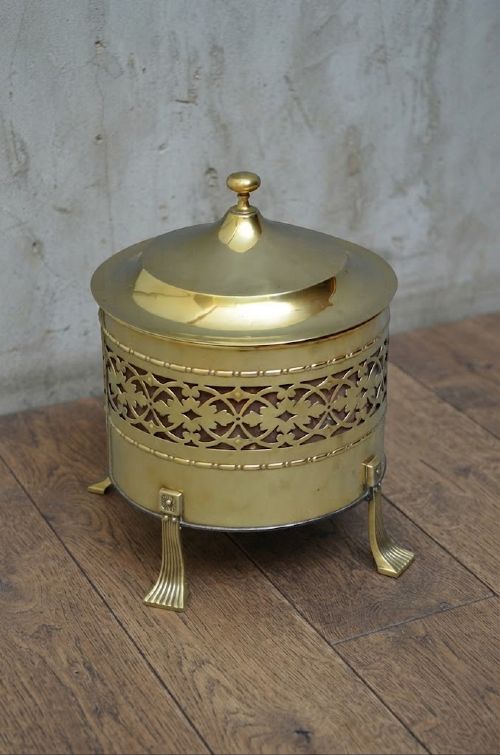
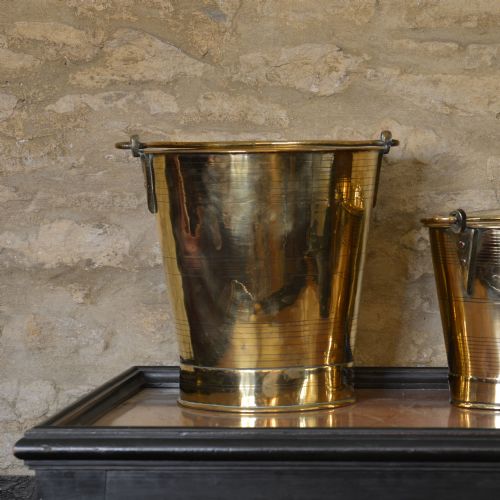
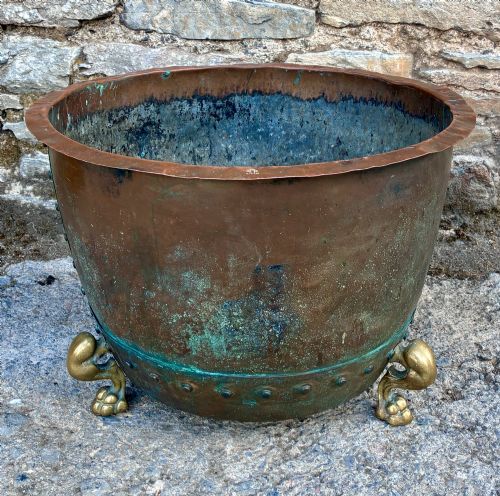
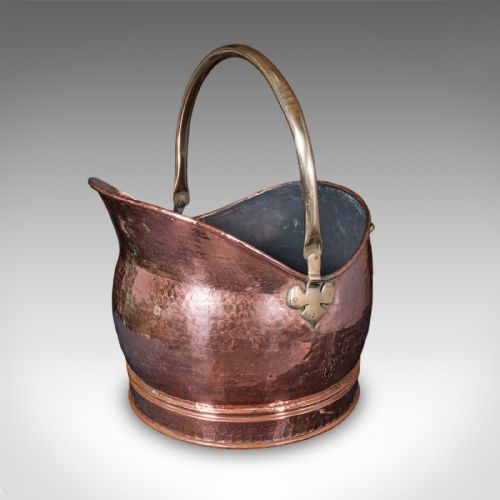
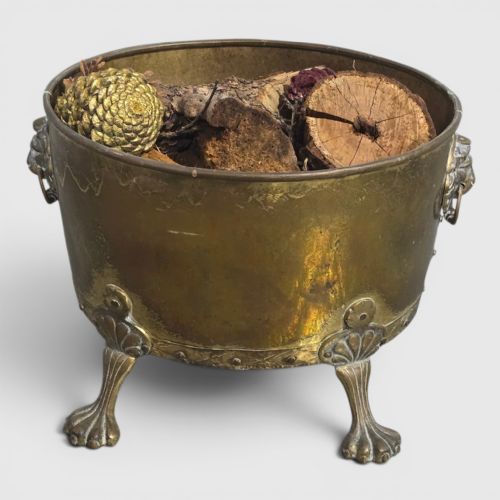
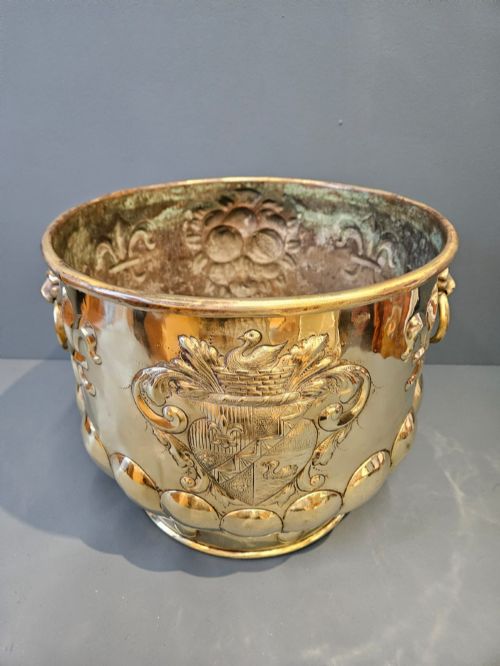
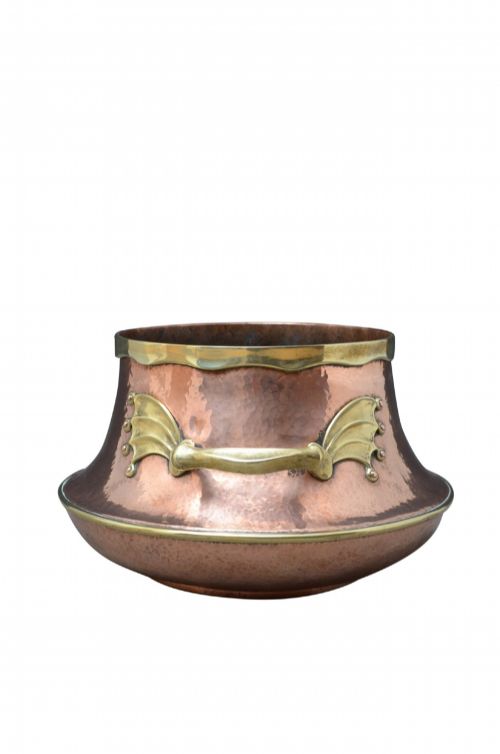
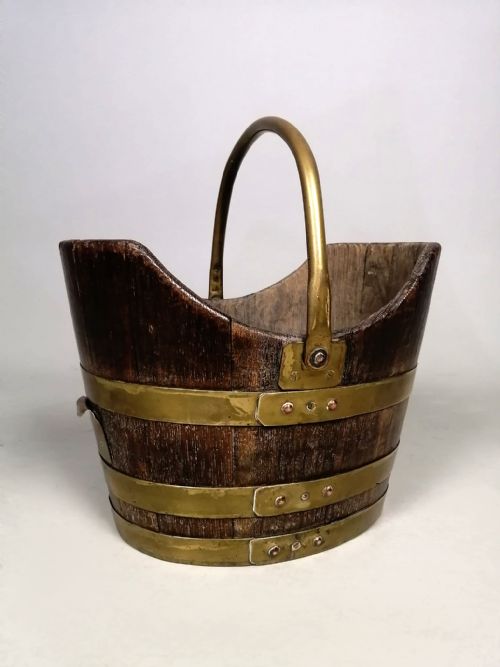
Buyers frequently encounter embossed brass log bins, helmet coal scuttles, and copper-banded vessels featuring mixed metal construction. The selection spans cylindrical bins, shaped copper and brass carriers, and campaign buckets suited for hearthside use.
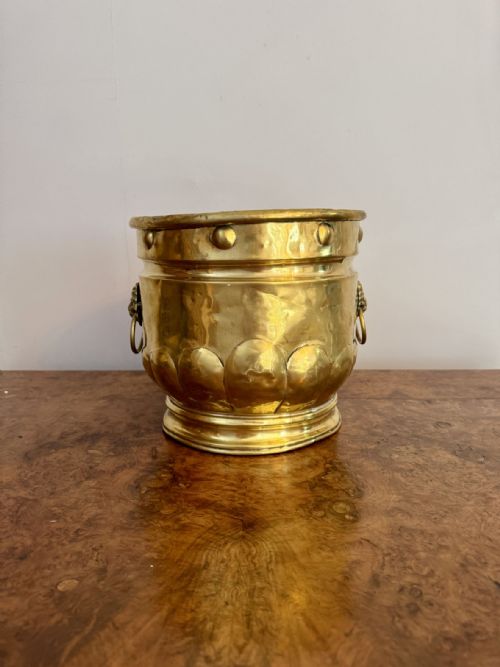
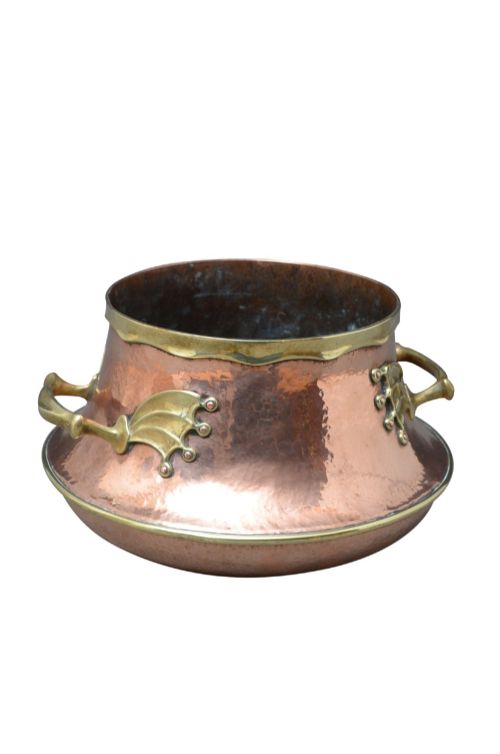
Many of these utilitarian pieces double as large planters or indoor plant containers when not holding logs or coal. The forms range from plain riveted metal cylinders to ornate receptacles bearing crests, fretwork, and hand-finished detailing.
Materials and construction methods
These pieces rely heavily on combinations of brass, copper, and iron, frequently paired with wooden elements such as oak staves and liners made of zinc. Makers joined metal panels using visible rivets, hand-hammering, and soldering techniques to ensure durability for heavy fuel storage.
Surface decoration involves embossing, fretwork piercing, and repoussé work, creating raised motifs and patterns across the metal body. Handles, feet, and bands are typically cast or forged in brass and attached securely to the main copper or brass vessel.
Listings feature items from the eighteenth, nineteenth, and twentieth centuries, incorporating materials like oak, zinc, iron, copper, and brass.
Assessing quality in metal fireside vessels
Quality rests on the thickness of the sheet metal used for the body and the structural integrity of the joints and rivets. Heavier gauge copper and brass combined with solid iron or wood framing separate robust vessels from lighter decorative items.
The crispness of hand-hammered detailing, the precision of embossed crests or fretwork designs, and the integration of sturdy cast handles define the higher tier of craftsmanship.
Henry Loveridge
The Vintage Brass Log Holders Glossary
- Coal scuttle
- A bucket or container specifically designed for carrying and storing coal, often featuring a shaped mouth or a hinged scoop for pouring fuel. These vessels frequently incorporate a swinging handle and flat base.
- Jardiniere
- An ornamental pot or stand designed to hold large plants or flowers, which often doubles in purpose as a container for logs by the fireside.
- Coopered
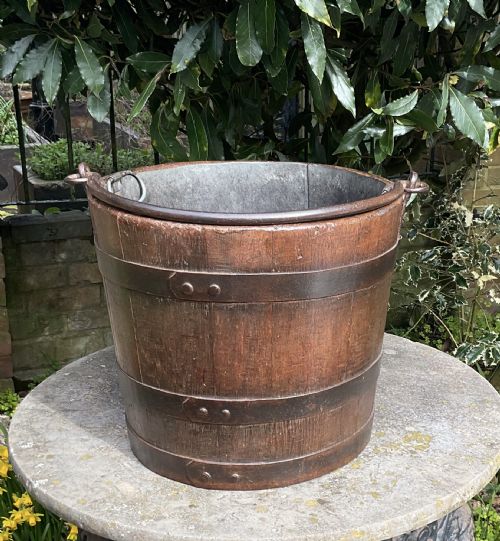
- A method of construction where curved wooden staves are bound together with metal hoops, similar to barrel making, used for oak log buckets.
- Embossed
- A decorative technique where a pattern is raised from the surface of the metal by hammering or pressing from the reverse side.
- Dinanderie
- A term for various objects made of brass, copper, or bronze, particularly European decorative metalwork produced from the medieval period onwards.
Vintage Brass Log Holders: Frequently Asked Questions
How were these vessels originally used?
Households utilised them to carry and store coal or logs close to the fireplace for daily heating needs. Sturdy construction allowed them to bear the heavy weight of solid fuel.
Over time, many transitioned from purely utilitarian coal carriers to decorative fireside accessories and indoor plant holders.
How do I care for brass and copper?
Maintenance involves dusting with a soft cloth and occasionally cleaning the metal surfaces to manage oxidation and tarnishing. Strong chemical abrasives can damage hand-finished patinas and embossed details.
Keeping the interior dry prevents moisture damage, particularly in vessels containing wooden staves or zinc liners.
How can I tell the period of a piece?
Dating relies on manufacturing techniques, material combinations, and decorative styles such as Arts and Crafts, Regency, or Victorian motifs. Rivet styles, handle attachments, and overall weight offer clues to the era of production.
Earlier eighteenth-century pieces often display hand-hammered copper fastened with primitive iron rivets, whereas later nineteenth-century examples may feature machine-pressed embossing.