


Cast Brass Supports
Cast brass supports provide the sturdy framework and heavy decorative accents found in period hearth and desk hardware.
Cast Brass Supports
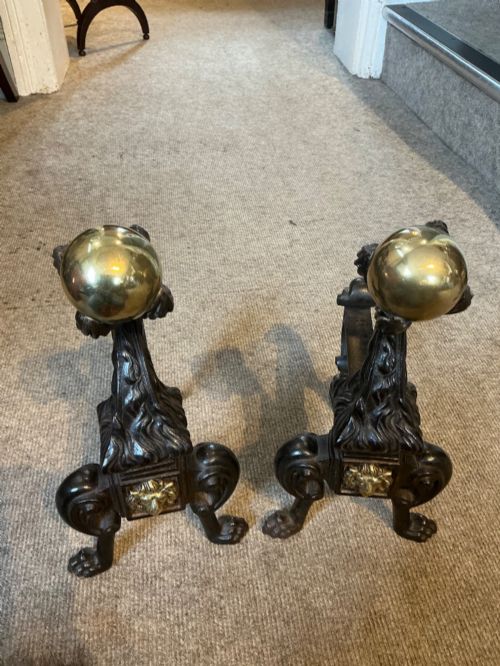
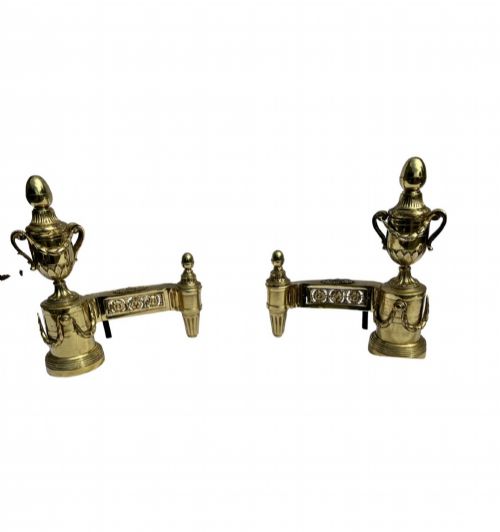
When you search for cast brass supports, you encounter items designed for practical load-bearing and hearth organisation, spanning the Victorian era through the early twentieth century. The selection leans heavily toward fire dogs, andirons, shelf brackets, and bookends.
Most pieces date from the nineteenth century, including specific decades like the 1850s, 1860s, and 1880s, alongside early twentieth-century examples up to the 1930s. Alongside brass, the evidence shows items incorporating cast iron, iron, bronze, solid brass, and wood.
Styles range from Georgian and Neoclassical to Victorian Gothic Revival, Victorian Neo-Classical, Victorian Industrial, Art Deco, and 1930s interwar designs. Fireplace accessories and bookends dominate the physical forms seen across the listings.
What varies in quality
Quality differentiates through the crispness of the cast ornamentation and the depth of the metalwork, distinguishing heavily detailed Victorian pieces from plain utility brackets. Ornate fire dogs and figural bookends exhibit finer hand-finishing and heavier gauge metal than utilitarian items.
The structural integrity of the casting and the original matching of pairs determine the desirability of andirons and shelf brackets. Superior pieces maintain their original heavy weight and balanced proportions without replacement components.
Scottish terriers and sea lions guard the bookshelf alongside standard cast metal brackets.
C Omin
The Cast Brass Supports Glossary
- Andirons
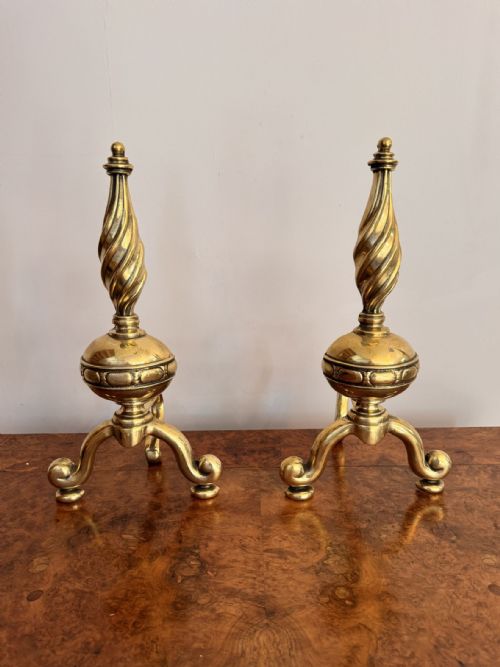
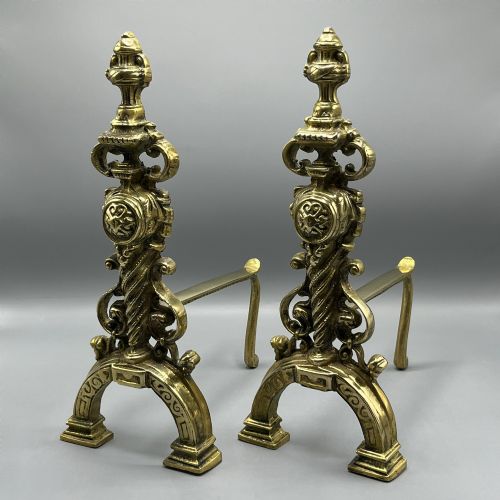
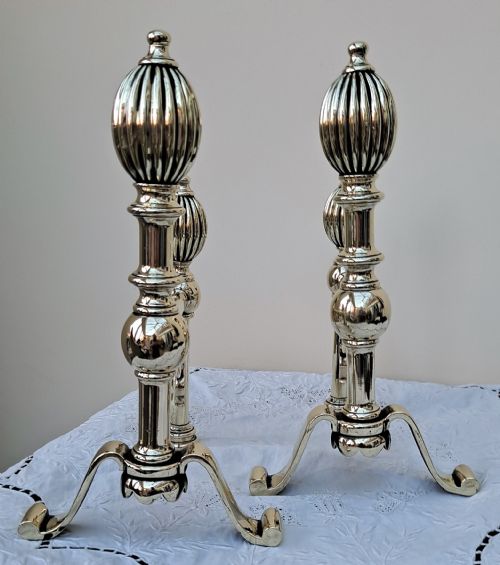
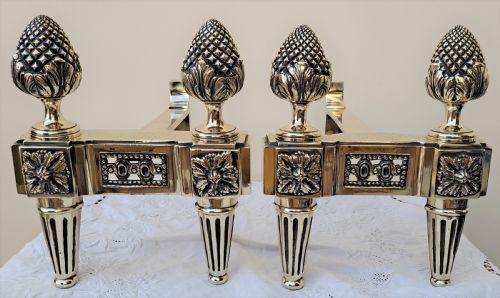
- Supports used in a fireplace to raise logs off the hearth for better air circulation. They often feature decorative front pillars made of cast brass.
- Fire Dogs
- An alternative term for andirons, frequently used interchangeably in nineteenth-century hearth furnishings. These heavy supports anchor the fireplace arrangement.
- Neoclassical
- A style drawing inspiration from classical antiquity, marked by symmetry, restraint, and classical motifs. This aesthetic appears on Victorian and Georgian brass supports.
- Shelf Brackets
- Architectural supports attached to walls to hold shelving. Heavy cast iron and bronze versions provide structural load-bearing capacity.
- Bookends
- Pair of weighted objects placed at the ends of a row of books to keep them upright. Examples in the evidence utilise cast bronze and brass in figural shapes.
Cast Brass Supports: Frequently Asked Questions
What are andirons used for?
Andirons hold logs above the hearth floor to allow proper airflow beneath the fire. They serve a functional role in open fireplaces whilst providing a decorative front piece.
Heavier cast brass versions anchor the hearth arrangement and prevent rolling logs from damaging the fireback.
How do I style fire dogs?
Fire dogs sit inside the hearth opening as a matched pair, framing the grate or fireplace basket. They anchor the visual weight of the fireplace.
Even without an active fire, period brass fire dogs add metallic warmth and structural symmetry to a room.
Are shelf brackets strong?
Cast metal brackets offer substantial load-bearing capacity depending on their material and size. Iron and bronze examples support heavy shelving.
Proper wall anchoring determines their weight capacity in domestic settings.
How do I identify Victorian pieces?
Victorian cast brass supports often display ornate Neoclassical or Gothic Revival detailing. Heavier casting and specific decorative motifs mark the period.
Dates range across the nineteenth century from the 1850s through the 1880s.
What is the difference between brass and bronze?
Brass is an alloy of copper and zinc, yielding a brighter golden tone suited for decorative hearth hardware. Bronze contains copper and tin, offering a darker metallic hue.
Both metals appear in heavy cast supports across the nineteenth and early twentieth centuries.