




Traditional Brass Hearthware
Traditional brass hearthware brings the warmth of past centuries directly to the fireplace through sturdy, gleaming pieces built for daily use.
Traditional Brass Hearthware
Traditional brass hearthware covers the metal accessories used around an open fire, ranging from coal scuttles and warming pans to fire dogs and companion sets. These items span the eighteenth, nineteenth, and early twentieth centuries, reflecting Georgian, Victorian, and Edwardian domestic life.
The most common forms on this page are coal scuttles, fire dogs, and warming pans, often paired with wrought iron, steel, or copper. Pieces frequently incorporate wooden handles or iron fittings to provide durability where heat and movement matter most.
Originating largely from English, Welsh, and Dutch workshops, these pieces combine utility with decorative metalwork. They turn a purely functional hearth into the visual centre of a room.
Materials and construction
Makers relied primarily on brass, copper, and wrought iron, combining cast and sheet metal techniques to build each accessory. Brass provided a bright, polished surface for visible components, while iron and steel supplied the structural strength needed for fire irons and andirons.
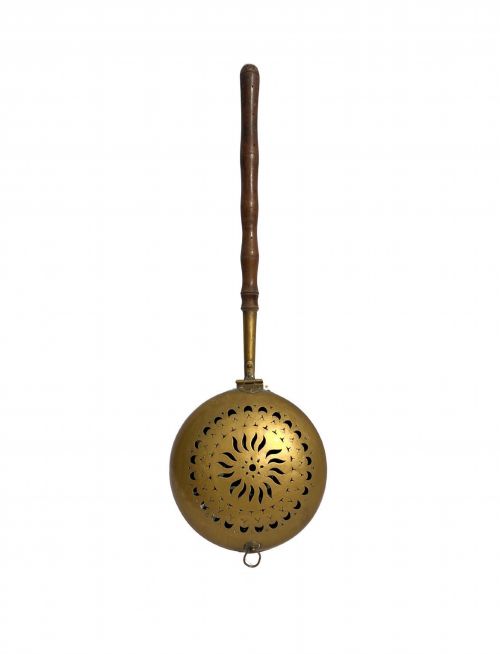
Coal scuttles often combined hammered copper bodies with brass mounts and swing handles, while warming pans featured turned wooden shafts joined to hinged brass lids. Fire dogs and andirons combined heavy cast brass ornamentation with sturdy wrought iron bars to support burning logs.
Listings feature brass, copper, wood, wrought iron, and steel across pieces dating from the eighteenth century through the Edwardian era.
Distinctions in quality
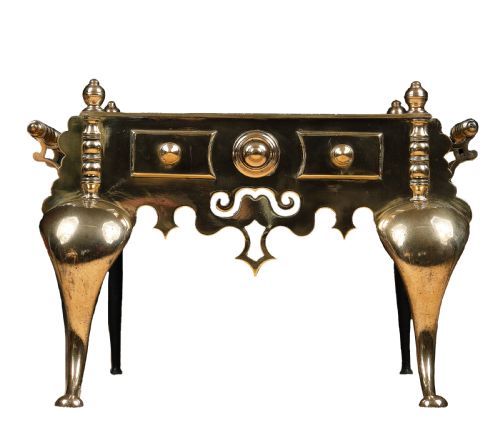
Quality rests in the weight of the metal and the crispness of the casting rather than surface shine alone. Finer fire dogs and companion sets display deeply chased detail and substantial thickness, whereas simpler pieces rely on thin pressed sheets.
Construction methods also distinguish standard utility items from finer examples. Dovetailed joints, secure riveting, and well-turned wooden handles indicate superior workshop standards from the Georgian and Victorian periods.
The Traditional Brass Hearthware Glossary
- Fire dogs
- Support irons placed in a fireplace to hold logs above the hearth floor, allowing air to circulate beneath the fire. They often feature decorative brass fronts.
- Goffering iron
- A heated metal cylinder used with a stand to press crisp pleats into lace collars and cuffs during the eighteenth and nineteenth centuries.
- Coal scuttle
- A specialised bucket or helmet-shaped container designed for holding and carrying domestic coal to the fire grate.
- Andirons
- Heavy horizontal metal bars supported by vertical legs, used interchangeably with fire dogs to cradle firewood.
- Footman
- A low metal stand placed in front of the hearth to keep plates or kettles warm by the fire.
Traditional Brass Hearthware: Frequently Asked Questions
How do I clean old brass?
Traditional brass hearthware benefits from gentle cleaning with warm soapy water and a soft cloth to preserve the aged patina. Avoid harsh chemical abrasive cleaners that strip away historical character.
Light dusting and occasional application of traditional metal polish will maintain the lustre without damaging the underlying metal surface accumulated over centuries.
Are these pieces safe for fires?
Most traditional brass hearthware items, such as fire dogs and companion sets, remain entirely suitable for active fireplace use. Their robust iron and brass construction was originally engineered to withstand daily exposure to intense heat.
Delicate warming pans and decorative coal scuttles are better suited for static display beside the hearth rather than direct daily service.
How do I date brass hearthware?
Dating relies on observing manufacturing techniques, tool marks, and stylistic shifts across the Georgian, Victorian, and Edwardian periods. Hand-beaten seams and specific handle attachments often point to eighteenth-century origins, while later Victorian pieces show heavier machine stamping.
Comparing the form and metal composition with established period examples helps narrow down the decade of manufacture.
What is a chestnut roaster?
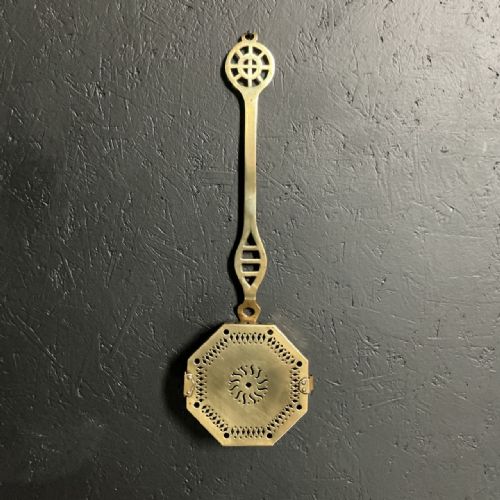
A chestnut roaster is a long-handled pan with a pierced or solid brass lid used for roasting nuts directly over open hearth coals. The extended handle kept the user safely away from the flames.
These domestic utensils double as decorative wall or fireplace ornaments when not in active use.