

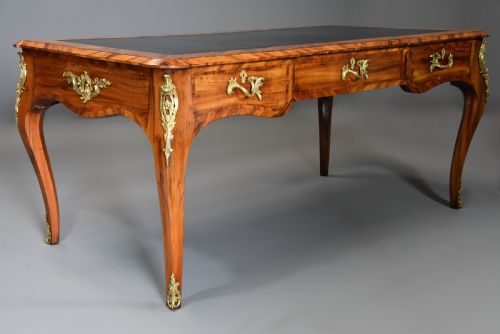
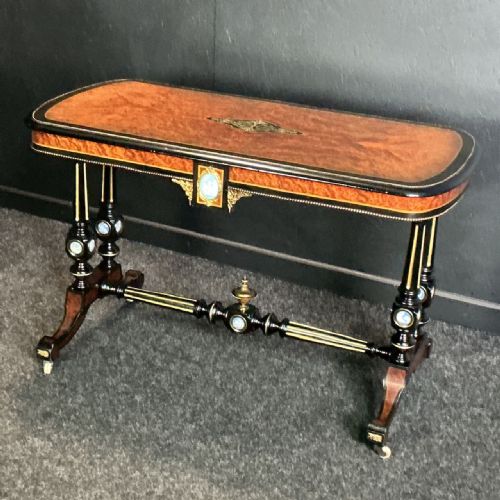


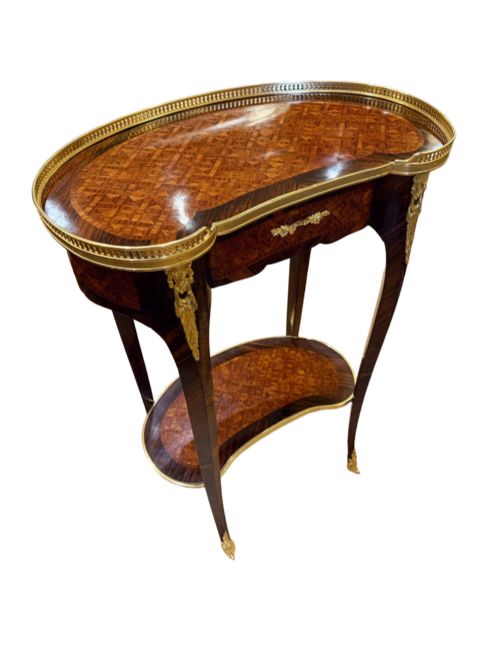
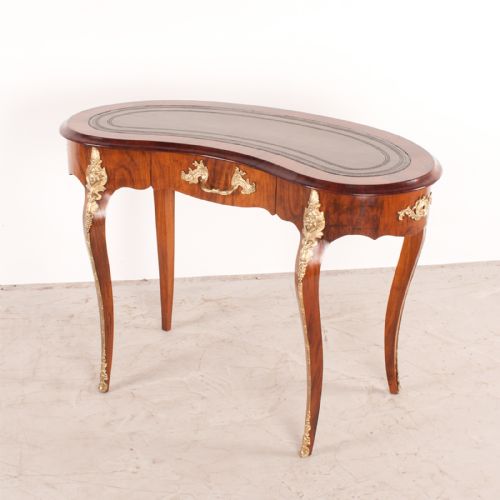
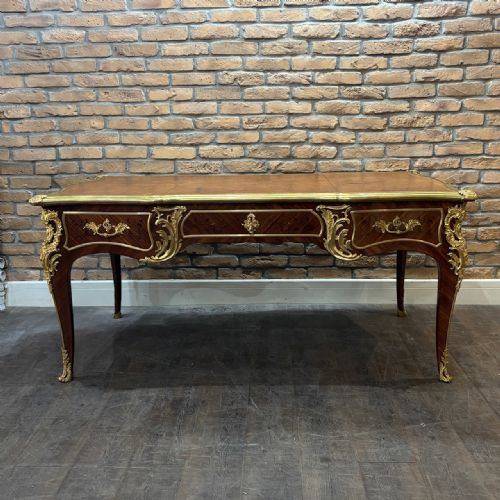
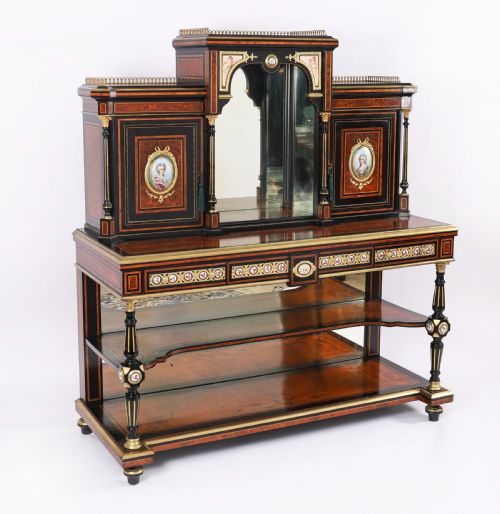
Victorian Ormolu Writing Table
These pieces known as a victorian ormolu writing table combine figured timber and gilt mounts to bring elegance to a study.
Victorian Ormolu Writing Table
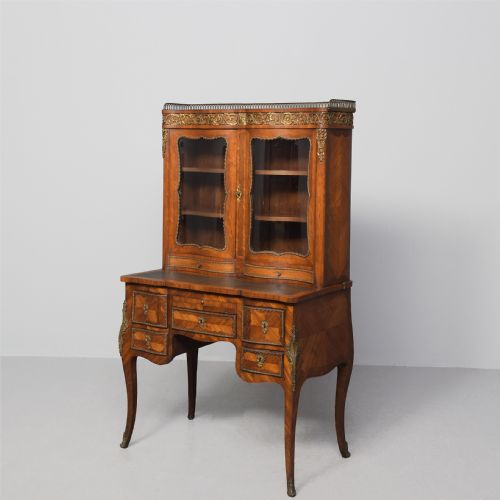
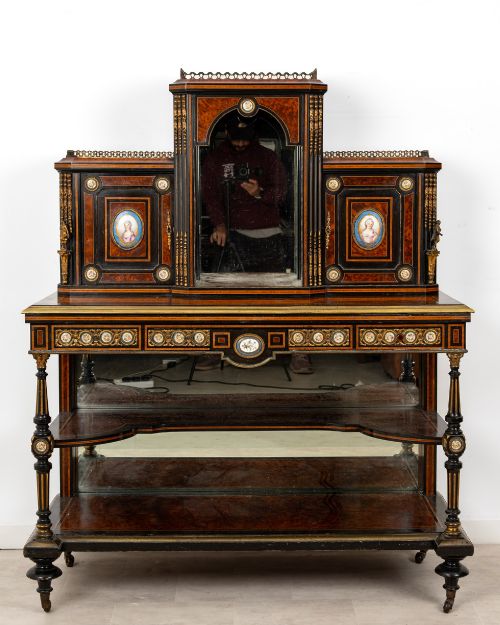
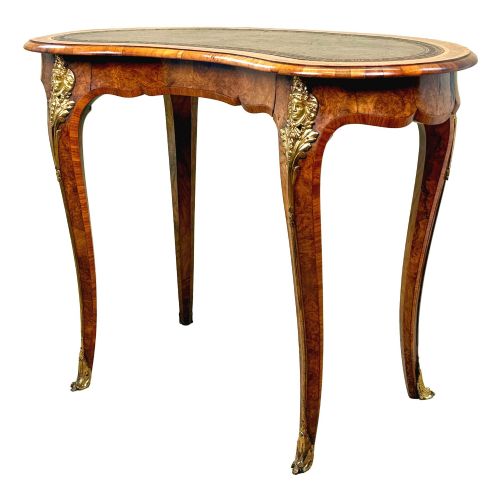
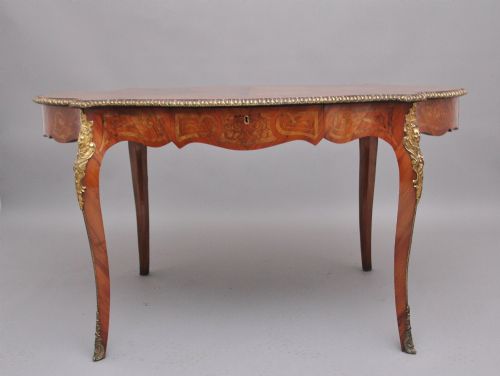
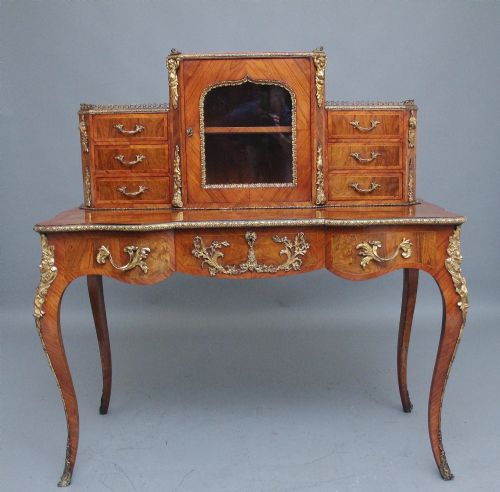
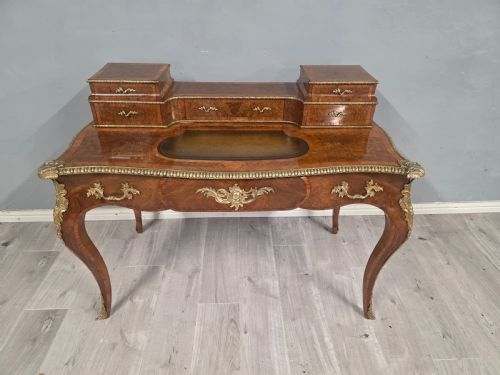
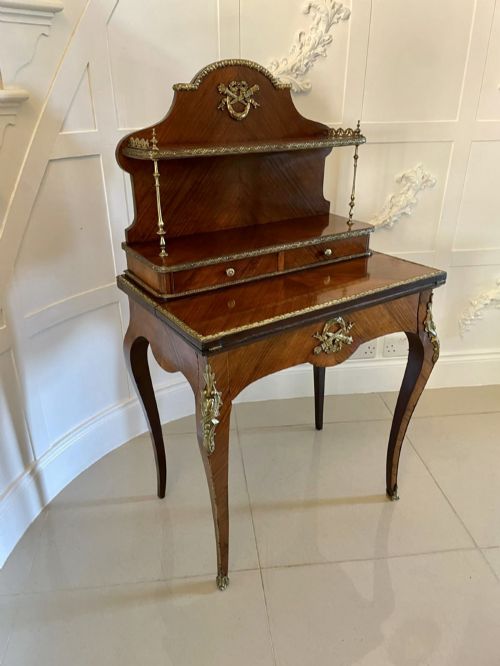
A victorian ormolu writing table brings together nineteenth century craftsmanship and ornamental gilt-bronze mounts. Buyers looking for this phrase encounter various forms, including kidney shaped library tables, compact bonheur du jour desks, and refined bureau plat tables.
The prevailing aesthetic draws heavily on continental inspiration, appearing in Louis XV revival, Rococo revival, and French chateau styles. Walnut and burr walnut dominate the selection, often enriched with marquetry inlay and fitted leather writing surfaces.
Most examples date across the nineteenth century, spanning decades from eighteen fifty to eighteen ninety. These items served as functional writing furniture and decorative centre tables for refined domestic interiors.
How They Were Made
Cabinet makers utilised dense hardwoods such as walnut, amboyna, kingwood, and satinwood as the primary carcase materials, frequently applying burr veneers to create striking figured grain patterns. Ormolu mounts, cast and gilt, were meticulously applied to borders, legs, and corners to accent the silhouette.
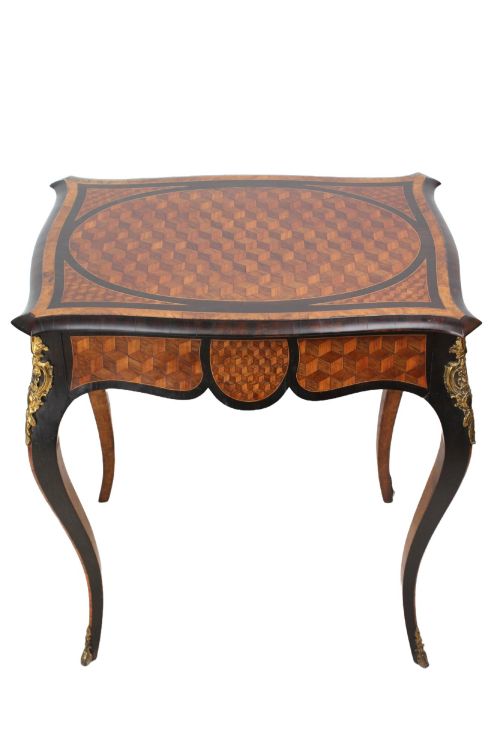
Surfaces often incorporated intricate marquetry, parquetry, and contrasting string inlay alongside tooled leather writing inserts. Porcelain plaques, notably Sevres style ceramics, were integrated into superstructure writing cabinets known as bonheur du jour.
Victorian Ormolu Writing Table Retail Price Guide 2026
Typical asking prices for victorian ormolu writing table among the pieces listed under this phrase on Sellingantiques today, from the lower quarter to the upper quarter. They describe what is for sale here now, not the wider market.
Listings feature nineteenth century periods including the Victorian era, eighteen fifties, eighteen sixties, eighteen seventies, eighteen eighties, and Edwardian items.
What Varies in Quality
The refinement of the ormolu mounts separates standard production from exceptional pieces, visible in the crispness of the chasing and the warmth of the gilding. Timber selection dictates overall merit, with densely figured burr walnut and intricate multi-wood marquetry marking superior workshops.
Structural complexity influences distinction, particularly in curved kidney forms and multi-tiered writing cabinets with fitted interior drawers and porcelain plaque insertions.
Gillow·JAS Shoolbred·Edwards And Roberts
The Victorian Ormolu Writing Table Glossary
- Ormolu
- Gilt-bronze decorative mounts applied to furniture. This technique provides metallic contrast against dark woods.
- Burr Walnut
- Timber taken from walnut tree growths that produces swirling grain patterns. Cabinet makers used veneers of this wood on prominent surfaces.
- Bonheur du Jour
- A small ladies writing desk featuring a small cabinet or shelving superstructure on top. These often include drawers and porcelain plaques.
- Bureau Plat
- A freestanding writing table with a flat top and one or more drawers in the frieze. Originating in France, these tables were finished on all sides to sit in the centre of a room.
- Marquetry
- Decorative patterns formed by fitting together small pieces of veneer into wooden panels. Artisans employed different tinted woods to create floral or geometric designs.
Victorian Ormolu Writing Table: Frequently Asked Questions
Where did people place these writing tables?
These pieces frequently occupied the centre of a room or stood against a wall in a private study or drawing room. Because many are finished on all sides, they functioned well away from boundaries.
Owners utilised the surface for correspondence and reading while keeping writing implements stored in integrated drawers.
How do I identify a bonheur du jour?
A bonheur du jour distinguishes itself by having a small tiered cabinet or tier of pigeonholes and small drawers mounted above the main writing surface. They frequently incorporate inlaid parquetry and decorative porcelain plaques.
These compact desks were designed primarily for ladies to write letters and store small valuables.
What timber is most common?
Walnut is the predominant wood found across these nineteenth century pieces, often utilised in its figured burr form to create rich visual texture. Other exotic woods such as kingwood, amboyna, and satinwood appear frequently in crossbanding and inlay.
Cabinet makers paired these warm timbers with gilt ormolu mounts and leather inserts.
How do I distinguish revival styles?
Revival pieces draw upon earlier French aesthetics, particularly Louis XV and Rococo designs characterised by serpentine lines, cabriole legs, and asymmetrical floral ormolu mounts. Makers adapted these continental forms to suit Victorian tastes.
The integration of parquetry, marquetry, and kidney shaped tops often signals this French influence.