


Victorian Ormolu Credenza
A victorian ormolu credenza brings nineteenth-century presence to a room, combining figured timber, gleaming cast mounts and generous display space.
Victorian Ormolu Credenza
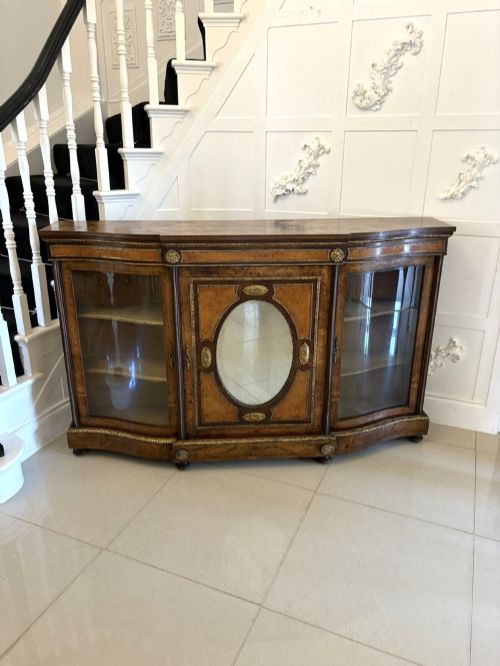
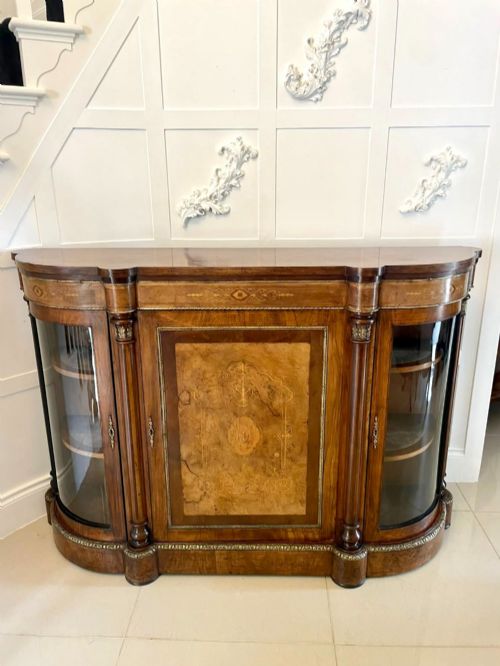
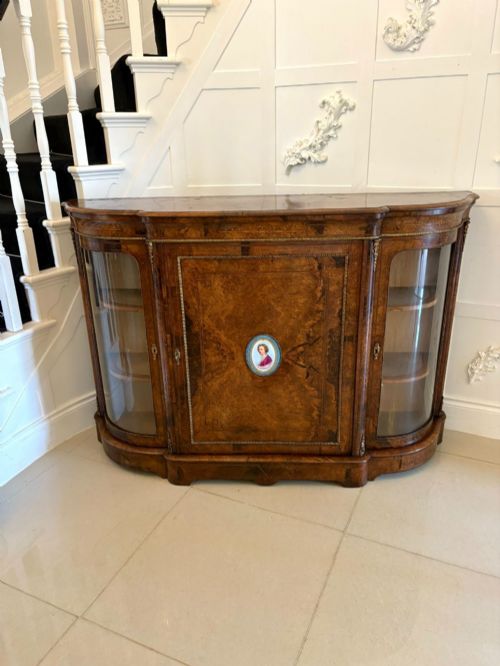
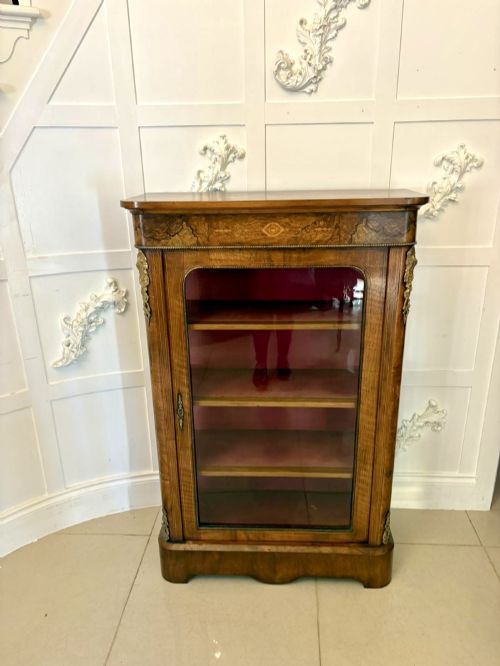
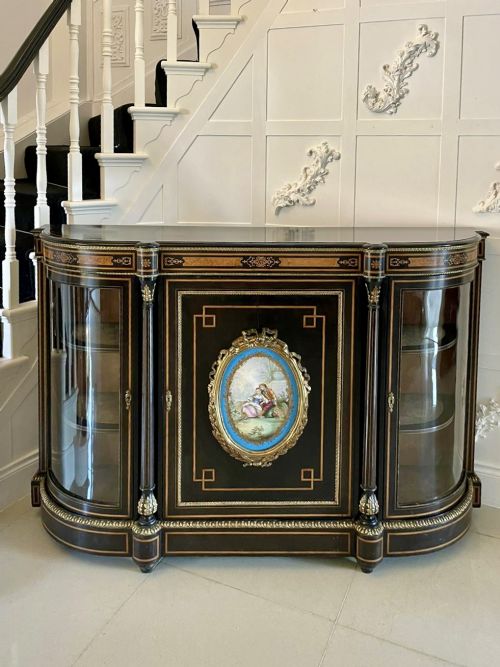
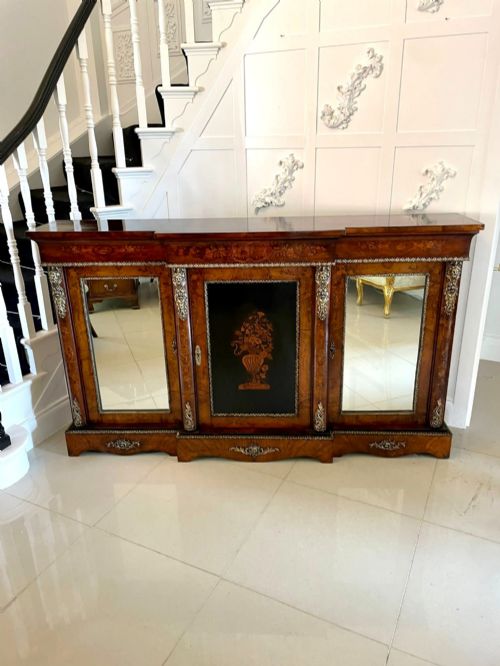
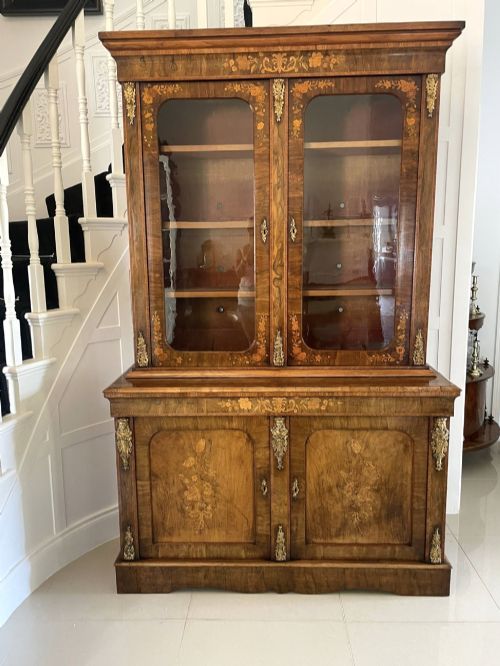
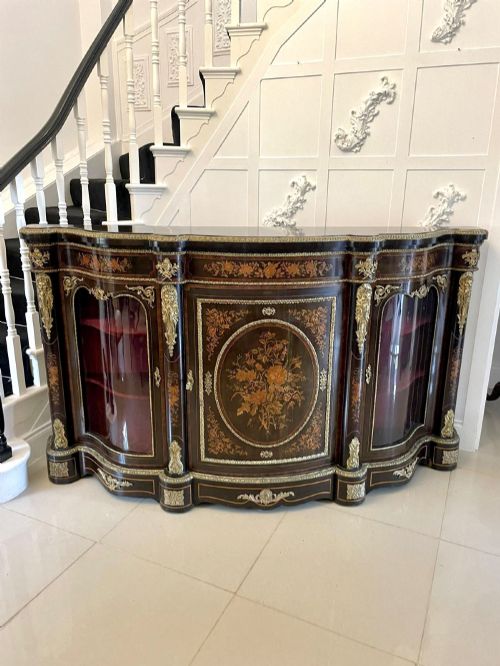
A victorian ormolu credenza is a substantial nineteenth-century low cabinet designed for display and storage, often featuring curved glass doors flanked by side cupboards. The version met most frequently on this page combines burr walnut timbers with floral marquetry inlay and gilt-metal mounts.
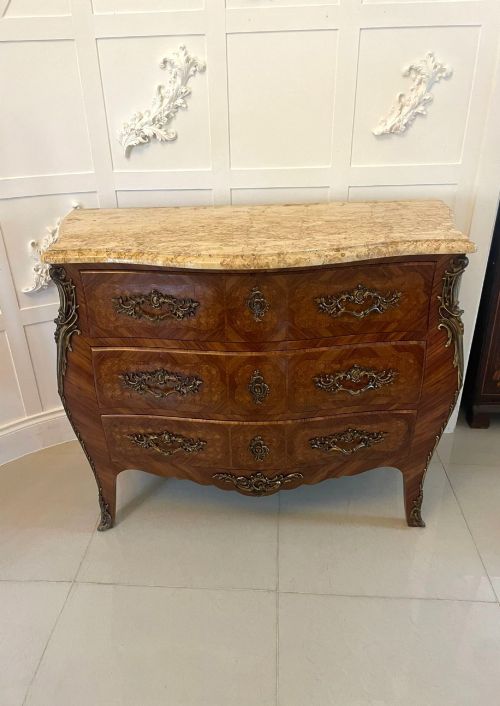
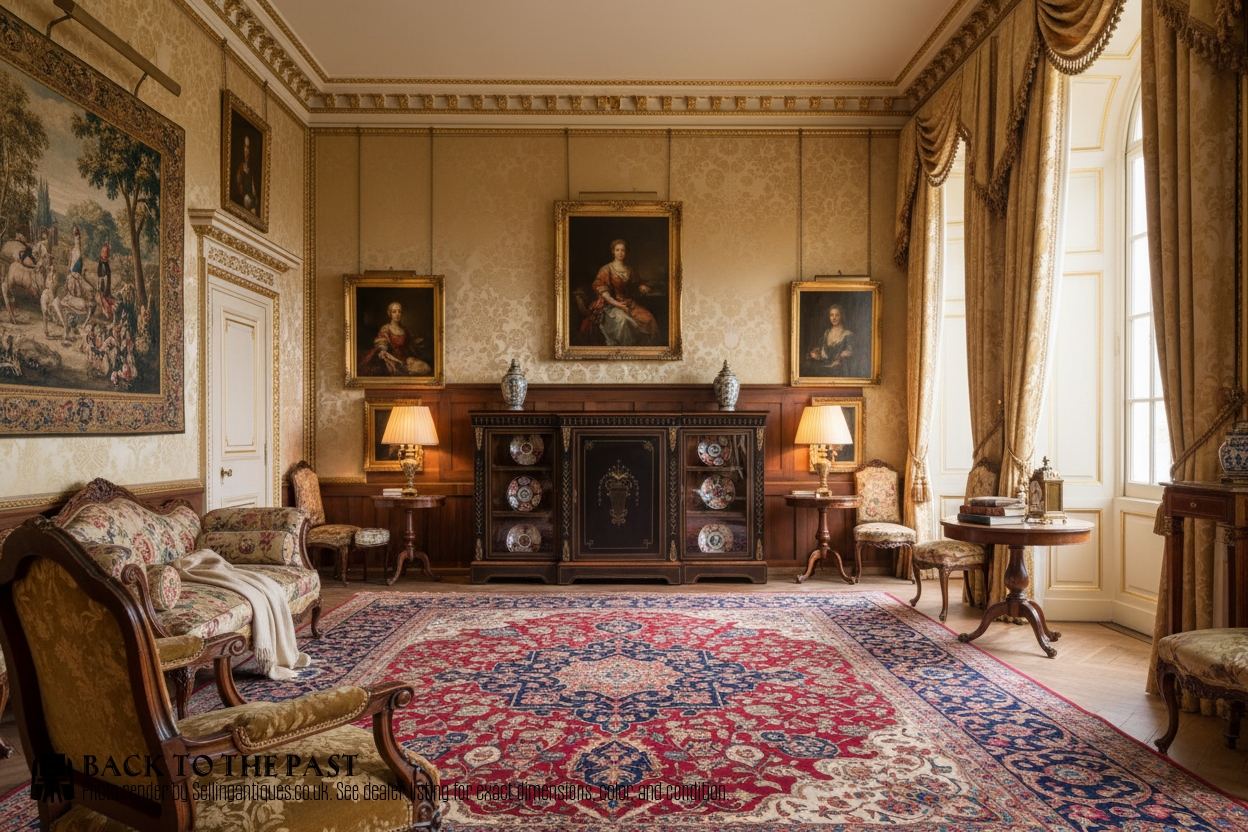
Makers drew heavily upon French revival styles, producing serpentine-fronted cabinets influenced by Louis XV designs alongside austere ebonised and brass-inlaid pieces. These items served as central display surfaces in grand Victorian reception rooms, housing porcelain collections and decorative silver.
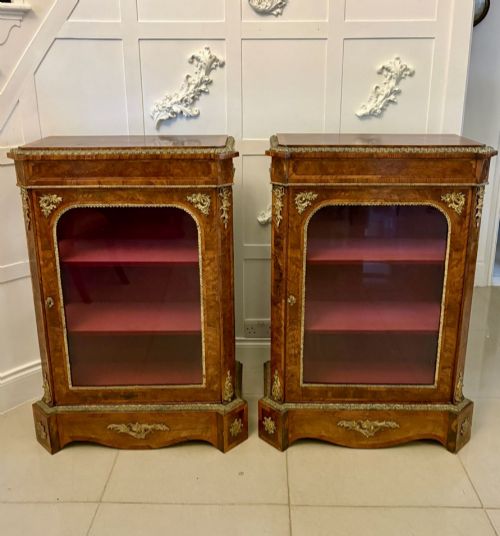
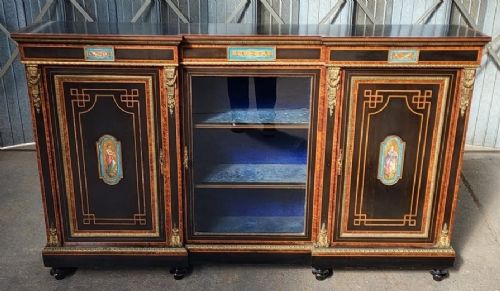
The selections span pier cabinets and full three-door credenzas originating across the Victorian era, particularly the middle decades of the nineteenth century. Walnut predominates as the primary carcass timber, complemented by amboyna, kingwood, and occasionally satinwood veneers.
Materials and Construction
Cabinetmakers laid figured burr walnut and exotic veneers over solid pine or oak carcases, cutting delicate floral marquetry patterns from contrasting dark and light woods. Craftsmen cast ormolu mounts in bronze or brass, chasing the surface details by hand before applying a gold-gilt finish to frame doors, friezes and corners.
Curved glass panels required specialised heating and bending techniques to fit serpentine side doors without distortion. Interior shelves rest within velvet-lined compartments, while porcelain plaques and hand-painted panels frequently punctuate the wooden cabinetry.
Listings feature credenzas spanning the nineteenth century, utilising burr walnut, ebonised wood, amboyna, and kingwood paired with porcelain and glass.
Judging Quality
Quality rests upon the crispness of the ormolu castings and the depth of figure in the walnut veneer, where tightly swirled grain indicates superior timber selection. Heavily articulated floral marquetry with naturalistic shading displays far greater handwork than stamped, repetitive inlay patterns.
Exhibition-grade pieces incorporate curved serpentine glass, mirrored back panels, and inset porcelain plaques without hairline cracks. The weight and thickness of the gilt bronze mounts distinguish workshop standards from mass-produced commercial output.
Gillows·Edward Holmes Baldock·Maison Gagneau
The Victorian Ormolu Credenza Glossary
- Ormolu
- Gilded bronze or brass mounts applied to furniture to accent corners, borders and door panels. These decorative elements were cast and hand-chased to catch candlelight in Victorian drawing rooms.
- Credenza
- A low nineteenth-century cabinet comprising a central cupboard flanked by curved glass doors or side cabinets. They provide surface display space alongside enclosed shelving.
- Marquetry
- The art of forming decorative patterns using thin veneers of various woods laid onto a carcass. Craftsmen utilised contrasting timbers to render botanical motifs and floral sprays.
- Burr Walnut
- Timber taken from walnut tree growths, producing dense, swirling grain patterns. Cabinetmakers prized this wood for its decorative surface movement on large door panels.
- Pier Cabinet
- A narrow upright display cabinet designed to fit against the wall space between windows. These tall fixtures frequently share the marquetry and ormolu vocabulary of larger credenzas.
- Boulle
- An inlay technique combining brass, tortoiseshell and pewter in intricate scrollwork designs. Pieces utilising this method reflect French revival influences popular during the period.
Victorian Ormolu Credenza: Frequently Asked Questions
What is a credenza used for?
Victorian households utilised these cabinets to display fine porcelain, decorative ceramics and silver on their timber tops and behind glass doors. The enclosed side cupboards provided dust-free storage for linens, books and household valuables.
Today, they function as focal points in large living spaces, television consoles, or sideboards in dining rooms where display and concealed storage are both required.
How do I date a credenza?
Dating relies upon examining construction methods, secondary timbers like oak or pine inside, and stylistic markers. Pieces from the eighteen-fifties and sixties often display rich burr walnut veneers and elaborate floral marquetry.
Later Victorian examples from the eighteen-eighties lean towards ebonised finishes, incised gilding, and neoclassical revival motifs influenced by changing aesthetic tastes.
How do I clean ormolu mounts?
Ormolu requires gentle dusting with a soft, dry brush to prevent dirt accumulation in the chased crevices of the metal. Avoid abrasive polishes or chemical cleaners that strip the original fire-gilt or gold finish from the bronze substrate.
Professional conservators recommend microcrystalline wax to protect the metal surface from atmospheric oxidation and handling oils.
Are these pieces French or English?
Cabinetmakers in both countries produced these designs, heavily influenced by French revival fashions sweeping Victorian Britain. English firms adopted Louis styles, incorporating local craftsmanship with imported French ormolu mounts and porcelain plaques.
Provenance is sometimes confirmed by stamped maker marks on the carcase timber or trade labels pasted inside the drawer linings.