


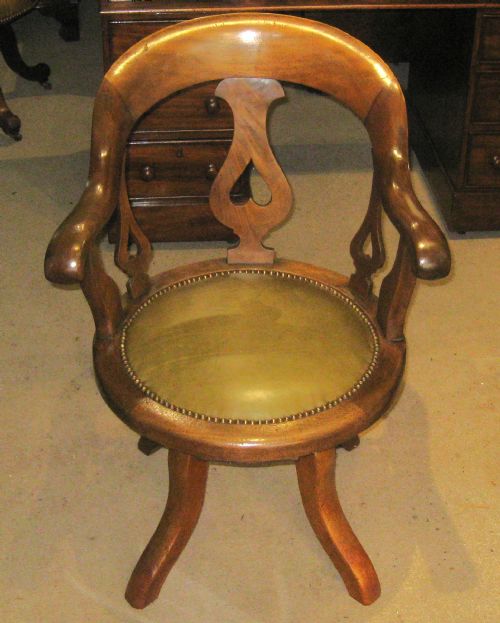
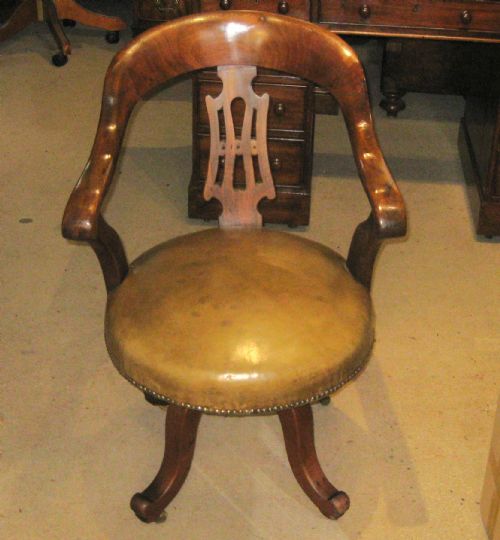
Victorian Office Desk Chair
When choosing a victorian office desk chair, you are selecting a sturdy seat designed for nineteenth-century workspaces that combines practicality with traditional craftsmanship.
Victorian Office Desk Chair
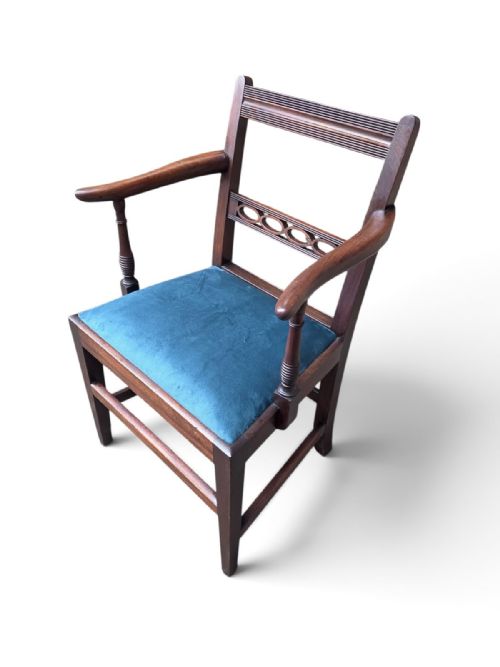
A victorian office desk chair encompasses sturdy swivel models, solid wood captain's chairs, and leather-upholstered library armchairs designed for nineteenth-century workspaces.
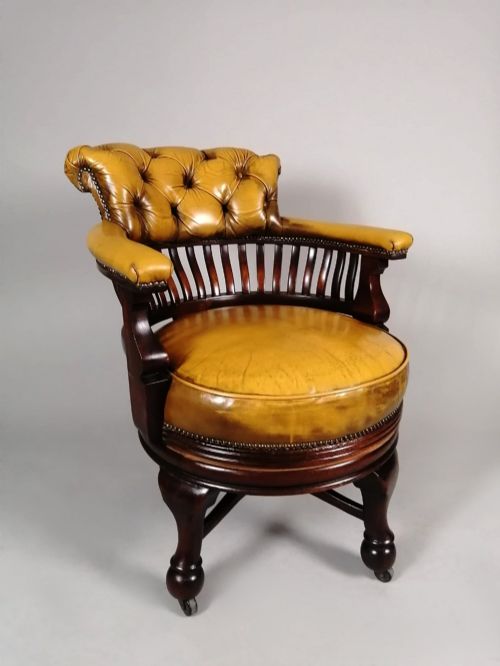
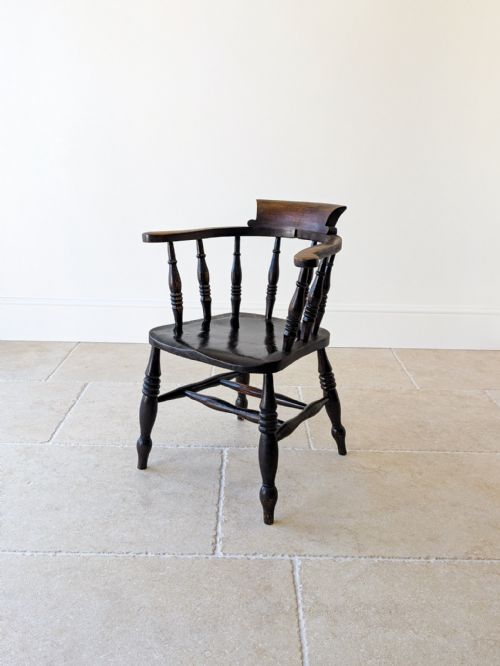
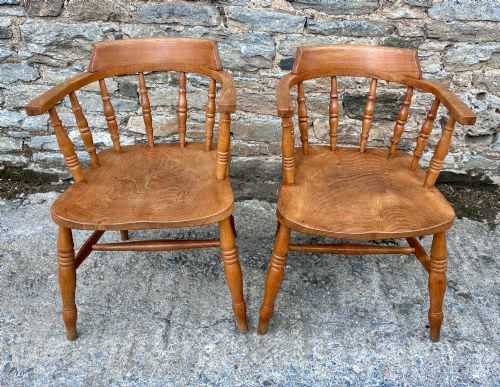
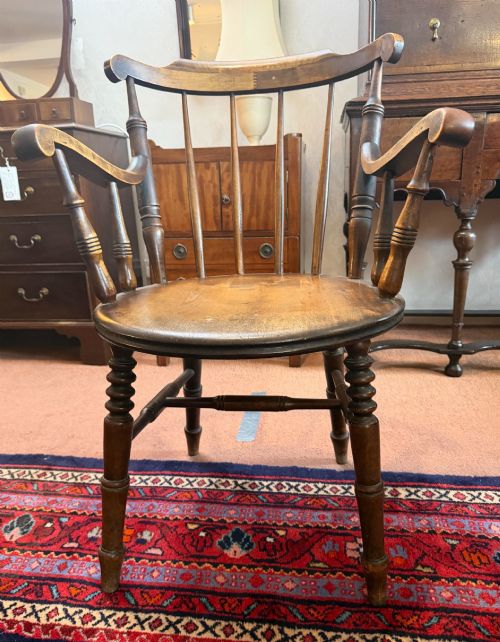
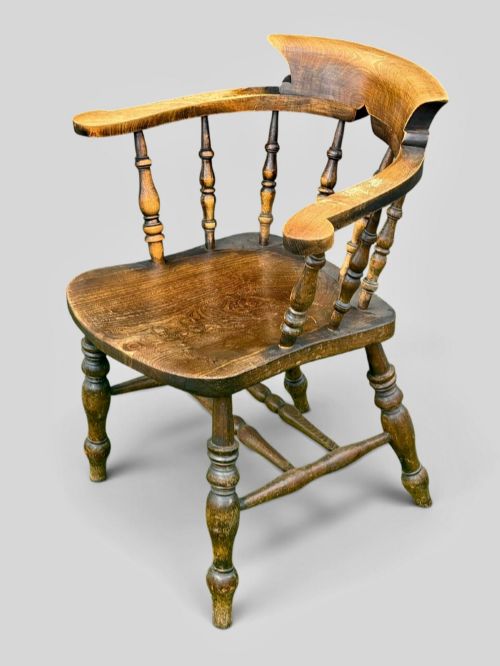
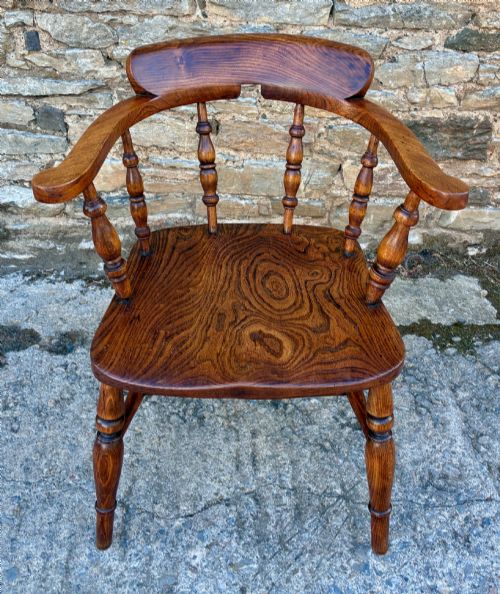
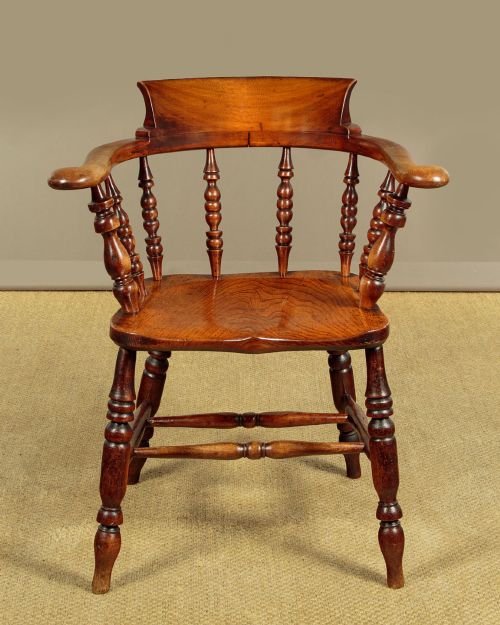
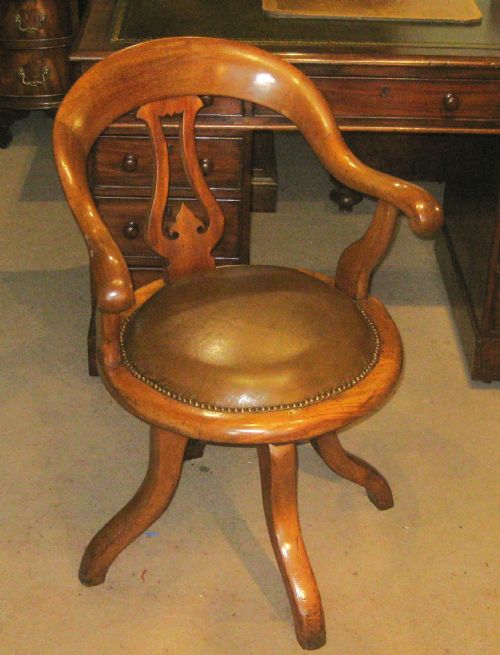
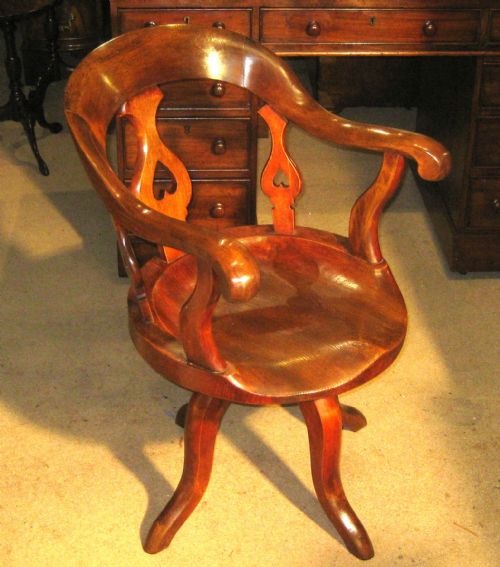
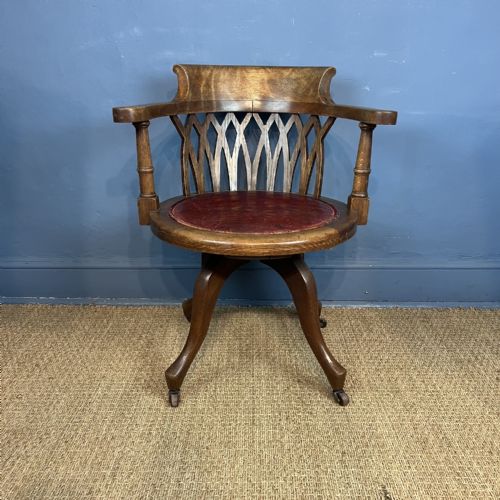
The most common examples on this page are mahogany and oak revolving chairs featuring green or red leather pads, alongside provincial elm and beech smoker's bows.
These functional seats evolved to meet the demands of growing administrative trades, resulting in robust frames intended for daily commercial and domestic use.
How They Were Made
Cabinetmakers utilised dense timbers like mahogany, oak, and walnut for the primary frames, paired with turned spindle supports in beech, elm, and ash.
Revolving mechanisms relied on heavy cast-iron spindles and brass collars fixed beneath the seat to allow smooth 360-degree rotation.
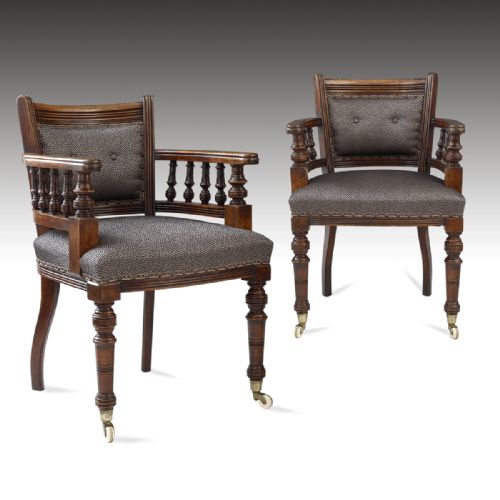
Upholstered versions utilised horsehair stuffing beneath buttoned leather hides, secured to the wooden base with brass clout nails.
The selection includes Gothic Revival and Aesthetic Movement interpretations alongside traditional swivel office chairs.
What Varies in Quality
The calibre of timber selection and depth of carving distinguish standard workshop production from pieces bearing distinctive maker signatures or Gothic Revival detailing.
The integrity of the internal swivel mechanism and the retention of original turned wooden components dictate the overall durability and authenticity of the piece.
CV Smith·Bruce James Talbert·Gillows·Morris & Co.
The Victorian Office Desk Chair Glossary
- Captain's chair
- A low-backed wooden armchair featuring a continuous curved rail supported by spindles, commonly associated with nineteenth-century office environments.
- Smoker's bow
- A sturdy, low-back Windsor-style armchair with a deep-bent wooden arm rail, frequently utilised in domestic studies and offices.
- Revolving mechanism
- The iron and brass undercarriage assembly allowing the seat to swivel and often adjust in height.
- Gothic Revival
- An architectural and decorative style popular during the nineteenth century characterised by pointed arches, heavy tracery, and solid oak construction.
- Aesthetic Movement
- A late-nineteenth-century design approach emphasising simplicity of line and artistic visual qualities over excessive ornament.
Victorian Office Desk Chair: Frequently Asked Questions
Are these chairs comfortable for daily use?
Most models provide firm support due to their original horsehair padding and sprung or solid wooden bases. Their ergonomic curved backs suit modern desk heights quite well.
Buyers planning long hours at a screen often add a discreet, matching cushion to increase everyday comfort without altering the antique appearance.
How do I identify a revolving model?
Look underneath the seat for the central iron spindle and four-legged wooden or cast-iron spider base. These mechanical parts distinguish swivel chairs from static library armchairs.
Original mechanisms usually display period foundry marks or patinated brass fittings rather than modern threaded steel rods.
What is the difference between an elm and mahogany chair?
Elm and beech timbers typically indicate provincial English country manufacture, resulting in robust, rustic captain's chairs with visible grain. Mahogany and walnut denote formal urban library or office seating.
Formal varieties frequently incorporate upholstered leather pads and more elaborate carved details compared to solid wood provincial pieces.
How should I care for the leather?
Treat the leather surfaces with a traditional beeswax or neutral balm to maintain suppleness and prevent cracking over time. Avoid modern chemical cleaners that strip the original dye.
Gentle dusting with a soft dry cloth preserves the natural patina and historic character of the hide.