
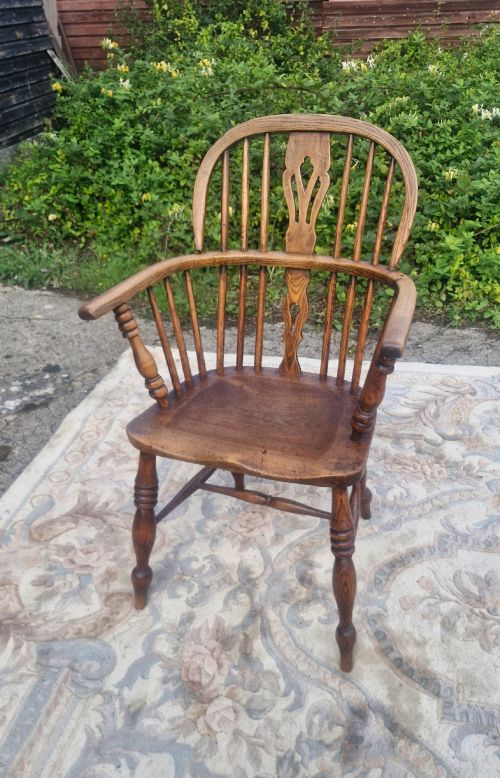
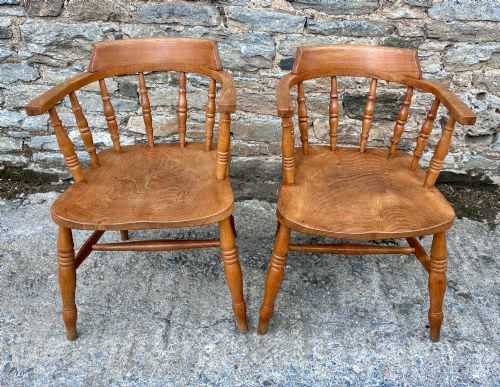
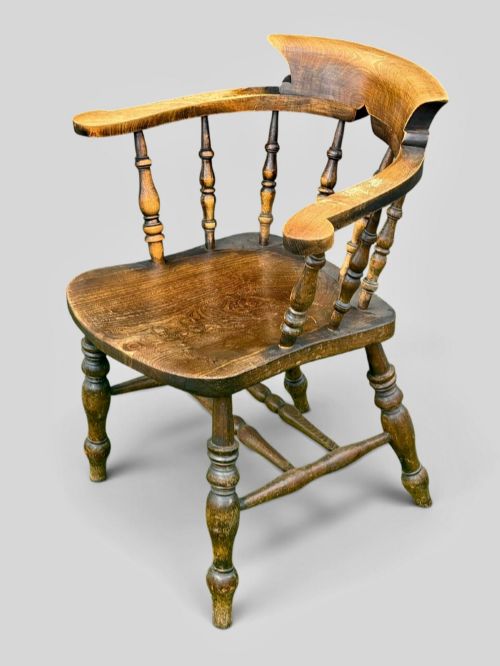
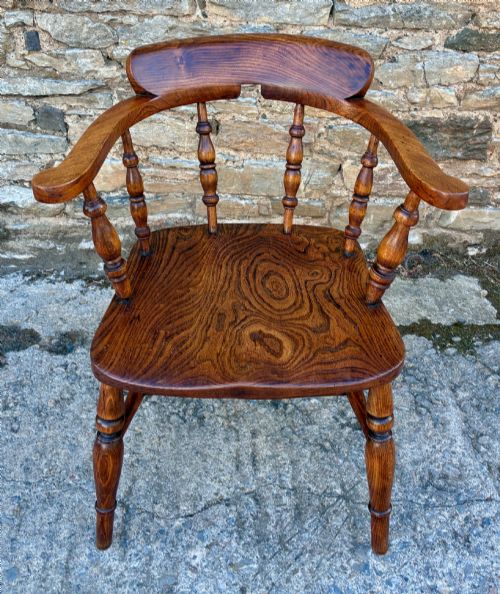
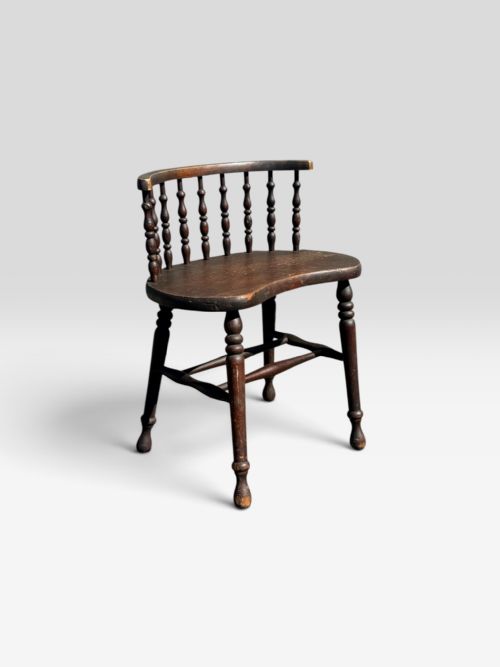
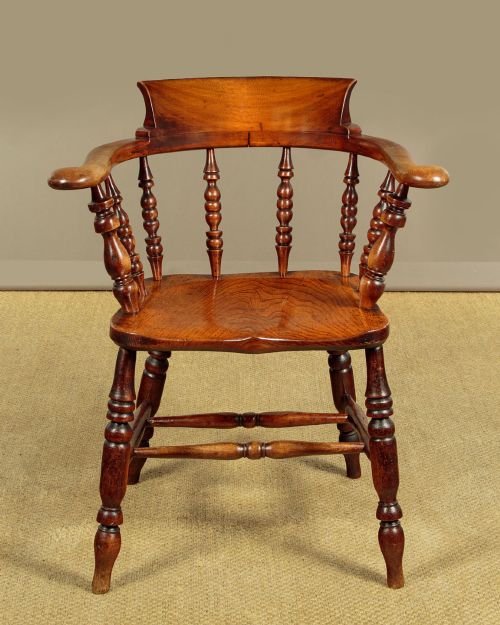
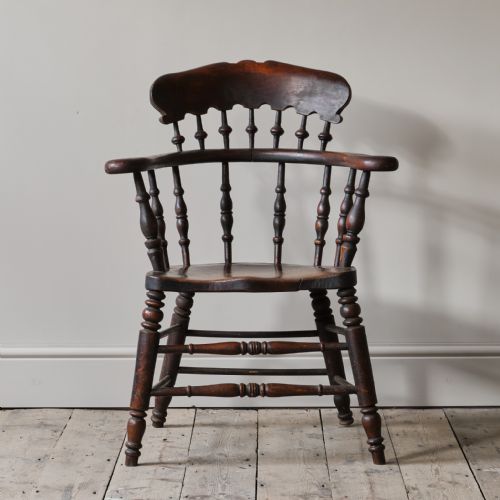
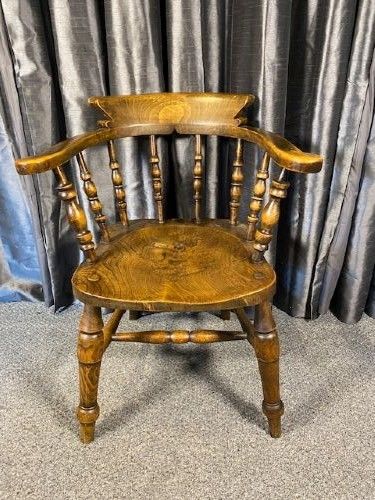
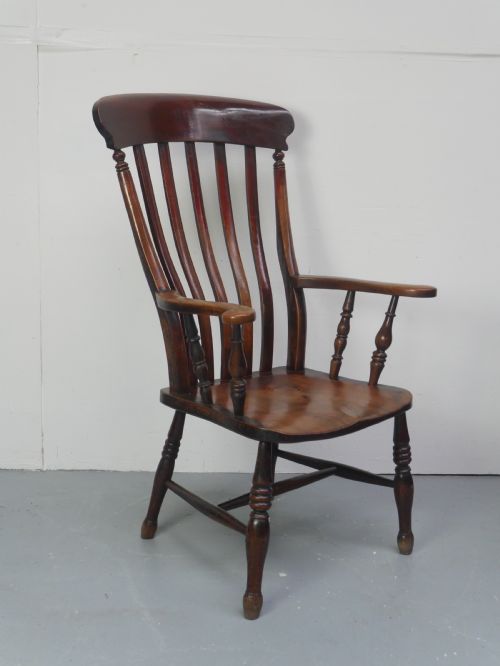
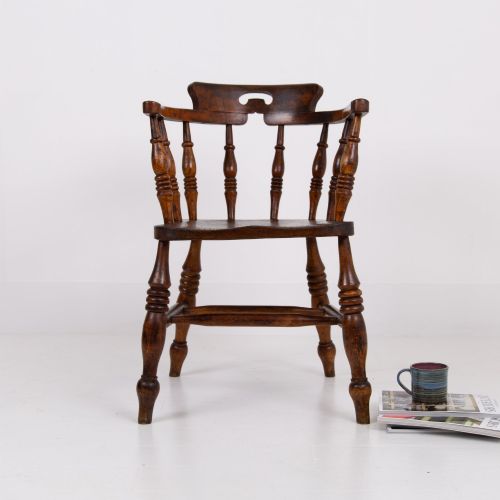
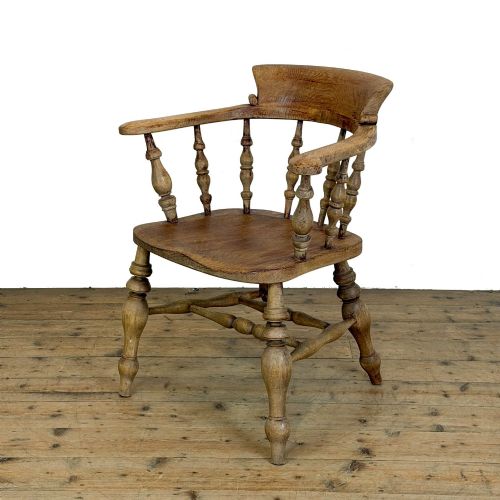
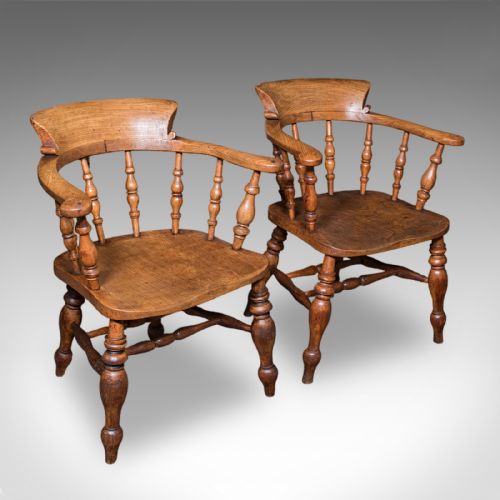
Elm Smokers Bow Armchair
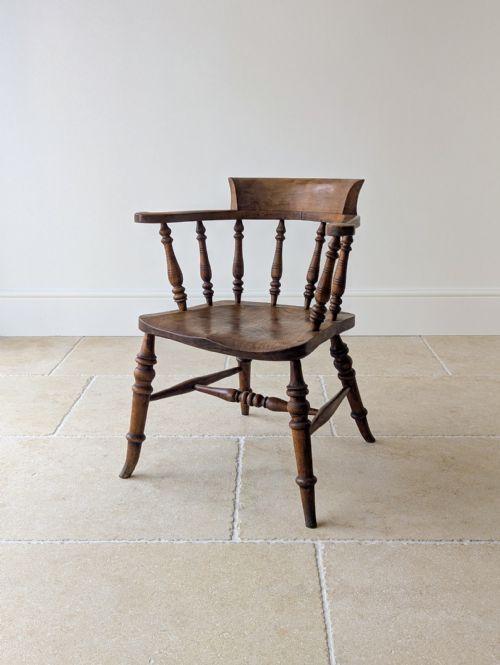
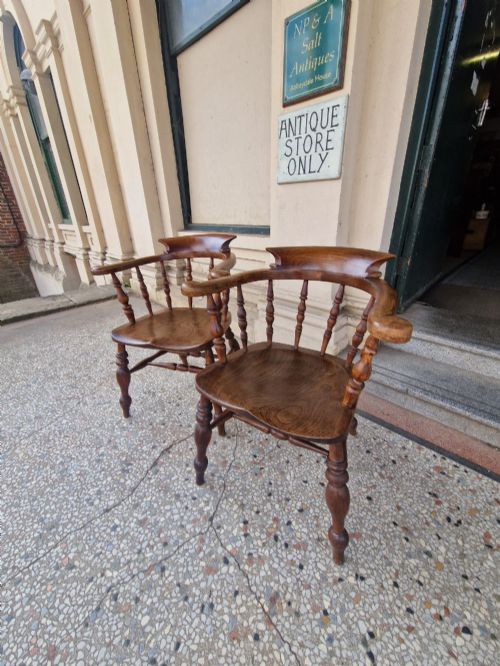
An elm smokers bow armchair brings robust country character and sturdy seating into a room.
Elm Smokers Bow Armchair
An elm smokers bow armchair belongs to the broader Windsor family, featuring a low curved back and robust wooden construction suited for everyday use. These chairs emerge primarily from the Victorian and Edwardian eras, spanning the mid-nineteenth century into the early twentieth century.
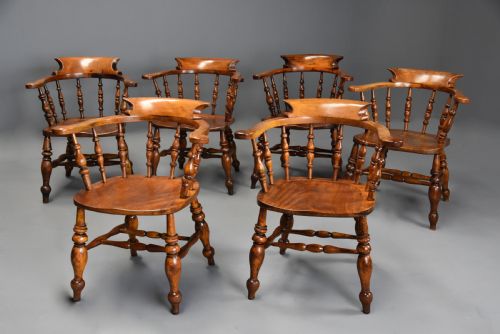
The form frequently overlaps with captain chairs, desk chairs, and country armchairs designed for kitchen or office settings. Buyers encounter single pieces, pairs, and occasionally larger sets recorded across rural English traditions.
Materials and construction
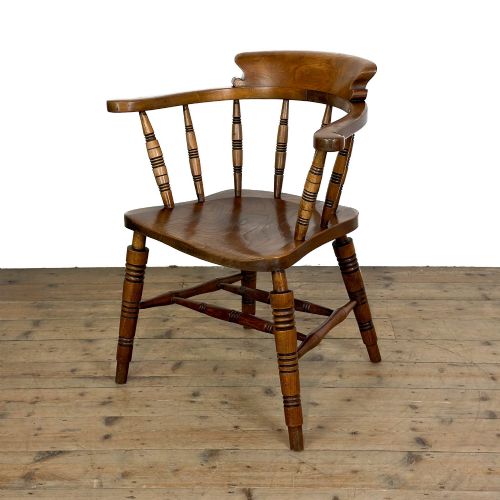
Cabinet makers utilised a combination of native timbers, pairing solid elm seats with bent ash or beech for the curved back rails and spindles. Oak and yew occasionally appear within regional variations, while turned stretchers provide structural rigidity beneath the seat.
Seats are typically deeply saddled from a single thick block of timber to ensure comfort. Traditional joining techniques such as wedged tenons secure the uprights directly through the seat board.
Some chairs retain double stretchers, built extra tough for country squires who clearly rocked a bit too hard.
Judging quality in country seating
Quality rests on the thickness and figuring of the elm seat, alongside the grace of the steam-bent back bow. Better examples display crisp turning on the spindles and legs without excessive replacement parts.
Proportion and stance dictate the visual appeal, where a deeply curved arm and balanced stretcher arrangement elevate the piece above standard utility seating.
Glenister High Wycombe
The Elm Smokers Bow Armchair Glossary
- Smokers bow
- A low-back Windsor armchair characterised by a continuous curved wooden armrail resting on short turned spindles. This form gained popularity in Victorian vernacular spaces and offices.
- Windsor chair
- A chair built with a solid wooden seat into which the legs and back spindles are separately bored and wedged. Regional variations include low-back and high-back formats.
- Stretcher
- Horizontal wooden rods connecting the legs of a chair to provide structural stability. Double stretchers offer additional reinforcement in heavy-use country seating.
- Saddled seat
- A wooden chair seat carved into a concave, contoured shape for ergonomic comfort. This shaping is particularly pronounced in elm country armchairs.
Elm Smokers Bow Armchair: Frequently Asked Questions
What is the difference between a smokers bow and a captain chair?
Smokers bows and captain chairs share very similar low-back Windsor silhouettes and were frequently used interchangeably in offices and country homes during the nineteenth century.
Distinctions depend largely on regional terminology used by makers rather than fundamental structural differences in the seat or arms.
Where were these armchairs originally used?
These sturdy armchairs served in farmhouse kitchens, Victorian offices, and country pubs where durable seating was essential for daily tasks.
Their robust timber construction allowed them to withstand heavy commercial and domestic use over generations.
How do I date a nineteenth century elm armchair?
Dating relies on observing construction details, tool marks on the underside of the seat, and the wear patterns accumulated across the elm and beech timbers.
Victorian examples often feature characteristic spindle turnings and stretcher arrangements that evolved from earlier vernacular designs.
Can I use an antique smokers bow at a desk?
Many nineteenth-century examples functioned historically as office or desk chairs due to their supportive curved armrests and comfortable wooden seats.
Check the seat height against modern desk clearances to ensure a comfortable working posture.