

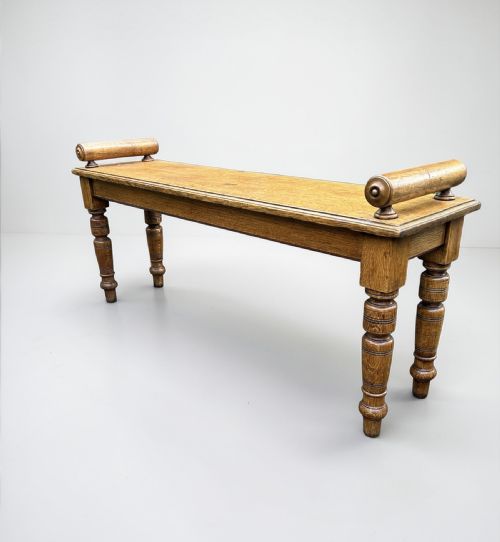



Victorian Oak Window Seat
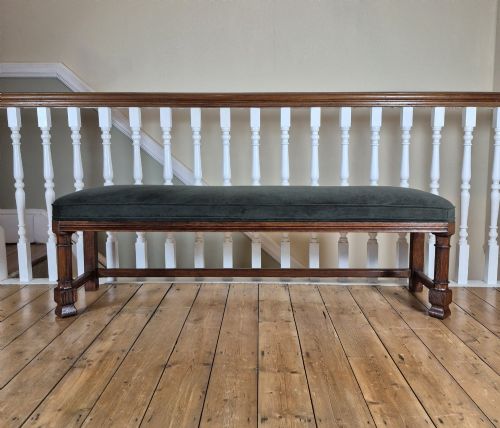
A victorian oak window seat offers sturdy construction and rich grain, grounding a hallway or bay with period character.
Victorian Oak Window Seat
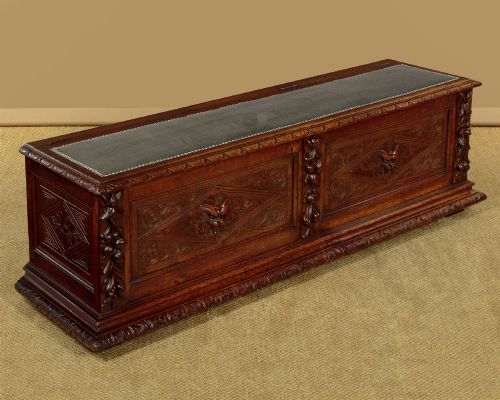
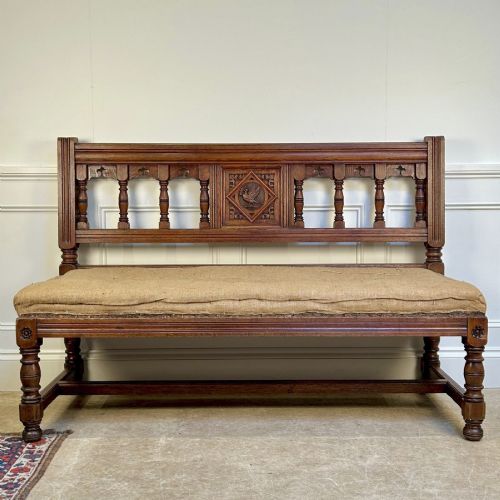
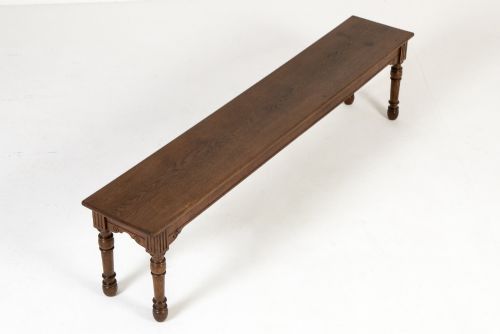
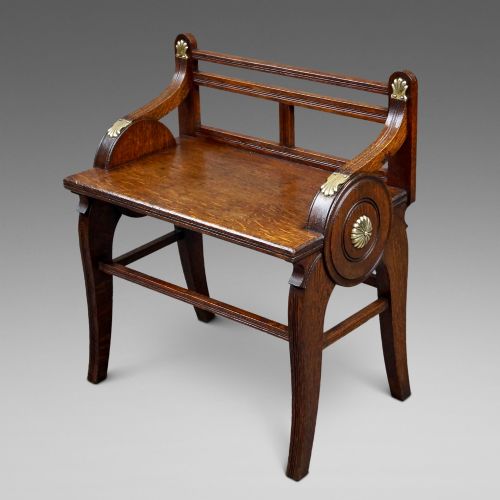
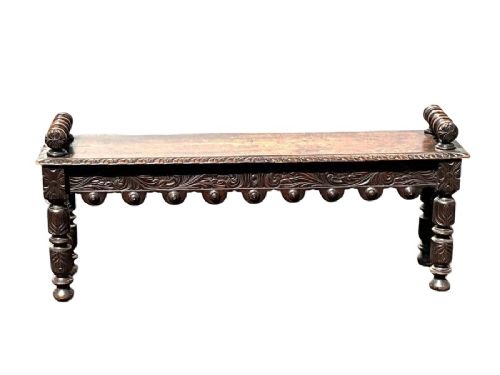
A victorian oak window seat combines practical seating with the heavy timber presence typical of nineteenth century domestic furniture. These pieces frequently double as hall benches, long stools, and storage boxes designed for hallways and living spaces.
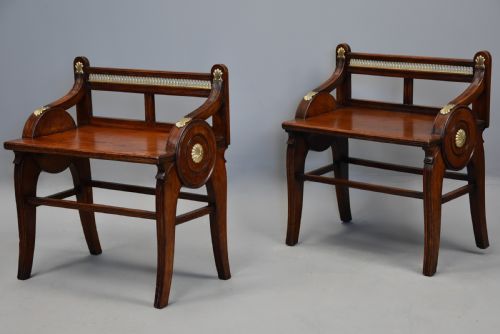
The examples found here range from plain jointed forms to heavily carved gothic revivals and brass-mounted pieces. Most originate from the wider Victorian era, spanning decades from the eighteen-fifties through to the close of the century.
How They Were Made
Cabinet makers built these frames primarily from solid English oak, occasionally incorporating burr elm for contrasting grain. Joinery relied on traditional peg joints and sturdy framing to support daily use as benches and pews.
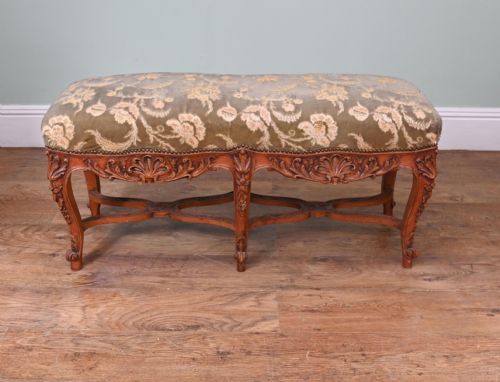
Upholstered versions utilised materials such as leather, velvet, hessian, and fabric stretched over padding, whilst others incorporated brass mounts and decorative ironwork for structural reinforcement.
Listings feature solid oak, brass, leather, and velvet across nineteenth-century styles including Gothic Revival, Arts & Crafts, and French Provincial.
What Varies in Quality
Depth of carving and sharpness of detail separate standard production from exceptional pieces. Crisp linenfold panels, well-executed tracery, and figurative elements like green man carvings indicate superior workshops.
The selection of timber grain, particularly figured oak or burr elm accents, dictates visual appeal. Robust peg-jointed construction without excessive modern intervention preserves the structural integrity expected by collectors.
GIllows·James Shoolbred & Co
The Victorian Oak Window Seat Glossary
- Gothic Revival
- A nineteenth-century style drawing inspiration from medieval architecture, featuring pointed arches, tracery, and heavy carving. It dominated much of the ecclesiastical and domestic furniture design of the period.
- Hall Bench
- A narrow wooden seat positioned in entranceways, often incorporating storage beneath the lid or a decorative backrest. These pieces served visitors while they removed outer garments.
- Joint Stool
- An early form of wooden stool constructed with mortise and tenon joints held together by wooden pegs. The design provides exceptional stability through simple geometry.
- Reformed Gothic
- A sub-movement of the Gothic Revival style promoted by designers who favoured structural honesty and simpler, rectilinear forms over excessive ornamentation. It stripped away historical excess in favour of utility.
- Burr Elm
- A knotty timber growth yielding intricate swirling grain patterns highly prized for decorative panels. Cabinet makers sliced this wood thinly to highlight its natural figure.
Victorian Oak Window Seat: Frequently Asked Questions
Where should I place a window seat?
These pieces suit narrow hallways, bay windows, or foot-of-the-bed placements where linear seating is practical. Their sturdy timber frames handle high-traffic thoroughfares with ease.
Ensure the depth of the seat matches the available floor space, particularly in narrower corridors or smaller vestibules.
Did these seats include storage?
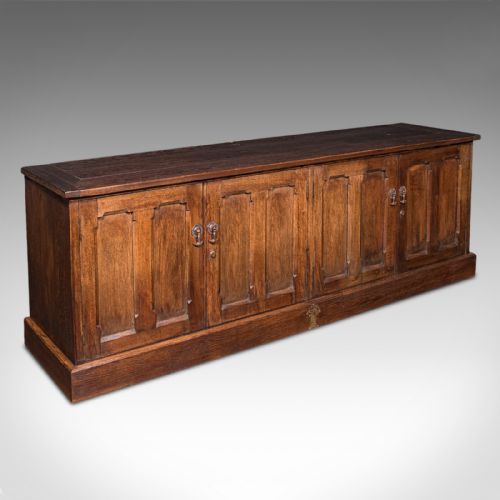
Many examples feature hinged lids opening to reveal storage boxes or blanket chests beneath the main cushion. This dual purpose made them popular for boots, linens, and household items.
Solid panel construction and heavy iron hinges kept the interior compartments secure and durable.
How do I identify Gothic Revival pieces?
Look for architectural motifs such as pointed arches, quatrefoils, heavy linenfold carving, and chamfered edges. These details mirror medieval stone church design translated into domestic timber.
Dark oak finishes and austere lines often accompany this specific nineteenth-century aesthetic movement.
What is the difference between a hall bench and a window seat?
Makers designed hall benches primarily for entranceways, often with high backs or storage compartments, whilst window seats tended to be lower and backless to fit beneath glazing.
In practice, makers and buyers used both terms interchangeably due to their shared proportions and heavy oak construction.