
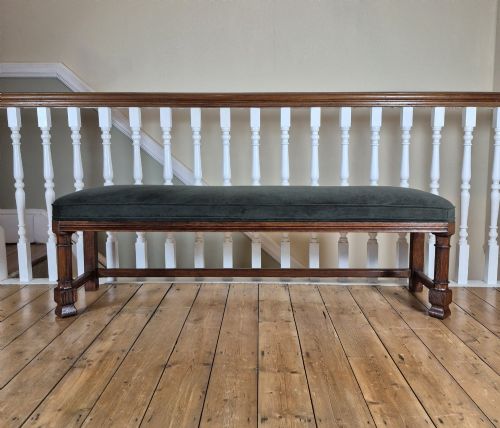
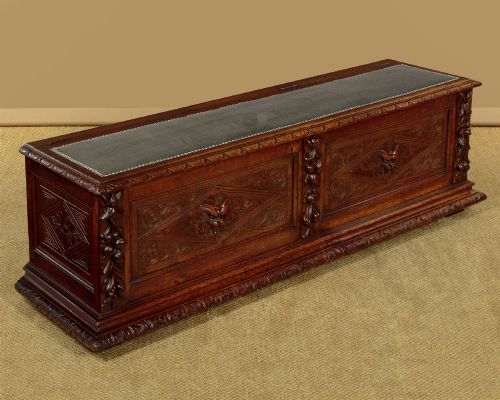
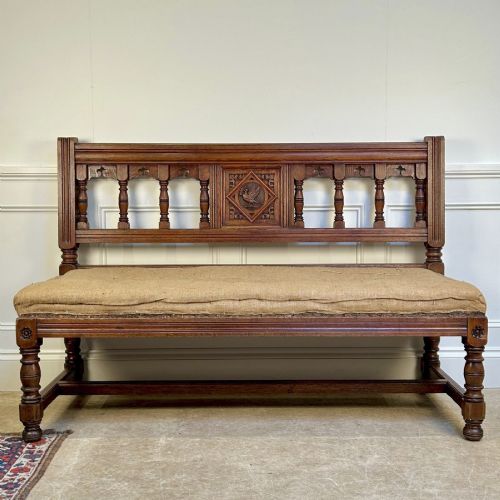

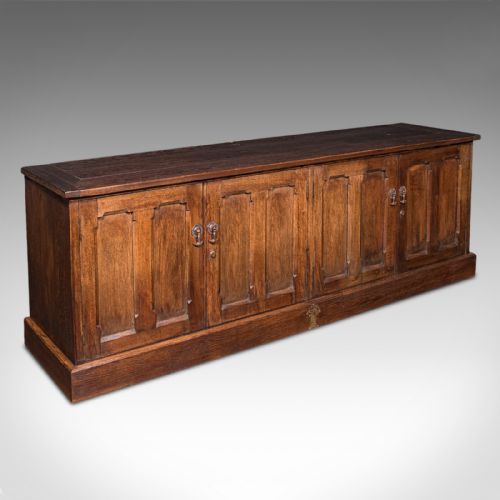


Gothic Revival Window Seat
These gothic revival window seat examples bring structural timber and architectural forms into domestic rooms for practical seating.
Gothic Revival Window Seat
A gothic revival window seat combines deep historical references with functional domestic seating designed to sit neatly beneath casement apertures. You will most commonly encounter pieces fashioned from sturdy oak, though walnut and burr elm examples also surface across the inventory.
The aesthetic draws heavily upon ecclesiastical and medieval architecture, translating pointed arches, tracery and linenfold carving into compact benches and stools. These forms span the nineteenth century, with Victorian interpretations alongside pieces in the later Arts and Crafts and Aesthetic Movement styles.
Makers often integrated storage or utilised sturdy X-frame constructions to support upholstered pads finished in velvet, leather, hessian, or contemporary fabric. While benches and hall seats share similar timber frames, a dedicated window seat is proportioned specifically for lower elevations and narrower floor spaces.
Materials and construction
Makers relied principally upon solid oak and walnut, selecting dense hardwoods capable of enduring heavy daily use while retaining crisp carved detail. Joinery involved traditional pegged mortise and tenon joints, ensuring structural rigidity without relying on modern metal fasteners.
Surfaces were frequently embellished with hand-carved motifs reflecting architectural stonework, while seating decks utilised webbing or solid panels to support squab cushions upholstered in velvet, leather, or hessian. Brass fittings and iron structural elements occasionally reinforced the timber framework.
Listings feature pieces spanning from 1870 through to the early 1900s, predominantly rendered in solid oak with occasional walnut frames.
Assessing quality and execution
Quality rests in the depth and sharpness of the carved enrichment, distinguishing crisp hand-tooled tracery from shallow or mechanically softened decoration. Timber selection also dictates grade, with figured burr elm or dense quartersawn oak marking out superior output.
The integrity of the frame construction and the fidelity of the historic revival style determine whether a piece remains a disciplined architectural interpretation or a simpler vernacular utility item. Original upholstery substrates and intact brass hardware further elevate the standing of surviving examples.
Gillows
The Gothic Revival Window Seat Glossary
- Gothic Revival
- An architectural and decorative style drawing inspiration from medieval forms, featuring pointed arches, trefoils, and heavy timber framing. This movement dominated nineteenth-century design across civic and domestic interiors.
- Reformed Gothic
- A sub-movement of the later nineteenth century that emphasised structural honesty, plain surfaces, and medieval construction methods over excessive applied ornament. It stripped away superfluous revival details in favour of functional clarity.
- Arts and Crafts
- A design movement valuing traditional hand craftsmanship, simple vernacular forms, and natural materials over industrial mass production. Pieces from this ethos often display exposed joinery and unpretentious timber surfaces.
- Aesthetic Movement
- A late nineteenth-century design current promoting art for art's sake, often incorporating cleaner lines and lighter woods like walnut. It marked a departure from heavier Victorian historical revivals.
- Quartersawn oak
- Timber cut radially from the growth rings, producing a distinctive flecked grain pattern known as medullary rays. This cut offers superior stability and resistance to warping in large structural panels.
Gothic Revival Window Seat: Frequently Asked Questions
Where should I place a gothic revival window seat?
These low benches fit naturally beneath large living room windows, along narrow hallways, or at the foot of a bedroom bed. Their shallow depth allows them to occupy circulation spaces without blocking pathways.
Ensure the height matches nearby furniture if you plan to use it for extended seating rather than momentary pauses.
What fabrics were originally used on these seats?
Period pieces typically utilised durable textiles such as heavy velvet, embossed leather, or coarse hessian to withstand regular domestic friction. Many surviving examples have since been reupholstered to suit modern interiors while retaining traditional padding profiles.
Checking the underside can reveal remnants of original lining materials if you wish to restore the piece to its exact historical specification.
How do I distinguish Victorian gothic from Arts and Crafts pieces?
Victorian gothic examples tend to feature heavier carved tracery, pointed arches, and ecclesiastical motifs that mimic stone architecture. Arts and Crafts pieces are generally more restrained, focusing on exposed pegged joints and honest timber grain.
Looking at the overall silhouette reveals whether the maker prioritised monumental architectural display or simple domestic utility.
Are these benches suitable for daily seating?
Solid oak and walnut framing provides robust structural integrity designed for sustained weight bearing. Adding a supportive squab cushion ensures comfort during longer periods of sitting.
Inspect the joinery at the legs and rails to confirm the frame remains tight before putting the seat into heavy daily service.