


Gothic Style Oak Bench
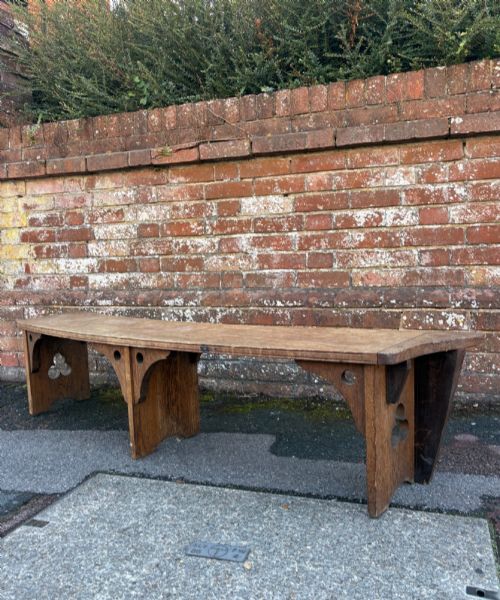
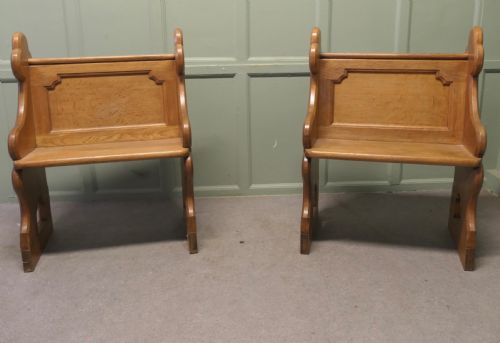
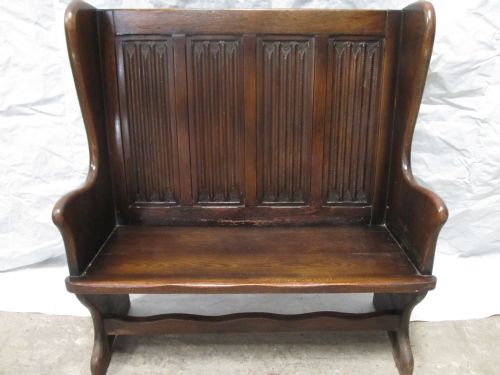
These gothic style oak bench examples combine heavy structural timber with architectural tracery, offering sturdy historical seating for halls and libraries.
Gothic Style Oak Bench
A gothic style oak bench brings architectural presence into a room, drawing on medieval forms adapted for Victorian and later interiors. Buyers searching for this phrase encounter solid timber seating ranging from simple boarded stools and window seats to elaborate monks benches and high back settle seats.
The pieces on this page lean heavily towards the nineteenth-century Gothic Revival and Arts and Crafts movements, alongside seventeenth-century examples and Italian Renaissance influences. Forms vary from curved pugin style benches with trefoil carved supports to compact window seats and apprentice pieces.
How they were made
Construction relies primarily on solid oak, utilising traditional joinery such as pegged mortise and tenon joints to bear the weight of heavy timber frames. Walnut also appears among the materials, while upholstery incorporates fabric and velvet inserts on seats and stools.
Carving defines the decoration, featuring trefoil motifs and panel work executed directly into the timber. Makers employed trestle forms and boarded construction techniques inherited from earlier centuries to build rigid, long-lasting seating.
Listings on this site span from the seventeenth century through the Victorian era into the twentieth century, constructed primarily in solid oak with occasional walnut.
What varies in quality
Quality rests upon the crispness of the timber carving and the selection of the oak itself, with denser grain showing superior durability and visual depth. Pieces that integrate structural joinery seamlessly with architectural ornamentation demonstrate a higher level of workshop competence.
Proportion and execution distinguish standard vernacular production from ambitious revival work designed by prominent architects or their followers. The integrity of the original timber surface and the subtlety of applied details dictate the standing of each piece.
Awn Pugin
The Gothic Style Oak Bench Glossary
- Gothic Revival
- An architectural and decorative style drawing inspiration from medieval buildings, notable for pointed arches and heavy timber construction. This movement flourished throughout the Victorian period.
- Monks Bench
- A dual-purpose piece of furniture featuring a hinged back that folds down to create a table surface over a box seat. It provides both storage and seating.
- Trefoil
- A three-lobed decorative ornament resembling a clover leaf, frequently pierced through wooden panels or carved into supports. It appears regularly in Gothic tracery.
- Settle
- A wooden bench with a high back designed to block drafts, often incorporating a panelled construction and a box base for storage. These pieces were traditionally placed near hearths.
- Apprentice Piece
- A miniature or scaled-down item made by a craftsman to demonstrate skill and secure trade recognition. These objects display the same construction methods as full-scale furniture.
Gothic Style Oak Bench: Frequently Asked Questions
Where should I place a gothic style oak bench?
These benches suit entrance halls, long corridors, or living spaces where their architectural lines can stand against a blank wall. Their heavy timber presence anchors a room effectively.
Smaller variants like window seats or footstools fit beneath windows or beside firesides, offering functional seating without overwhelming smaller spaces.
How do I care for antique oak furniture?
Maintain the timber by applying natural beeswax periodically to nourish the grain and protect the surface from drying out. Avoid placing oak pieces near direct heat sources or in fluctuating humidity.
Dust regularly with a soft, dry cloth and clean upholstery fabrics gently according to their specific textile requirements.
How can I tell the period of an oak bench?
Examine the tool marks, joinery methods, and wear patterns across the timber frame to understand its age. Seventeenth-century pieces display hand-riven boards and pegged joints distinct from nineteenth-century revival machinery.
Stylistic cues also help, as Victorian Gothic Revival and Arts and Crafts makers reinterpreted medieval motifs with different structural proportions.