



Victorian Oak Wall Barometer
A victorian oak wall barometer measures atmospheric pressure while bringing rich timber grain and carved detail into a hallway or study.
Victorian Oak Wall Barometer
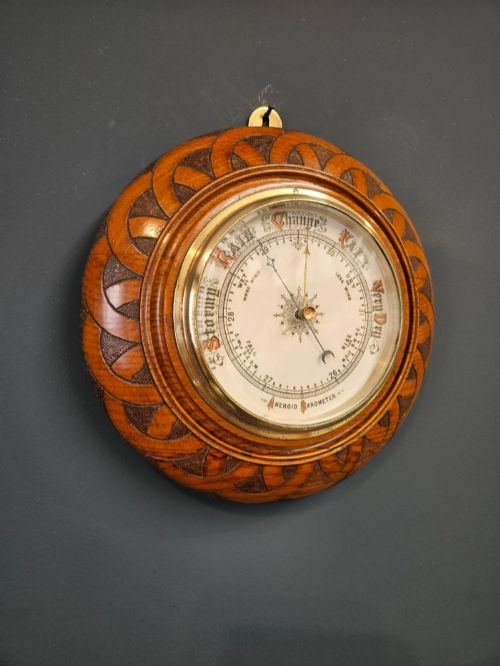
When you search for a victorian oak wall barometer, you encounter instruments designed to hang in domestic hallways, parlours and libraries to predict local weather changes. The listings on this page span the Victorian and Edwardian periods, stretching from the middle decades of the nineteenth century into the early twentieth century.
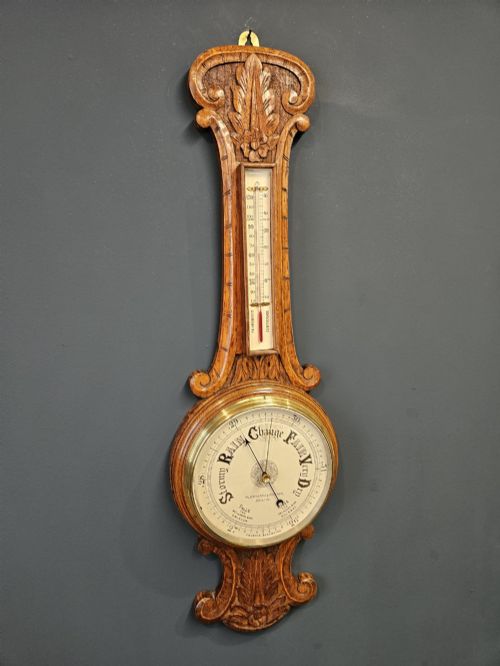
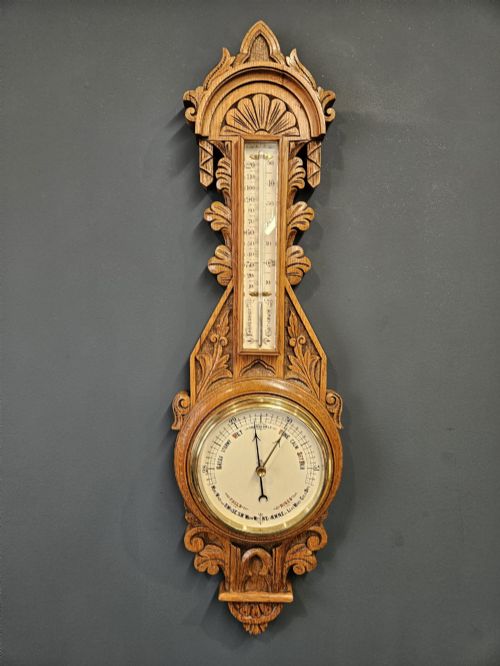
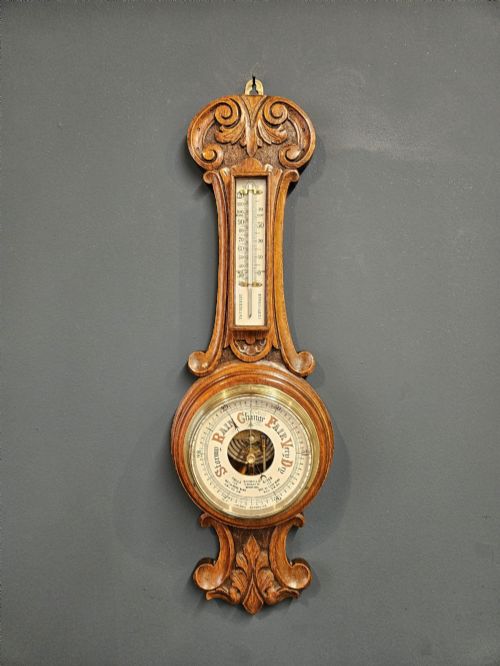
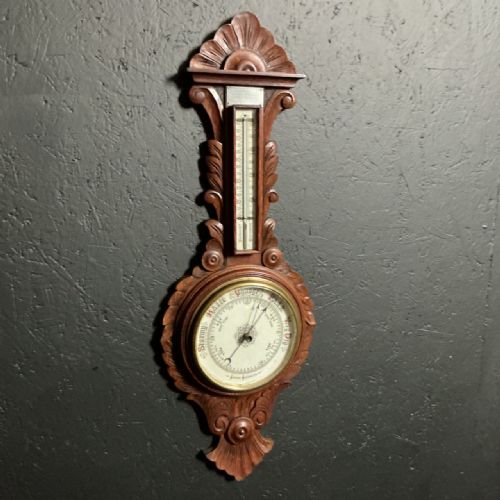
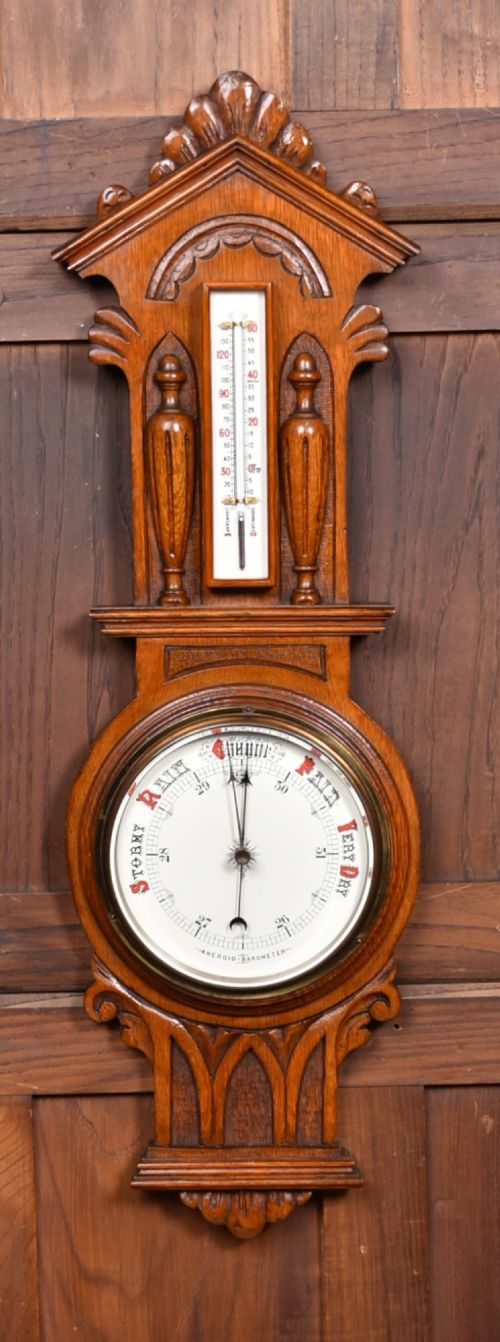
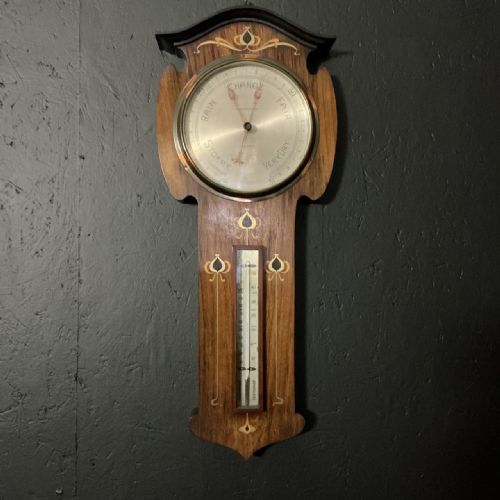
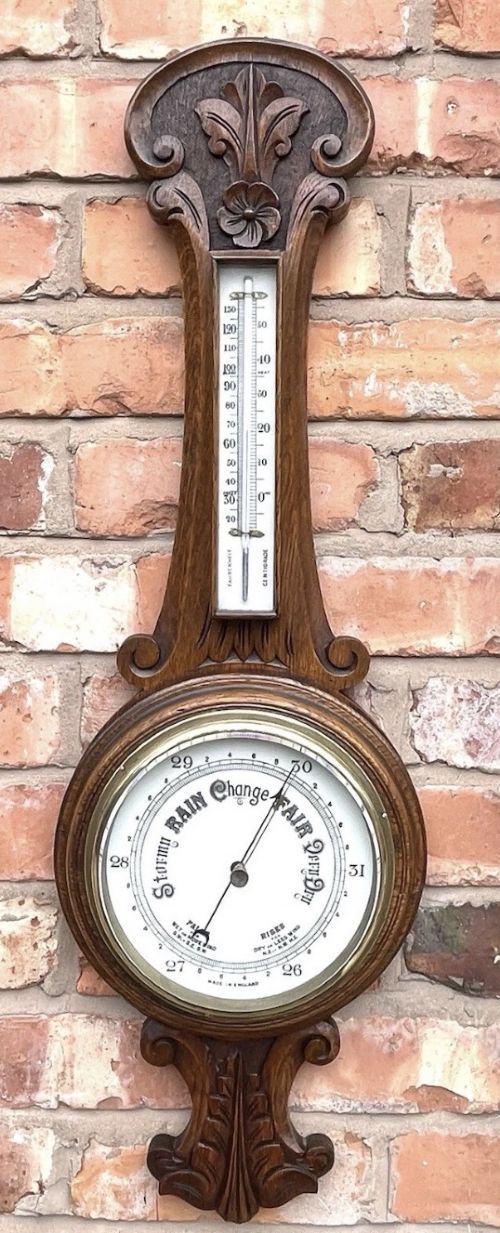
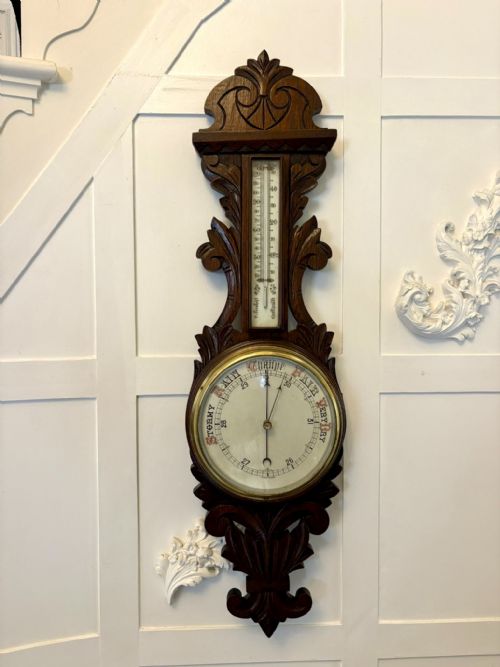
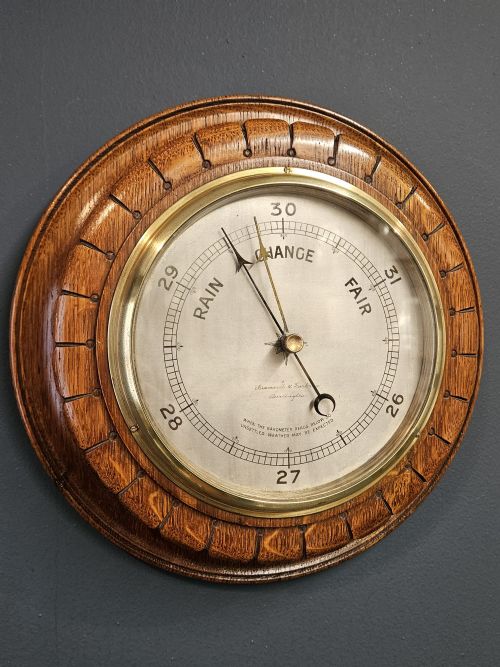
The banjo form dominates the selection, featuring an extended body that accommodates both the circular dial at the top and a thermometer set into the stem below. Alongside these banjo shapes, you find stick barometers, wheel barometers and compact circular wall models housed in timber frames.
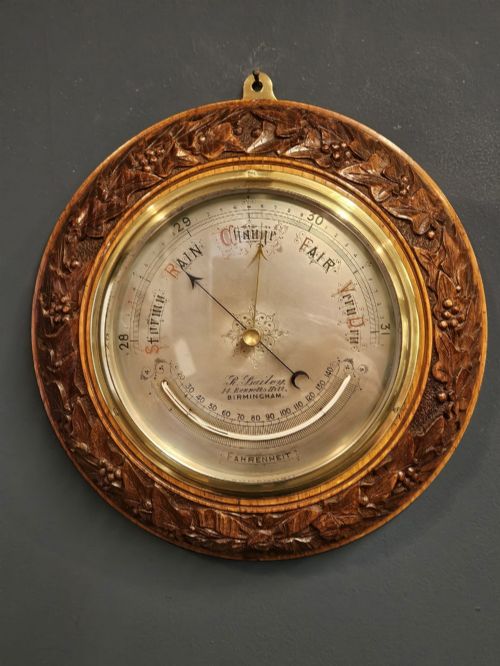
Makers such as Negretti & Zambra, J Hughes London, James Pitkin and Maple & Co appear across the inventory, alongside regional firms like Bramwell & Harbron of Darlington and W Watson & Sons. Stylistic influences vary from classical lines to Black Forest carving, geometric designs, Arts and Crafts simplicity and Gothic Revival motifs.
Materials and construction
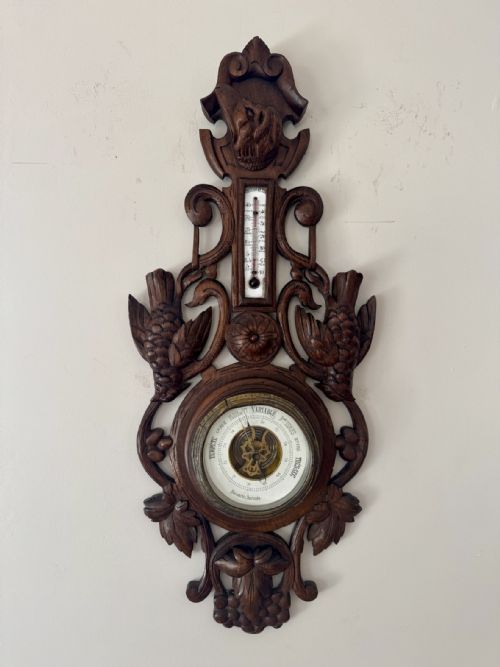
Cabinet makers utilised solid oak, golden oak and walnut for the structural cases, often turning the timber on a lathe or carving foliage, birds and geometric patterns directly into the wood. Frames range from simple circular surrounds to deeply carved Black Forest panels with intricate naturalistic motifs.
The internal mechanics rely upon brass movements, glass bezels protecting the faces, and either mercury columns or aneroid spring capsules to register changes in pressure. Dials are fashioned from porcelain, ceramic or silvered metal, with delicate paper scales sometimes used behind glass.
Thermometers integrated into the stems provide secondary readings, while mercury-filled stick barometers often include exposed tubes mounted on wooden floor or wall boards. Wall hanging mechanisms typically consist of secure brass rings or sturdy recessed brackets set into the rear of the case.
Victorian Oak Wall Barometer Retail Price Guide 2026
Typical asking prices for victorian oak wall barometer among the pieces listed under this phrase on Sellingantiques today, from the lower quarter to the upper quarter. They describe what is for sale here now, not the wider market.
Listings feature oak, walnut, ceramic, brass and porcelain materials across Victorian and Edwardian periods.
Evaluating the pieces
The depth and crispness of the wood carving dictate much of the visual merit, distinguishing mass-produced architectural mouldings from hand-carved Black Forest or West End maker pieces. Finer instruments display sharp detailing in the oak leaves, birds and geometric borders without splintering or modern repairs.
The legibility and material of the dial influence desirability, with silvered brass plates and painted porcelain faces holding greater presence than plain paper cards. Original glass bezels, intact thermometer bulbs and matching mercury tubes preserve the historical integrity of the piece.
Signature plaques from notable opticians and instrument makers like Negretti & Zambra add provenance and demonstrate high scientific standards of assembly. The overall balance between the timber case and the mechanical face determines how successfully the instrument reads as both a scientific tool and a wall hanging.
Bramwell & Harbron of Darlington·Negretti & Zambra·J Hughes London·W Watson & Sons·Maple & Co·James Pitkin London
The Victorian Oak Wall Barometer Glossary
- Banjo barometer
- An instrument shaped like a banjo, featuring a rounded dial head at the top and a tapering stem below that frequently houses a thermometer.
- Aneroid barometer
- A barometer that measures air pressure through the expansion and contraction of a flexible metal bellows, avoiding the use of liquid mercury.
- Stick barometer
- A tall, narrow wall instrument that uses a vertical glass tube filled with mercury against a scale to display atmospheric pressure.
- Silvered dial
- A metal dial face treated to produce a soft, reflective silver finish that contrasts sharply against engraved black numerals.
- Black Forest
- A regional carving style originating from Central Europe, noted for deeply undercut naturalistic foliage, animals and rustic scenes rendered in dark woods.
Victorian Oak Wall Barometer: Frequently Asked Questions
How do aneroid and stick barometers differ?
Aneroid barometers utilise an internal mechanical capsule to register air pressure without liquid, allowing for compact banjo and circular wall shapes.
Stick barometers rely on an open column of mercury within a tall wooden case, offering a direct visual reading of barometric height.
Where should I hang a wall barometer?
Hang your barometer on an interior wall away from direct sunlight, central heating radiators and heavy drafts to ensure accurate pressure readings.
Choose a sturdy wall fixing that can comfortably support the weight of the dense oak case and glass components.
Do these antique barometers still work?
Many aneroid and mercury barometers retain their functional mechanisms, though older instruments may require professional calibration against local weather stations.
Changes in weather will often move the internal pointer, but treating them primarily as decorative historical objects is recommended.
How do I identify a Black Forest piece?
Black Forest barometers stand out through their high-relief, hand-carved wooden motifs featuring oak leaves, cascading foliage and carved animals.
The timber is typically dark walnut or stained oak, worked with deep undercutting that creates dramatic shadows across the frame.