




Victorian Oak Refectory Table
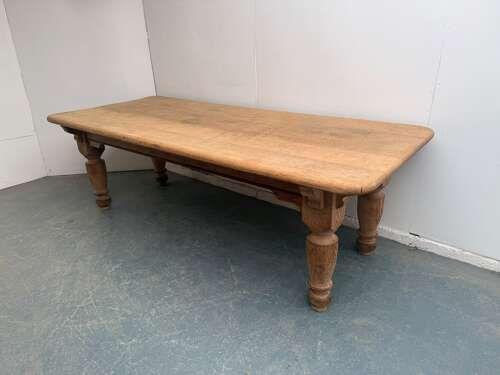
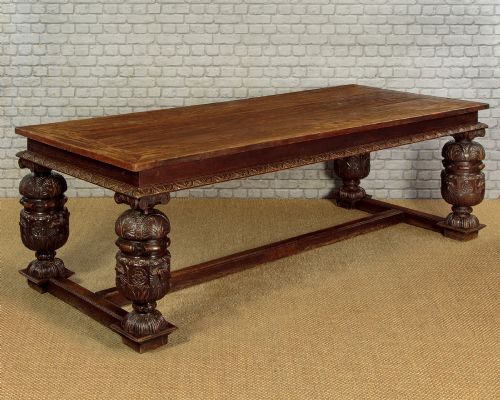
A victorian oak refectory table brings sturdy domestic heritage into a room, offering long timber surfaces designed originally for communal dining and heavy daily use.

Victorian Oak Refectory Table
A victorian oak refectory table typically draws on earlier architectural styles, appearing in forms labelled as Gothic Revival, Jacobean Revival, or rustic farmhouse.
Most examples found here span from the mid to late nineteenth century, reflecting the Victorian period's fascination with robust historical design and solid timber construction.
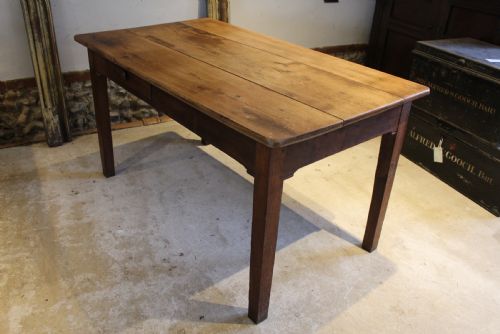
These pieces function primarily as large dining tables, tavern tables, or serving boards, built to seat substantial numbers for family meals or communal gatherings.
How they were made
Makers relied heavily on solid oak planks, sometimes paired with secondary timbers like pine, pitch pine, or walnut for framing and internal supports.
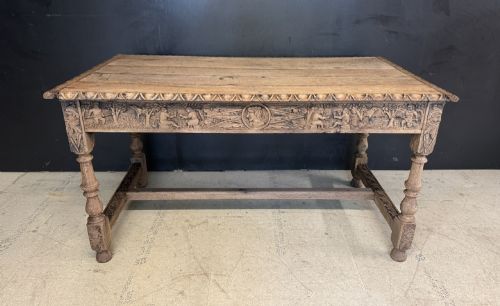
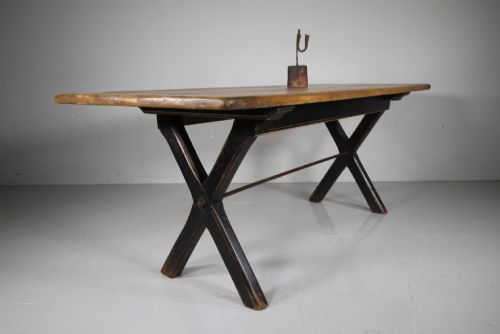
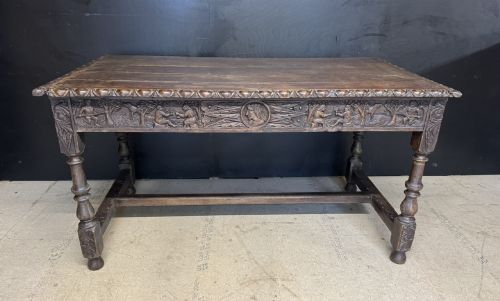
Construction techniques involved thick plank tops supported by heavy trestle bases, carved legs, and occasional iron, brass, or bronze hardware details.
Surfaces were frequently finished with wax or paint, while decorative elements incorporated hand-carved motifs reflecting Renaissance or Gothic revivals.
Victorian Oak Refectory Table Retail Price Guide 2026
Typical asking prices for victorian oak refectory table among the pieces listed under this phrase on Sellingantiques today, from the lower quarter to the upper quarter. They describe what is for sale here now, not the wider market.
Listings feature oak alongside pine, pitch pine, and walnut, spanning periods from the Georgian era through to the late nineteenth century.
What varies in quality
The degree of hand-carving and the choice of timber density separate standard utilitarian tables from finer workshop productions.
Proportion and structural integrity define the better specimens, where thick oak planks remain stable and balanced across long spans without excessive sagging.
Whytock And Reid
The Victorian Oak Refectory Table Glossary
- Refectory table
- A long dining table historically used in monasteries for communal meals. Nineteenth-century interpretations adapt this format for domestic dining rooms.
- Plank
- A long, flat piece of timber sawn from a log. Multi-plank constructions are common in these dining surfaces.
- Gothic Revival
- An architectural and decorative style popular during the Victorian period. It reinterprets medieval pointed arches, tracery, and heavy carving on furniture.
- Trestle table
- A table supported by side assemblies consisting of two or more upright members connected by a horizontal beam.
- Pitch pine
- A resinous softwood utilised in conjunction with oak for structural framing in several nineteenth-century vernacular pieces.
Victorian Oak Refectory Table: Frequently Asked Questions
How do I seat guests comfortably?
Consider the overall length and the placement of the legs or trestles beneath the top. Long oak surfaces easily accommodate benches or multiple chairs along each side.
Ensure that knee clearance matches the height of the apron and underframe so diners sit at a natural distance from the edge.
What rooms suit these tables?
These robust dining surfaces fit spacious kitchens, formal dining rooms, or open-plan living areas designed for heavy daily use. Their substantial presence anchors large spaces effectively.
Pair them with mismatched wooden chairs or benches to echo the gathered aesthetic found in period country houses.
How do I clean the wood?
Dust the oak surface regularly with a soft, dry cloth to prevent grit accumulation. Apply a quality beeswax periodically to nourish the timber and maintain its natural sheen.
Avoid placing the table near direct heat sources or strong sunlight, which can dry out nineteenth-century oak and cause timber movement.
Are these tables authentic Victorian?
The pieces originate from the nineteenth century, often incorporating revival styles such as Gothic, Elizabethan, or Jacobean details. Makers of the period deliberately copied earlier seventeenth-century forms.
Examine the construction marks, timber shrinkage, and fastener types to understand the specific period context of the individual table.