
Victorian Oak Pedestal Table
These robust pieces bridge practical utility and heavy architectural presence, making a victorian oak pedestal table a grounding centrepiece for any study or drawing room.
Victorian Oak Pedestal Table
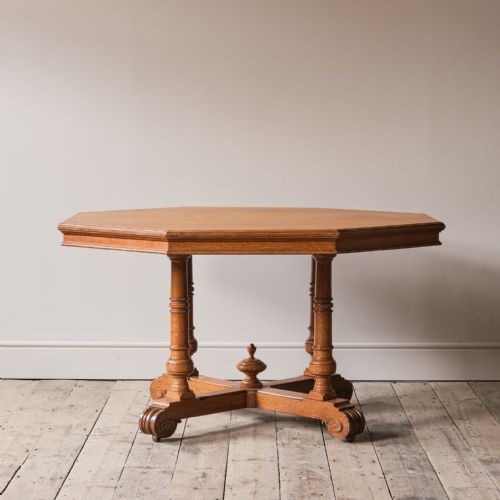
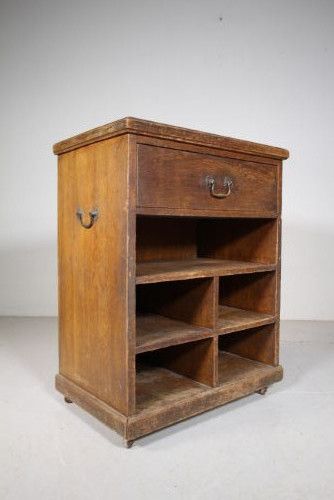
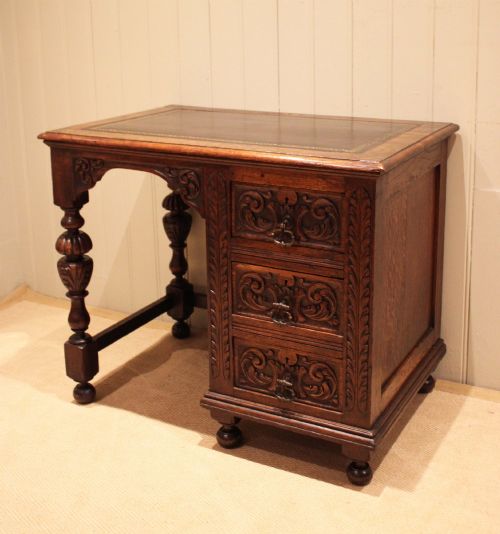
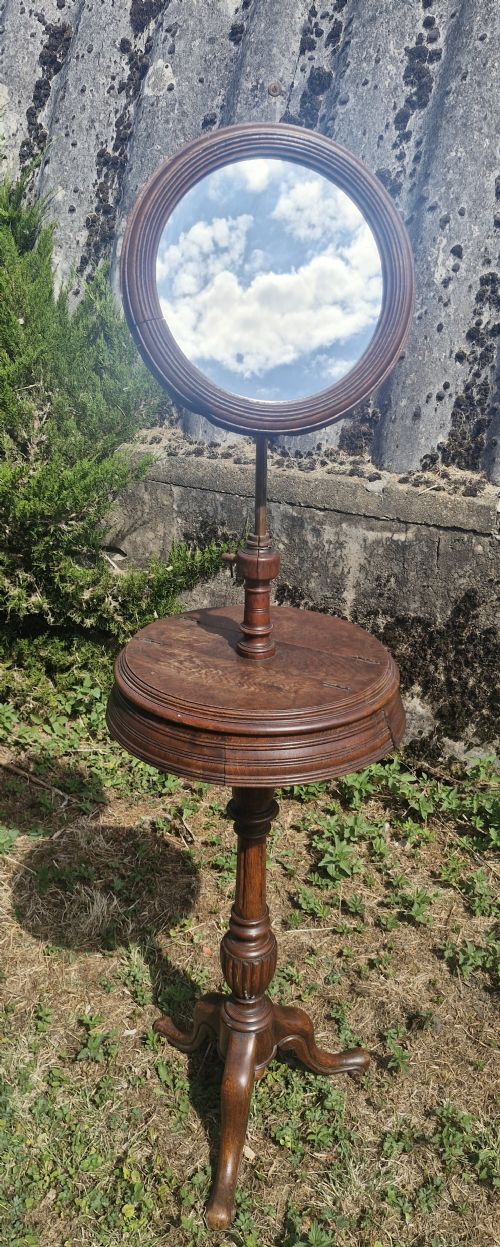
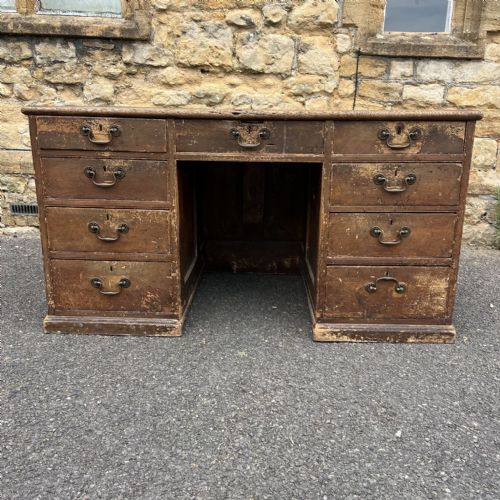
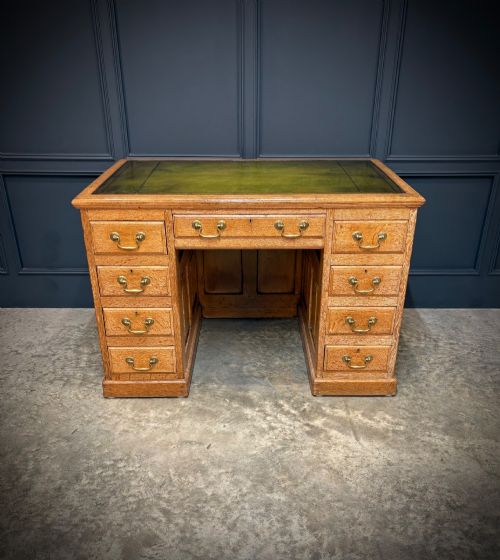
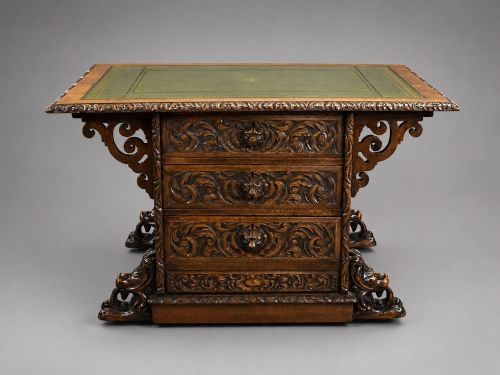
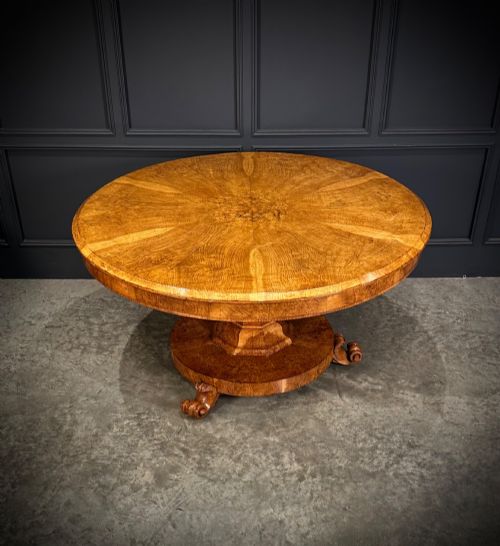
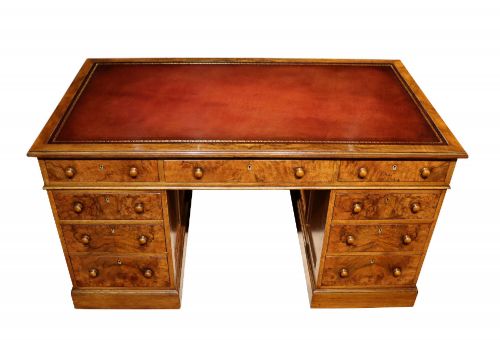
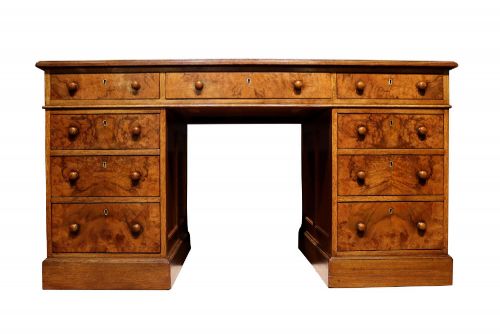
When searching for a victorian oak pedestal table, buyers encounter a diverse array of nineteenth-century forms ranging from heavy twin-pedestal writing desks to circular dining tables and tilt-top occasional pieces. The selection includes specific variations such as kneehole desks, partners desks, library tables, and bedside cabinets produced during the Victorian era and adjacent periods.
The material palette extends beyond standard timber to incorporate burr oak, pollard oak, and ebonised wood, frequently paired with brass hardware, leather writing surfaces, and cast iron supports. Stylistic influences span from Gothic Revival and Aesthetic Movement to William IV and Renaissance Revival, reflecting the varied tastes of nineteenth-century British cabinet makers.
Most pieces date from the mid to late nineteenth century, encompassing decades such as the 1860s, 1870s, 1880s, and 1890s, alongside occasional Edwardian examples. These tables served industrious purposes in offices, libraries, and country houses, resulting in durable construction designed for heavy daily use.
Materials and Construction
Cabinet makers utilised solid oak and decorative veneers like burr and pollard oak to create deeply figured table tops and panelled pedestals. Secondary timbers such as pine appear in concealed structural areas like drawer linings and internal framing.
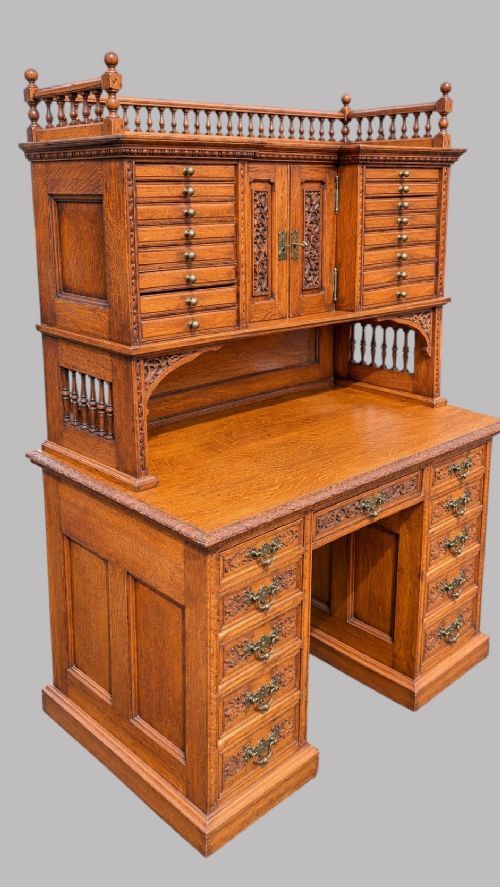
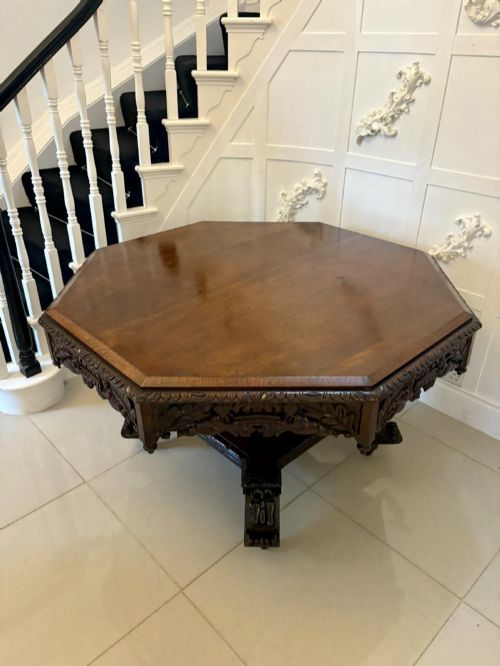
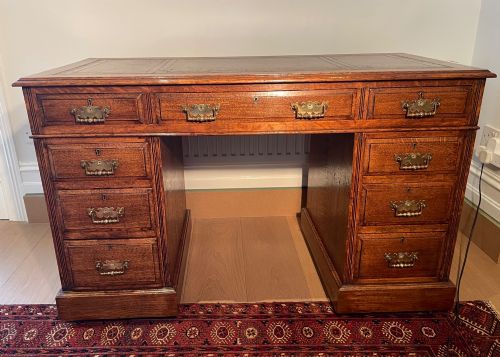
Surface details frequently incorporate hand-carved ornamentation, brass mounts, and inset tooled leather writing panels fixed to the timber substrates. Joinery methods rely on traditional framing and dovetailing, ensuring the central pillar and foot supports firmly anchor the heavy weight above.
Listings feature mid to late nineteenth-century dates, incorporating Gothic Revival and Aesthetic Movement styles alongside brass, leather, and burr walnut elements.
Assessing the Pieces
The depth of figured grain in burr or pollard oak veneers and the crispness of hand-carved mouldings separate standard utilitarian office furniture from fine domestic parlour pieces. Superior examples exhibit harmonious timber selection across large top surfaces and pedestals rather than mismatched grain patches.
Internal construction standards, including solid oak drawer linings, original brass hardware, and smoothly operating tilt or adjustable mechanisms, indicate the original workshop's tier of production. The integration of high-grade supplementary materials like supple leather inserts further distinguishes finer pieces.
T Wilson·Shoolbred
The Victorian Oak Pedestal Table Glossary
- Pedestal table
- A freestanding table supported by a central pillar or column resting on a footed base. This configuration allows maximum legroom around the perimeter.
- Partners desk
- A large double-sided desk designed for two people to work opposite one another. These typically feature drawers and cupboards accessible from both sides.
- Tilt top
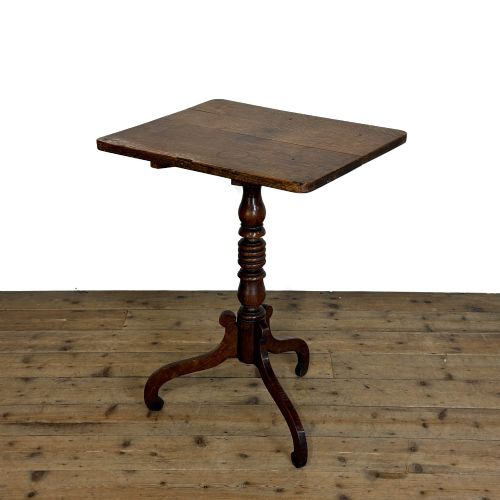
- A hinged tabletop mechanism that allows the surface to pivot vertically for storage against a wall. This feature is common on smaller occasional and parlour tables.
- Kneehole desk
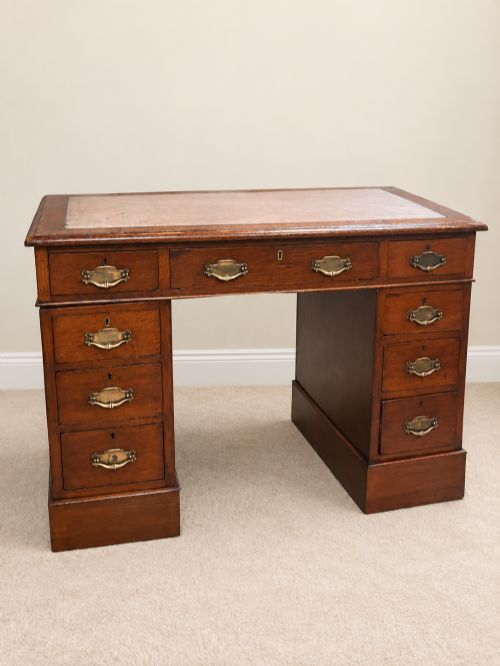
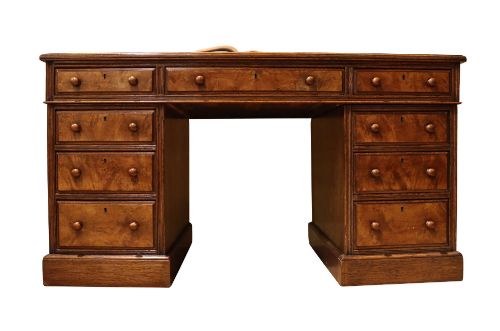
- A single-pedestal or double-pedestal writing table with an open recessed space in the centre for the user's legs. Smaller variants often include a central drawer above the aperture.
- Pollard oak
- Timber taken from trees that were pollarded, creating gnarled wood with highly decorative growth rings. Cabinet makers prized this timber for high-status table tops and cabinet fronts.
Victorian Oak Pedestal Table: Frequently Asked Questions
How were pedestal desks used?
These large desks served as administrative hubs in nineteenth-century offices, libraries, and studies, providing extensive storage within the twin pedestals.
Their substantial surface areas accommodated ledgers, correspondence, and writing equipment for daily professional and estate management.
What is pollard oak?
Pollard oak is a decorative timber harvested from trees cut back deliberately above the trunk to encourage dense, knotty branch growth.
This pruning method produces tightly swirled grain patterns that nineteenth-century makers utilised for prominent table tops.
What is a tilt top table?
A tilt top table incorporates a hinged mechanism beneath the surface that allows the top to rotate into a vertical position.
This practical design enabled nineteenth-century households to store occasional tables flat against room perimeters when not in active use.