





Brown Oak Vanity Desk
A brown oak vanity desk brings rich timber grain and period utility to a bedroom, offering a surface for morning routines that has weathered decades of use.
Brown Oak Vanity Desk
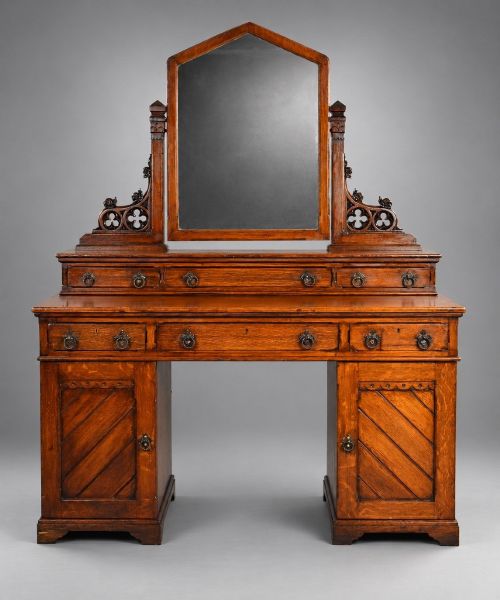
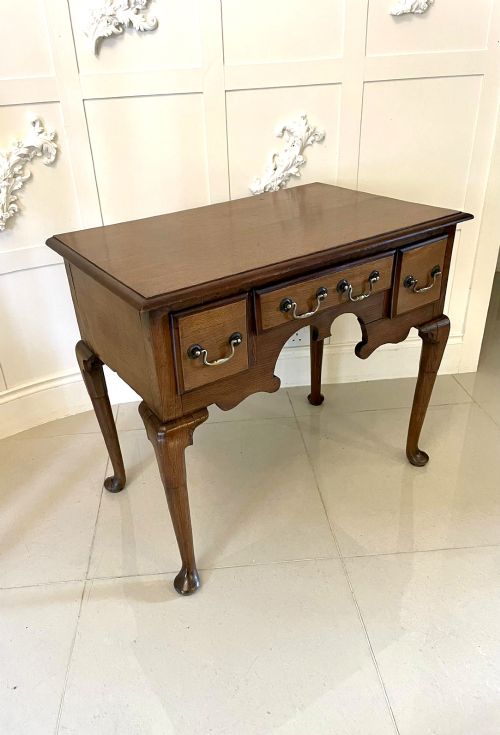
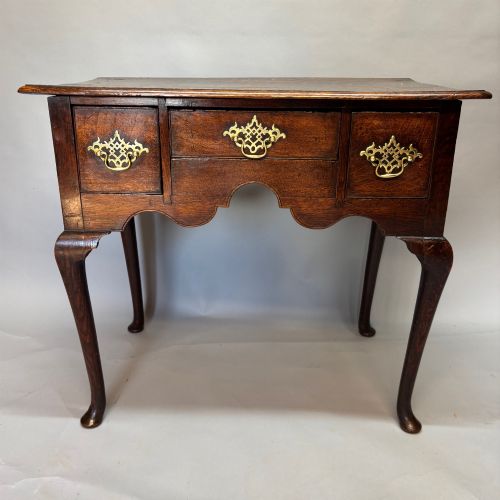
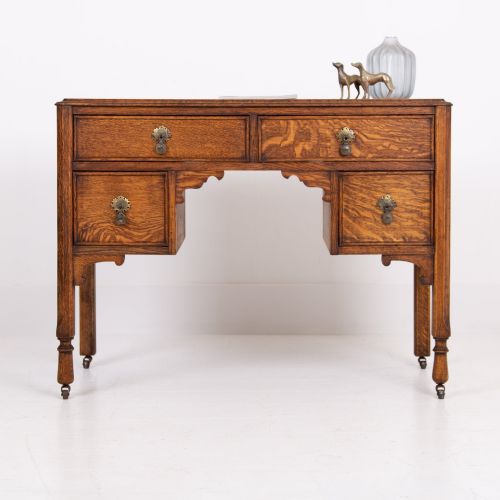
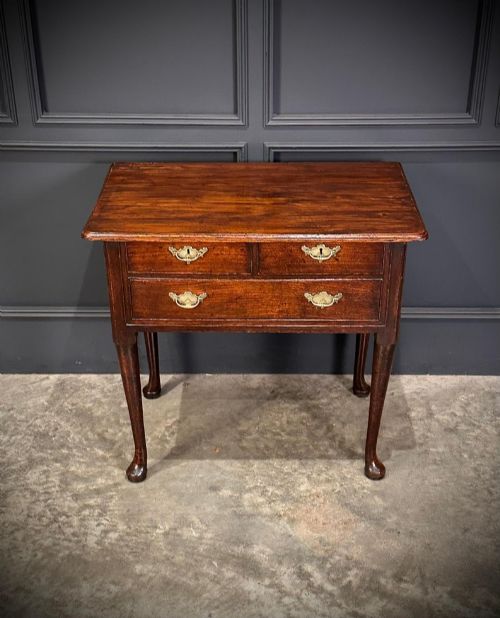
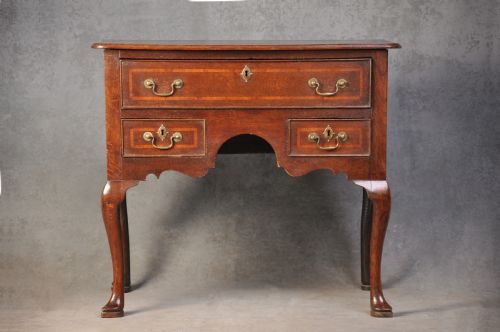
A brown oak vanity desk encompasses functional bedroom furniture designed for personal grooming and writing, drawing on forms spanning from the eighteenth century through the Edwardian era. Buyers searching for a brown oak vanity desk will most frequently encounter lowboys and dressing tables originating from the eighteenth century, the Victorian period, and the Edwardian era.
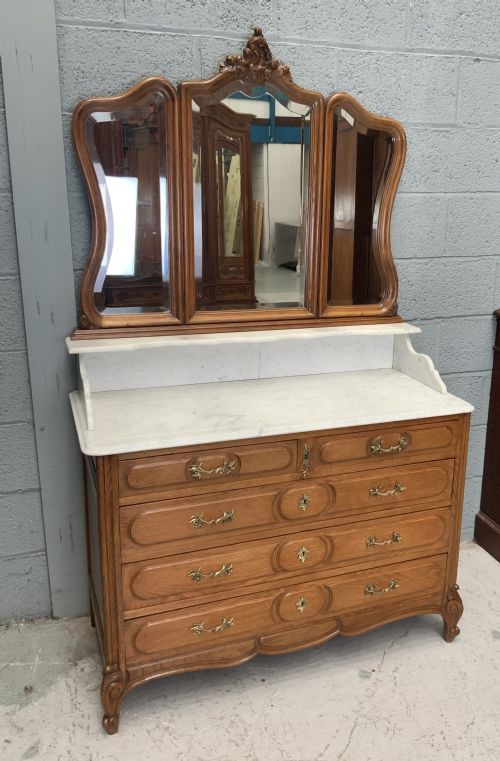
The selection ranges from early George I and Georgian lowboys with simple drawers to late Victorian and Arts and Crafts dressing tables featuring mirrors and inlaid details. These pieces combine practical storage with the distinct warm tones and figured grain characteristic of mature oak timber.
Makers and regional workshops utilised traditional forms such as the lowboy and washstand, adapting them into dedicated dressing spaces. The resulting items function equally well as compact desks or traditional vanity units within modern interiors.
Materials and construction methods
Cabinet makers constructed these brown oak vanity desk examples using solid oak timber, frequently accented with contrasting woods like boxwood and ebony for inlay work. Brass handles, key escutcheons, and glass mirrors complete the primary material palette recorded across the pieces.
Joinery techniques relied on traditional frame and panel construction, dovetail joints for drawer boxes, and hand-carved decorative elements seen in French and Tudor Revival variants. Original stencilled decoration and inlaid motifs appear on select Victorian and Arts and Crafts examples, demonstrating careful surface detailing.
Brown Oak Vanity Desk Retail Price Guide 2026
Typical asking prices for brown oak vanity desk among the pieces listed under this phrase on Sellingantiques today, from the lower quarter to the upper quarter. They describe what is for sale here now, not the wider market.
The listings include pieces spanning the 18th Century, Victorian period, Edwardian era, and the 1930s, constructed primarily in oak.
Distinctions in construction and finish
The standard of a brown oak vanity desk rests upon the selection of the timber, particularly the depth of figure in the oak and the crispness of any hand-carved or inlaid decoration. Pieces retaining original brass hardware, working keys, and undamaged glass mirrors hold greater integrity.
Proportion and structural balance separate simpler utilitarian items from finer Georgian and Arts and Crafts examples. The integration of drawers, original stencilled decoration, and the retention of a matching stool or mirror define the upper tier of the range.
Wright and Hunter of Belfast·Heals
The Brown Oak Vanity Desk Glossary
- Lowboy
- A small oak table with one or more drawers, commonly used as a dressing table or side table during the eighteenth century.
- Dressing Table
- A piece of furniture equipped with a surface and frequently a mirror, designed for personal grooming.
- Inlay
- A technique where pieces of contrasting material such as boxwood or ebony are inserted into depressions in the oak base to form decorative patterns.
- Dovetail
- A joint used to secure drawer sides to drawer fronts, formed by interlocking wedge-shaped fingers.
- Escutcheon
- A protective plate surrounding the keyhole of a drawer or cabinet door, often cast in brass.
Brown Oak Vanity Desk: Frequently Asked Questions
How do I use a lowboy as a desk?
A lowboy provides a flat surface and knee clearance beneath the drawers, making it suitable for laptop use or writing letters.
Pair the lowboy with a small chair or a matching stool to achieve a comfortable seating height for daily tasks.
Are these desks suitable for daily use?
Solid oak construction gives these pieces structural resilience for regular placement in bedrooms and studies.
Protect the surface from moisture and heat to preserve the historic finish and timber grain over time.
How do I identify an 18th-century piece?
Eighteenth-century examples often present hand-cut dovetail joints, pegged framing, and minimal ornamentation focused on the timber's natural grain.
Examine the drawer linings and backboards for tool marks and signs of age consistent with Georgian manufacturing methods.
What is the difference between a lowboy and a dressing table?
A lowboy is a compact table with drawers and no fixed superstructure, whereas a dressing table typically incorporates an attached mirror and elevated compartments.
Both forms served similar grooming functions across the Georgian, Victorian, and Edwardian periods.