

Victorian Oak Dining Chairs
When you search for victorian oak dining chairs, you enter a world of sturdy nineteenth-century seating built for grand dining rooms and rustic kitchens alike.
Victorian Oak Dining Chairs
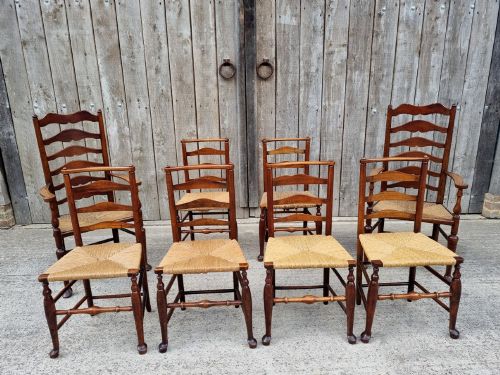
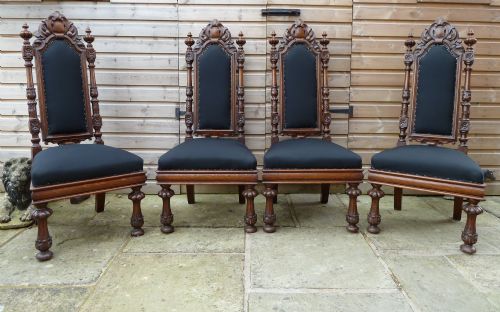
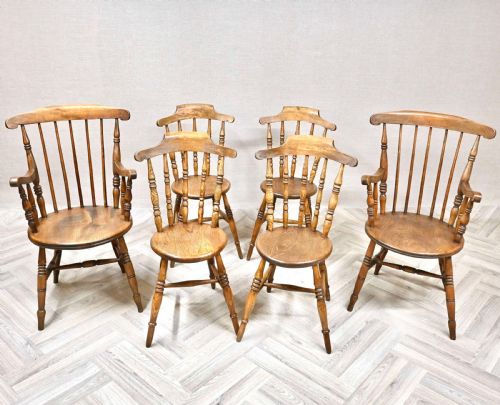
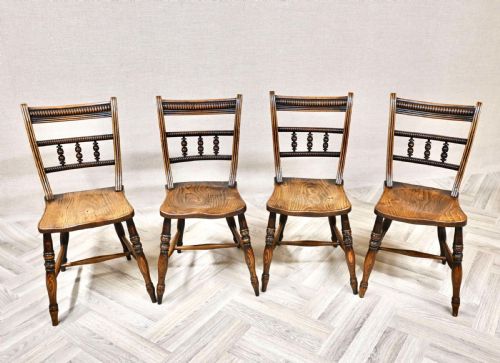
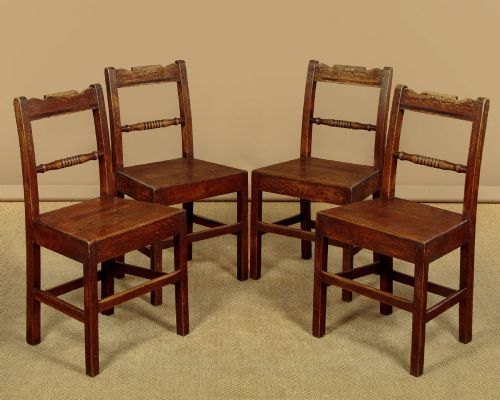
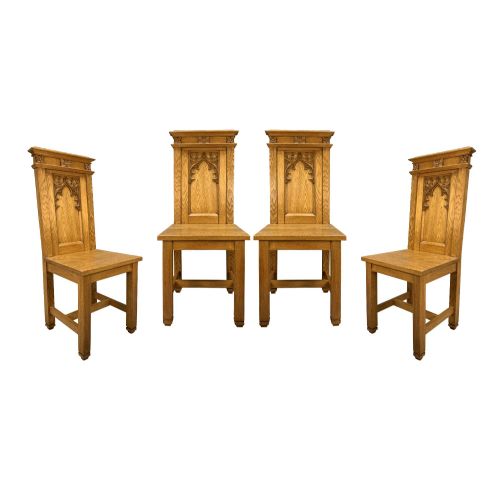
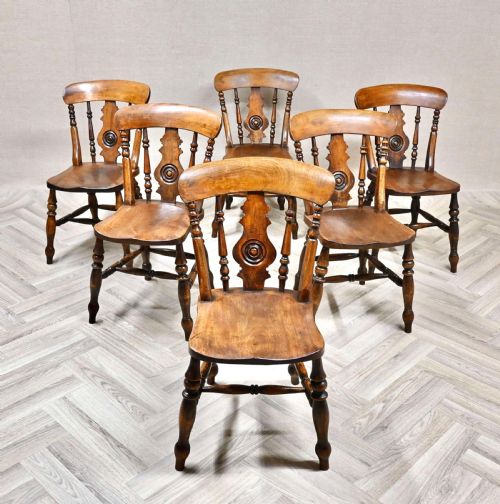
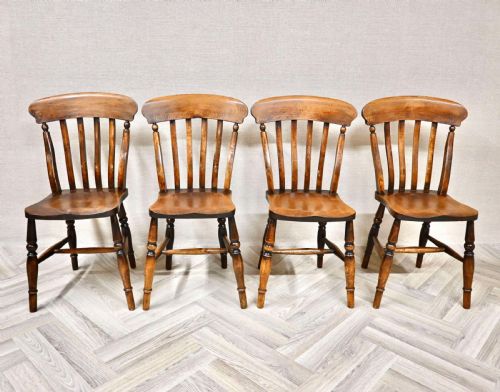
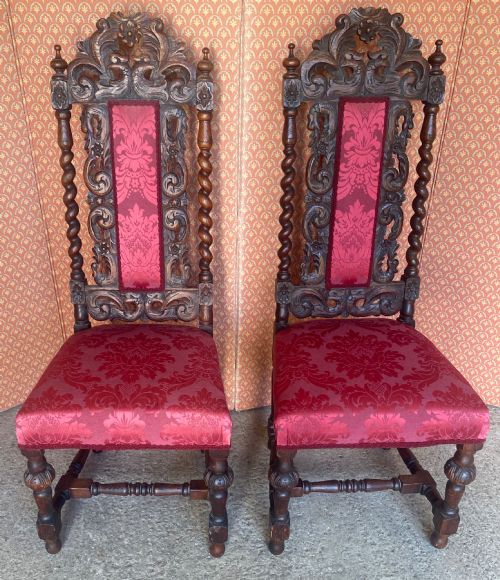
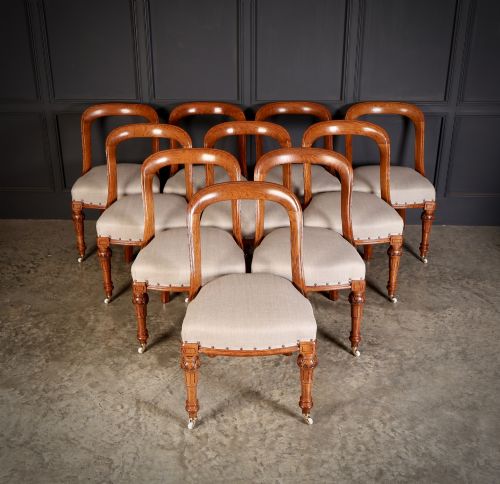
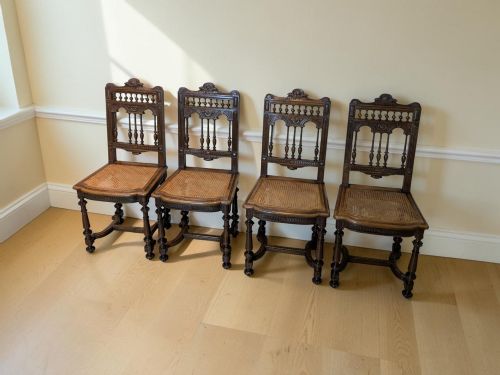
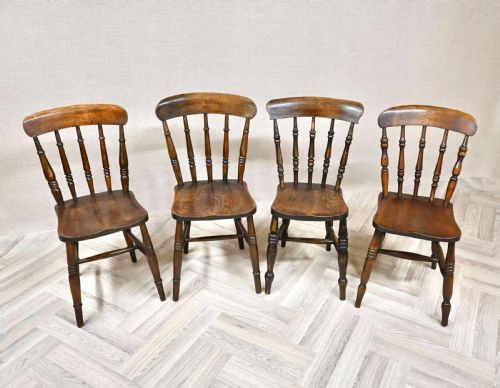
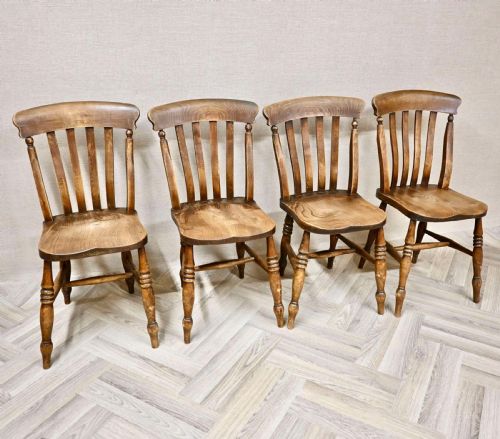
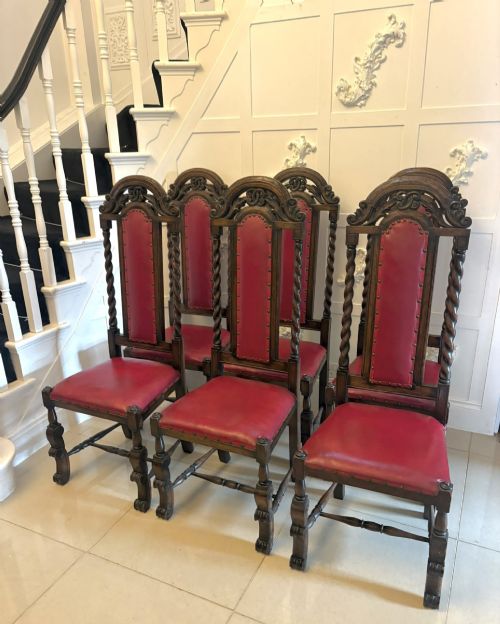
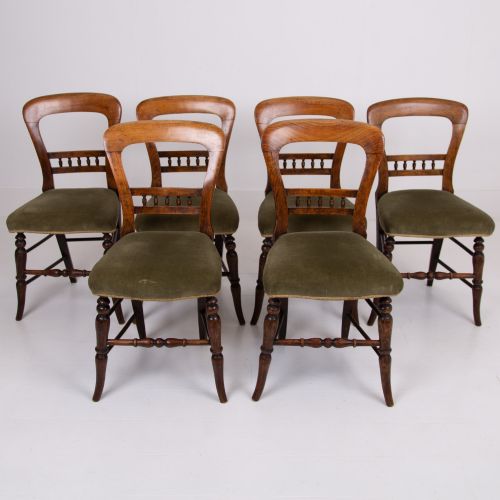
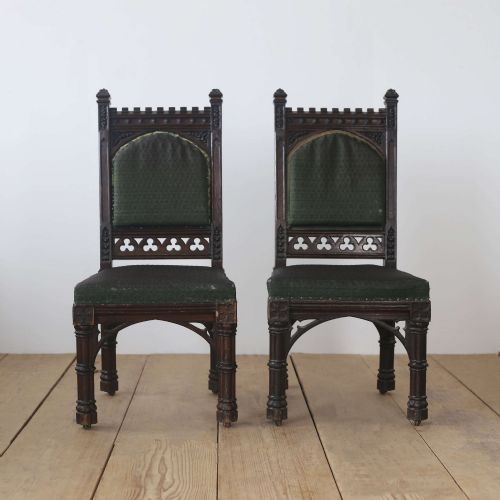
Victorian oak dining chairs encompass a broad variety of nineteenth-century seating, ranging from heavily carved Gothic Revival forms to simple country farmhouse Windsors. Buyers seeking matching groups will find extensive sets alongside smaller pairs, reflecting the diverse domestic settings they originally served.
The phrase captures both formal upholstered parlour designs and solid timber kitchen seating made from local woods. Pieces frequently incorporate regional variations, such as Irish craftsmanship or English country styles, providing numerous options for period interiors.
How They Were Made
Carpenters utilised solid oak alongside elm, beech, and ash for structural frames, turning legs with barley twist or spindle details. Joinery relied on traditional mortise and tenon methods to ensure longevity under daily domestic use.
Upholstered versions integrated leather, fabric, and brass studs secured to supportive frames. Carved decorative elements, including Gothic motifs, were shaped directly into the timber by hand.
Victorian Oak Dining Chairs Retail Price Guide 2026
Typical asking prices for victorian oak dining chairs among the pieces listed under this phrase on Sellingantiques today, from the lower quarter to the upper quarter. They describe what is for sale here now, not the wider market.
Several chairs feature well-worn saddles shaped precisely to nineteenth-century postures.
What Varies in Quality
The depth and crispness of hand-carved detailing distinguish standard production models from exceptional artisan pieces. Grain selection and timber thickness determine the structural integrity of the frame over decades of use.
The completeness of matching sets heavily influences desirability, as assembling a true set requires identical timber patination and turning consistency. Original upholstery components and stamped maker marks add distinct historical value.
Strahan of Dublin·Bruce Talbert·Gillows
The Victorian Oak Dining Chairs Glossary
- Windsor
- A traditional wooden chair built with a solid saddle-shaped seat into which the legs and back spindles are wedged directly. These country forms often feature lath backs or bow-shaped top rails.
- Gothic Revival
- A nineteenth-century design movement drawing inspiration from medieval architecture, characterised by pointed arches, trefoils, and heavy carved tracery. Pieces in this style frequently display imposing high backs.
- Barley Twist
- A type of furniture leg or stretcher shaped into a spiral rotation resembling twisted barley sugar. This decorative turning technique became popular during the nineteenth century.
- Cross-Frame
- A structural furniture configuration where the legs intersect in an X shape beneath the seat. This design provides enhanced stability and often appears in Gothic or Jacobean Revival seating.
Victorian Oak Dining Chairs: Frequently Asked Questions
How do I care for antique oak dining chairs?
Maintain timber moisture by applying appropriate wax polish periodically rather than modern liquid sprays. Keep them away from direct heat sources to prevent the wood from drying and splitting.
Ensure leather seats receive regular conditioning to maintain flexibility and prevent cracking. Check structural joints occasionally to confirm that nineteenth-century glue and pegs remain secure.
Were these chairs used only in formal dining rooms?
While carved oak sets furnished formal nineteenth-century dining spaces, many examples served domestic utility in kitchens and farmhouses. Sturdier Windsor and country versions were built for daily family life rather than formal entertaining.
Substantial numbers of armchairs and side chairs also functioned as hall furniture or library seating. The variety in construction reflects the diverse social settings of the Victorian home.
How can I tell if a set is truly matching?
Examine the grain patterns, colour patination, and minor variations in hand-carved details across all pieces in the group. True sets share identical turning dimensions and construction methods established by the maker.
Subtle discrepancies in height or joinery often indicate that individual chairs were gathered together at a later date. Inspect the underside of the seats for consistent tool marks and numbering systems.
What is the difference between Gothic Revival and standard Victorian chairs?
Gothic Revival pieces incorporate medieval architectural motifs such as pointed arches, quatrefoils, and heavy geometric carvings. They utilise darkened oak to emulate earlier centuries and project an imposing presence.
Standard Victorian models more frequently display turned barley twist legs, simpler crest rails, or country Windsor forms. These variations reflect shifting domestic fashions throughout the nineteenth century.