

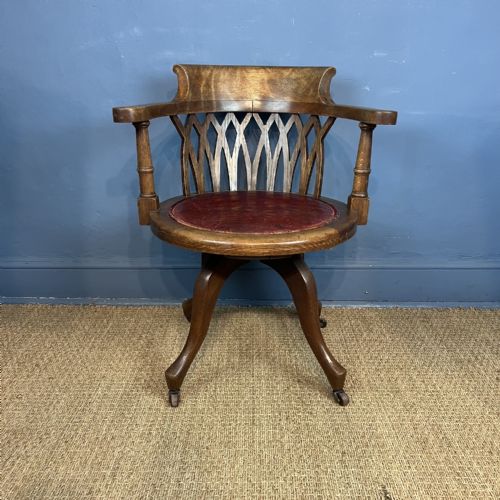
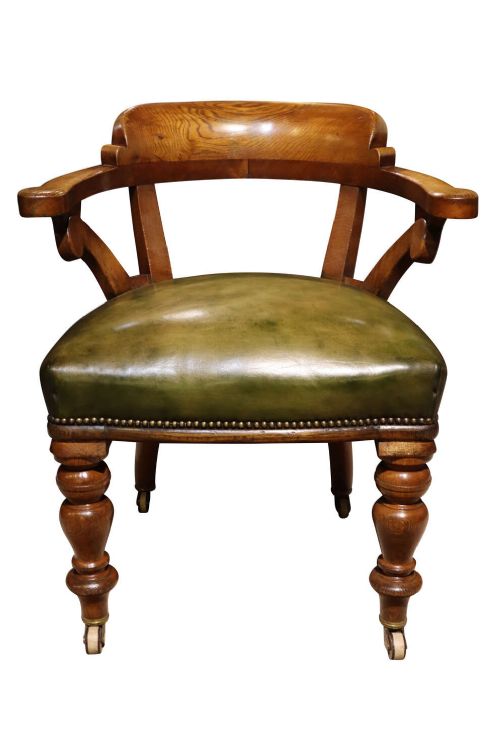
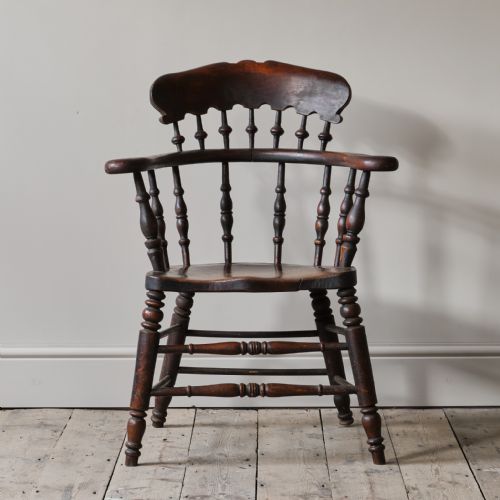
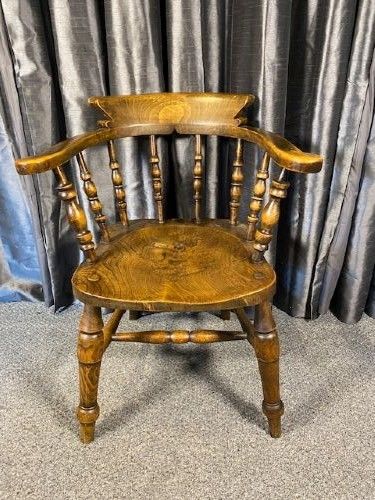
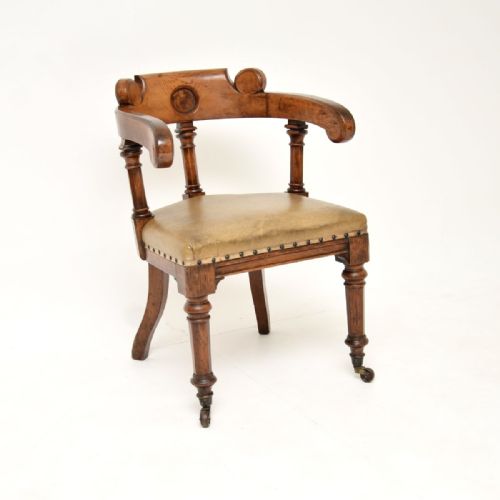
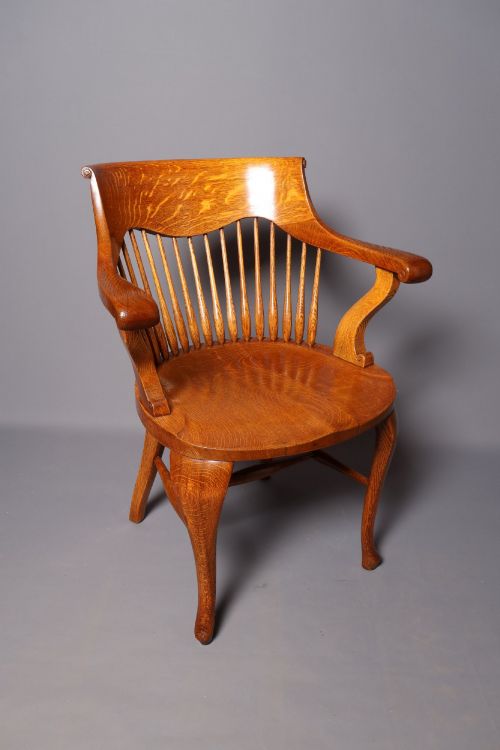
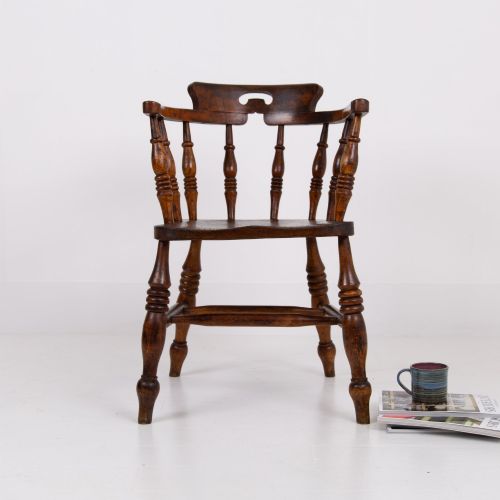
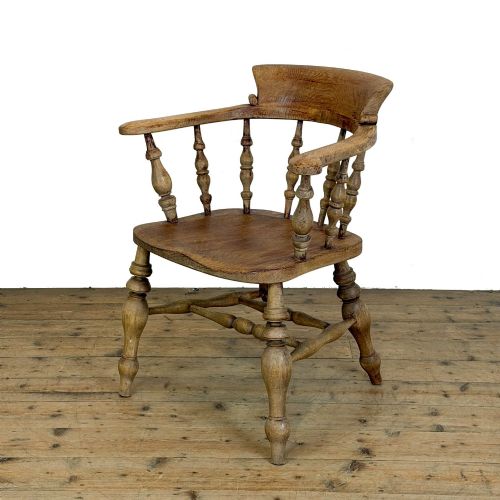
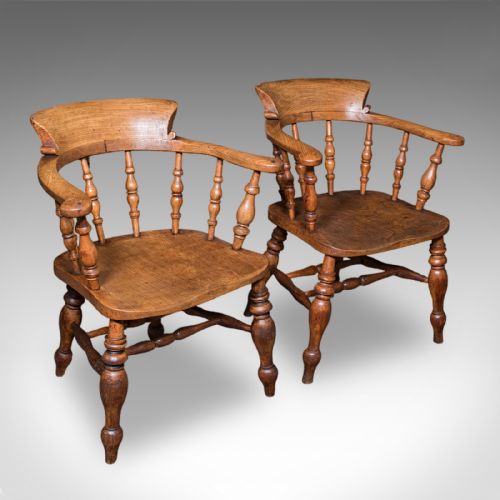


Victorian Oak Captains Chair
A victorian oak captains chair brings sturdy character to a home workspace, offering solid timber construction and comfortable curved armrests designed for long hours at a desk.
Victorian Oak Captains Chair
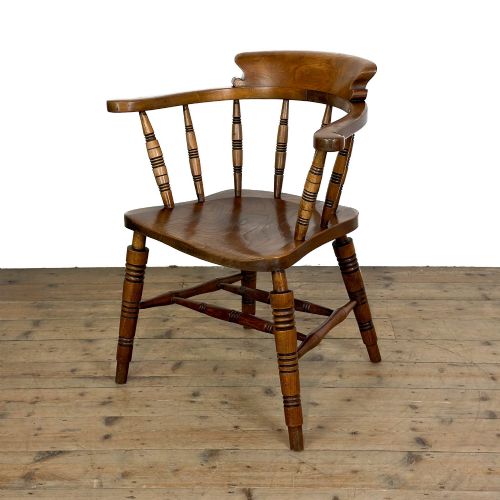
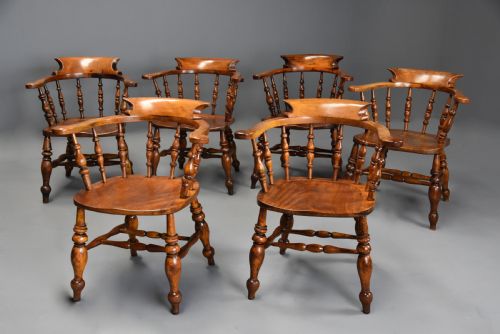
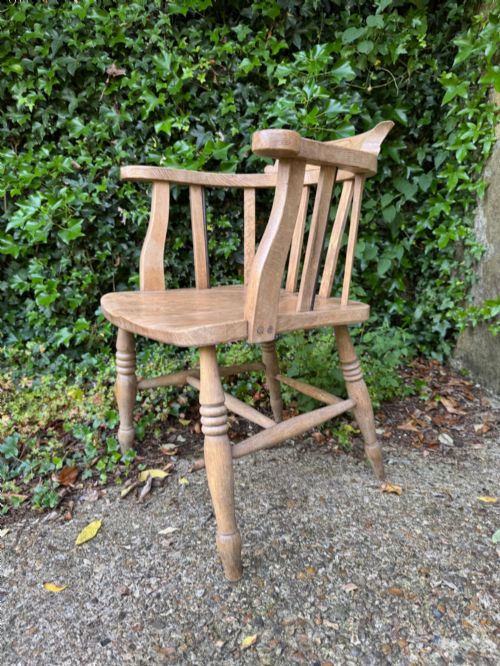
A victorian oak captains chair combines the robust utility of nineteenth-century seating with traditional forms like the smoker's bow or the revolving office armchair. These sturdy seats emerged to serve functional roles in studies, libraries, and ship cabins during the nineteenth century.
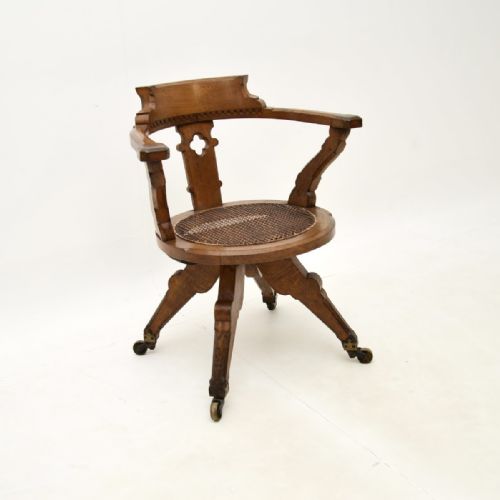
Buyers frequently encounter examples featuring turned spindles, rounded backs, and occasionally swivel mechanisms mounted on iron or cast iron bases. The design prioritises lumbar support and durability, bridging the gap between informal country Windsor chairs and formal library armchairs.
Originating largely from the Victorian era and Edwardian periods, these pieces appear in solid oak, often paired with contrasting elm or ash components. They serve equally well as desk chairs or as standalone library armchairs in contemporary interiors.
How They Were Made
Cabinet makers utilised solid oak for the primary frames, frequently combining it with elm or ash for seats and bentwood for continuous backrails. These timbers were steam-bent into sweeping curves to form the distinctive rounded armrests characteristic of the style.
Construction relied heavily on traditional joinery, including mortise and tenon joints, alongside turned spindles secured into shaped wooden seats. Later nineteenth-century variants integrated brass fittings, iron swivel mechanisms, and inset leather upholstery fastened with decorative tacks.
The archive records pieces originating from diverse environments, ranging from country houses to maritime settings like P&O ships.
What Varies in Quality
The distinction between standard utility seating and superior examples rests on the crispness of the timber carving and the integrity of the original revolving mechanisms. Heavy golden oak frames with substantial brass swivel hardware indicate a higher grade of manufacture intended for professional offices or shipboard use.
Condition and originality dictate much of the standing within the marketplace, particularly where leather upholstery and turned wooden spindles remain intact without extensive replacement. Pieces bearing maker stamps or specific retailer marks from firms like S&H Jewell command greater attention from collectors.
S&H Jewell·Alfred Allen Furnishing Expert·Shannon Company
The Victorian Oak Captains Chair Glossary
- Smoker's bow
- A low-backed Windsor-style armchair featuring a continuous curved backrail supported by turned spindles above a solid wooden seat.
- Revolving desk chair
- An office chair mounted on a central pivot mechanism, often incorporating iron or cast iron components for rotation and height adjustment.
- Gothic Revival
- A nineteenth-century design movement characterised by architectural motifs such as pointed arches, quatrefoils, and heavy carved ornamentation.
- Bentwood
- Timber shaped into curves by the application of steam and pressure, allowing for smooth, continuous armrests without weak joints.
- Patina
- The deep surface sheen and mellow colour developed by aged timber through decades of handling, polishing, and natural oxidation.
Victorian Oak Captains Chair: Frequently Asked Questions
What is a smoker's bow?
A smoker's bow is a sturdy vernacular armchair with a low, continuous rounded backrest supported by turned wooden spindles.
These pieces typically feature solid elm or oak seats and serve as the direct rural ancestor of the office armchair.
How do I date a swivel chair?
Dating relies on inspecting the iron and brass undercarriage, screw threads, and the complexity of the wooden turning.
Earlier nineteenth-century versions use simpler wooden box mechanisms, whereas later iterations incorporate mass-produced cast iron spider bases.
Are these chairs comfortable for working?
They were originally built for long hours at merchant desks, courtrooms, and ship cabins, making them naturally ergonomic.
The curved backrail wraps around the body to support the arms, though seat heights often sit lower than modern office standards.
Can I use one with a modern desk?
Many models fit comfortably beneath standard modern writing tables, provided you check the clearance height beneath the armrests.
Revolving versions offer additional flexibility by allowing easy movement and adjustment at a contemporary workspace.