



Captain Chair Leather Seat
A captain chair leather seat brings sturdy support and traditional comfort to a study, built around a solid wood frame and a hide pad.
Captain Chair Leather Seat
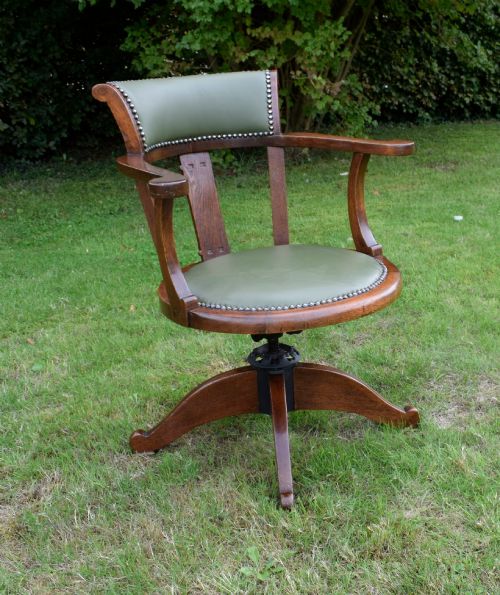
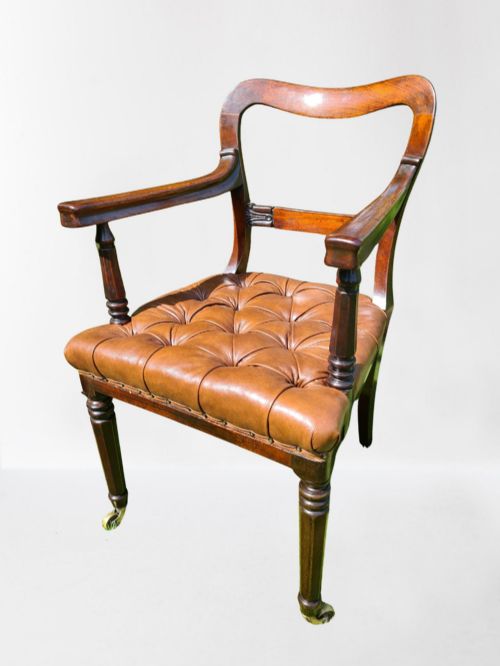
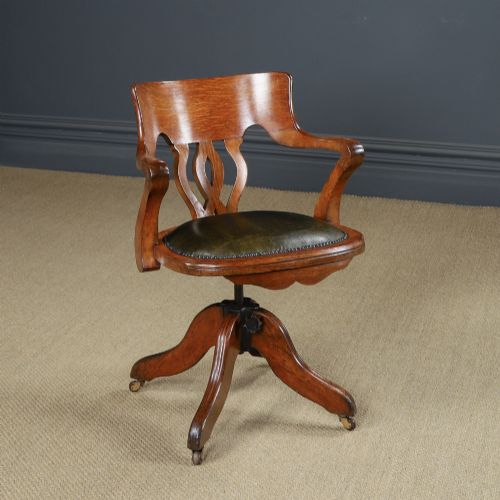
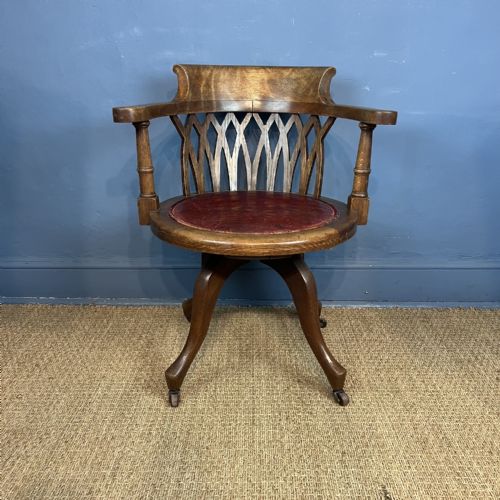
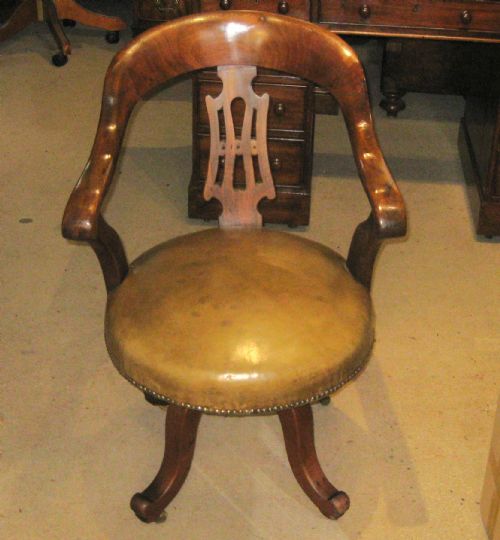
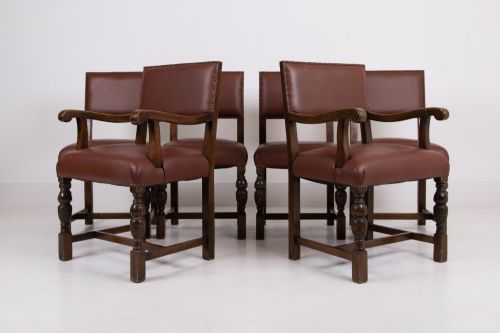
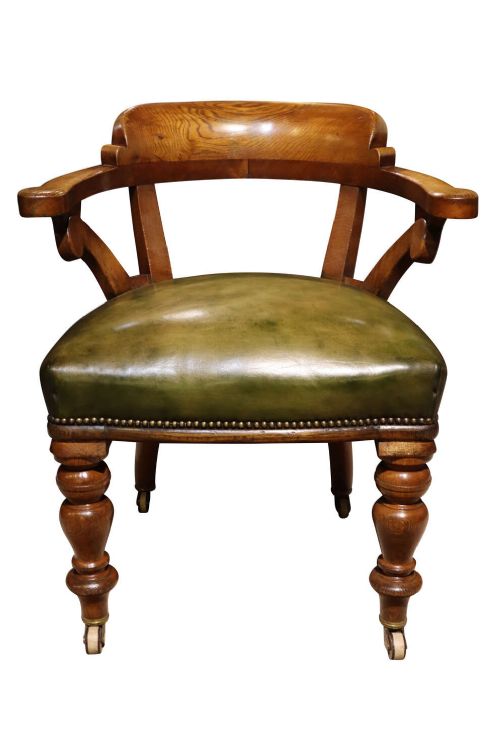
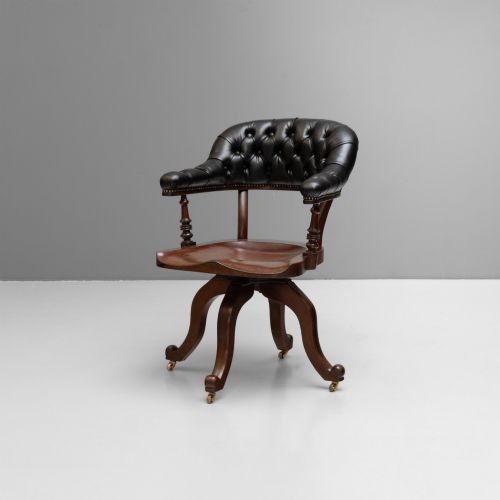
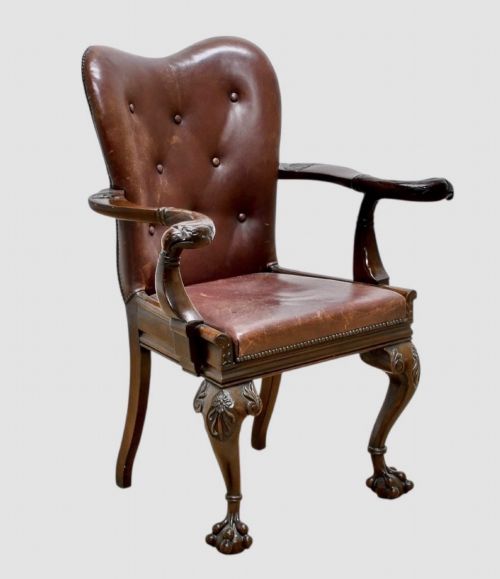
A captain chair leather seat combines the low-slung, robust elbow chair form with a durable hide pad designed for long hours at a desk. You will find these pieces largely spanning the nineteenth and early twentieth centuries, taking the shape of library armchairs, swivel desk chairs, and carved oak or mahogany carvers.
The most common examples on this page are Victorian and Edwardian desk chairs, often featuring revolving actions or fixed frames suited to a study or office. Walnut, oak, and mahogany appear frequently alongside green, tan, and dark red leather seats.
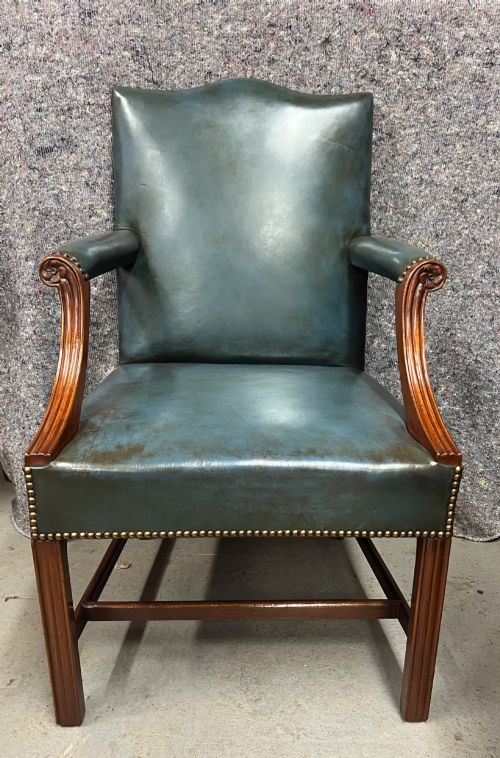
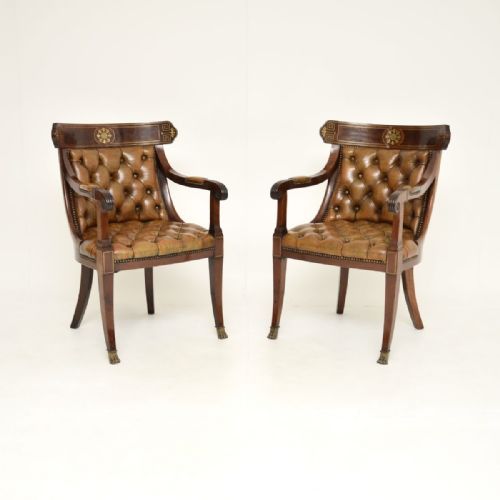
Beyond standard desk forms, the selection includes Regency library armchairs, Georgian style carvers, and ship or cockfighting chairs with low profiles and inset hide pads. These items bridge domestic seating and functional workspace furniture from the past.
Materials and construction
Makers built these frames using dense timbers like mahogany, oak, and walnut, often turning and carving the wood for structural strength at the joints and arm supports. Brass fittings appear in castors, swivel mechanisms, and inlay work on Regency pieces.
Leather seats and pads were typically hand-dyed in shades of green, brown, or red, then secured to the wooden bases using brass tacks or studs. Swivel and tilt versions incorporated iron and metal hardware beneath the seat to allow movement.
Several chairs on this page feature revolving and tilting mechanisms that let Victorian clerks spin around in circles long before modern office furniture existed.
Distinguishing quality in these chairs
Quality rests in the selection of the timber and the depth of the carving, with dense grains and substantial frames marking out superior examples. The integrity of the revolving mechanism and the thickness of the hide seat also separate standard utilitarian pieces from finer library furniture.
Proportion and execution define the better pieces, whether in the subtle brass inlay of a Regency armchair or the solid turning of a Victorian revolving desk chair. Finer examples retain their original upholstery methods and matching timber patination across the arms and base.
The Captain Chair Leather Seat Glossary
- Carver chair
- An armchair, typically designed as part of a dining set or for use at a desk, featuring open arms attached to the seat rail.
- Library armchair
- A sturdy, upholstered seat with padded arms intended for reading and long periods of sitting in a study or library.
- Revolving desk chair
- An office seat mounted on a central spindle or metal mechanism allowing the top to turn and often tilt.
- Cockfighting chair
- A low, compact armchair with a horseshoe-shaped backrest and a solid wooden frame designed for seated viewing.
Captain Chair Leather Seat: Frequently Asked Questions
What defines a captain chair leather seat?
These pieces are sturdy elbow chairs featuring a solid wooden frame, low curved backrests, and inset leather pads designed for working at a desk.
They combine the supportive proportions of traditional library seating with functional writing surfaces of the nineteenth and early twentieth centuries.
How do I date a swivel desk chair?
Dating relies on the style of the timber framing, the turning on the legs, and the complexity of the iron or metal swivel mechanism underneath.
Victorian and Edwardian examples often feature heavy oak or mahogany frames, while late nineteenth-century versions introduce simpler spindle backs and adjustable height screws.
Were these chairs used only on ships?
Despite names referencing ships or captains, most of these sturdy elbow chairs were made for dry land use in domestic libraries, offices, and studies.
Heavily carved oak versions with low profiles gained nautical associations later in their history, though their primary function was workspace seating.
How do I care for the leather seat?
Leather seats benefit from occasional gentle cleaning and conditioning to maintain the supple texture of the hide and prevent drying out over time.
Keeping the chair away from direct heat sources preserves both the natural dye colours and the original tack work securing the pad.