
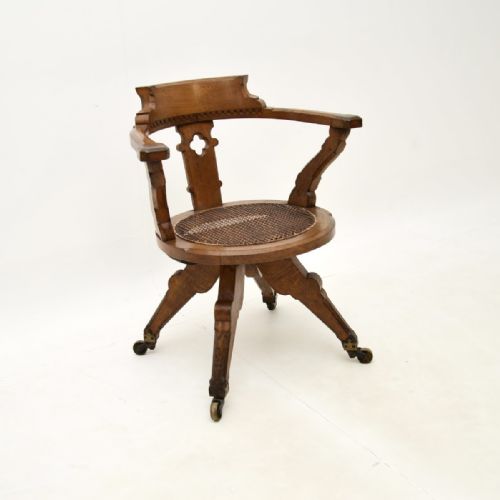


Revolving Oak Chair
When you search for a revolving oak chair, you are looking at sturdy timber seating built for working spaces from the Victorian era into the early twentieth century.
Revolving Oak Chair
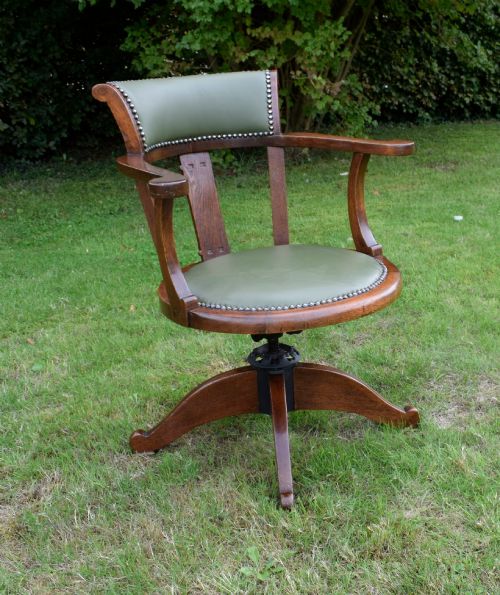
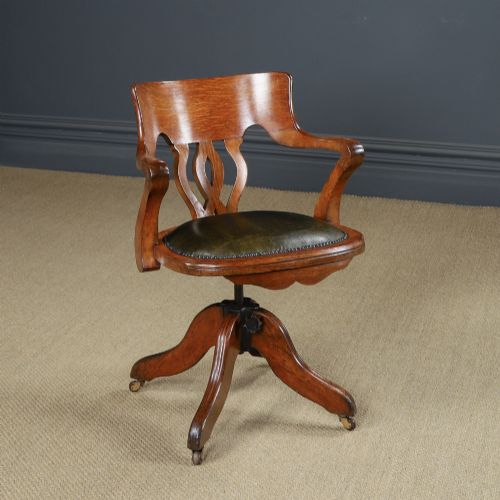
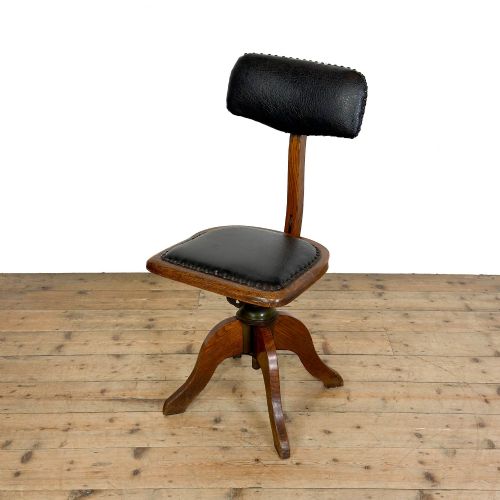
A revolving oak chair provides a sturdy, practical seat designed primarily for offices, desks, and libraries during the late nineteenth and early twentieth centuries. These pieces appear frequently in Edwardian and Victorian forms, encompassing desk chairs, armchairs, and specialised maritime seating.
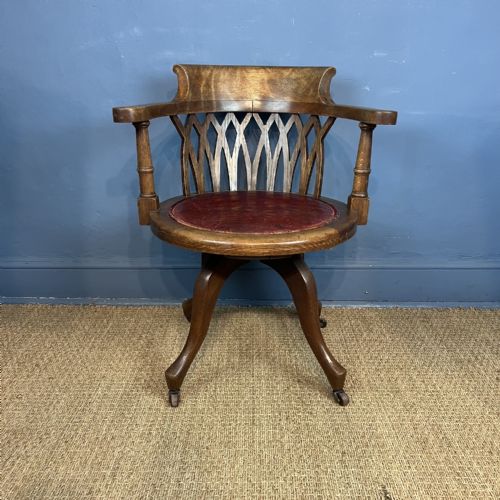
The most common examples on this page are Edwardian and Victorian office desk chairs featuring swivelling mechanisms and timber frames. Buyers also encounter variants incorporating leather upholstery, cane panels, or heavy carvings derived from Gothic Revival and shipboard contexts.
How They Were Made
Makers constructed these chairs predominantly using solid oak frames paired with supportive elements of beech, brass, iron, and cast iron for the swivel mechanisms. Leather and cane frequently appeared as inset or upholstered seat coverings.
Joinery techniques combined traditional framing with metal spindles and adjustable height screws to allow both rotation and vertical movement. Bentwood methods were also utilised to shape curved armrests and back rails.
Listings span periods from the 1870s through the 1930s, featuring oak, leather, iron, and brass.
What Varies in Quality
Quality rests in the robustness of the timber framing and the sophistication of the rotating mechanism. Finer examples display meticulous joinery and substantial carved detailing rather than simple, utilitarian assembly.
The integration of secondary materials such as supple leather upholstery and well-cast iron or brass hardware distinguishes superior pieces from standard office seating.
Kendrick & Jefferson·Bell Barn Furniture·William Birchcraft·Edward William Godwin
The Revolving Oak Chair Glossary
- Swivel
- A mechanism allowing the upper portion of the chair to rotate completely around its central axis. This movement relied on iron or brass spindles concealed beneath the seat.
- Captain's Chair
- A low-backed armchair featuring a rounded top rail supported by vertical spindles. These seats were originally favoured for offices and shipboard use.
- Bergere
- A traditional upholstered armchair featuring woven cane panels on the back and sides. In these listings, the style is adapted to a revolving desk format.
- Gothic Revival
- An architectural and decorative style drawing on medieval forms. Pieces in this category display characteristic pointed arches, heavy mouldings, and deep carvings.
Revolving Oak Chair: Frequently Asked Questions
How do I adjust the height on these chairs?
Height adjustment typically relies on a central threaded metal spindle beneath the wooden seat. Turning the chair body winds the screw mechanism up or down.
Older models require manual rotation through full turns to alter the vertical position before settling back into place.
Were these chairs used only in offices?
While most functioned as desk or office seating, many examples served specific roles in libraries and domestic studies. Specialised maritime variants were also built for use aboard ships.
Shipboard versions often featured heavier carvings and broader bases to maintain stability on the water.
How do I care for the leather seats?
Leather upholstery benefits from regular dusting and occasional treatment with appropriate conditioning balms to prevent drying. Avoiding direct sunlight helps preserve the original colour and supple texture.
Care should be taken around the wooden framing to prevent moisture from reaching the vintage finishes.
How can I tell Victorian chairs apart from Edwardian ones?
Victorian models often display darker finishes, heavier proportions, and decorative influences like Gothic Revival carving. They date from the mid-to-late nineteenth century.
Edwardian pieces, built after nineteen hundred, generally present lighter oak tones and simpler lines with integrated tilt mechanisms.