
Carved Oak Desk Armchair
A carved oak desk armchair brings robust timber and considered carving to a workspace, offering sturdy support for daily writing.
Carved Oak Desk Armchair
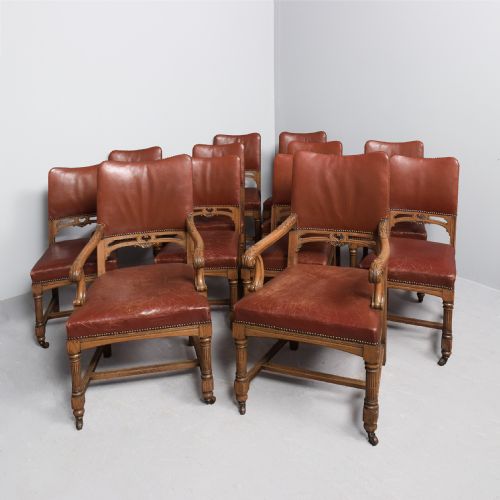
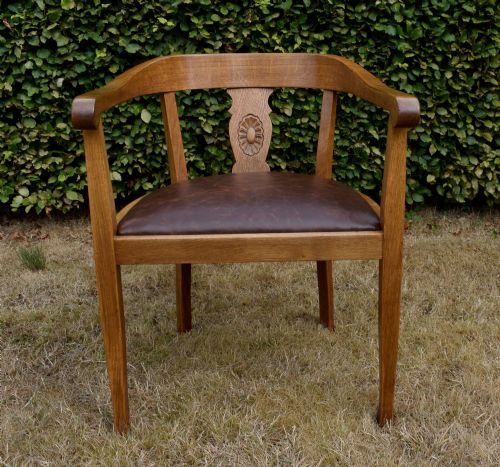
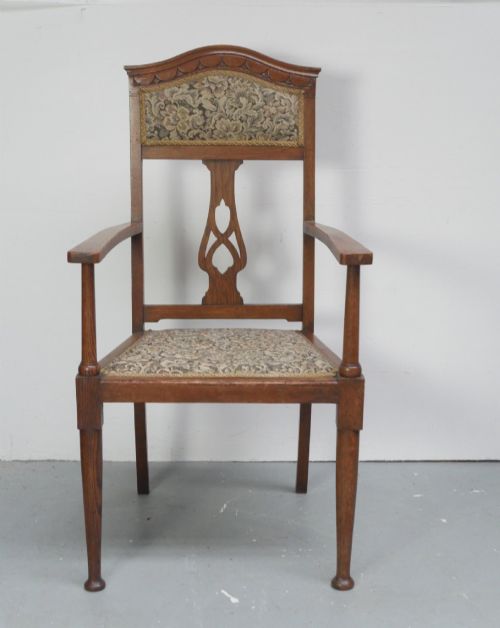
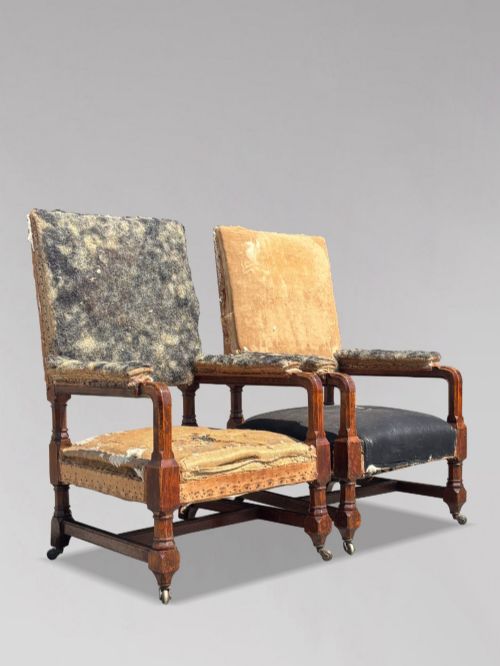
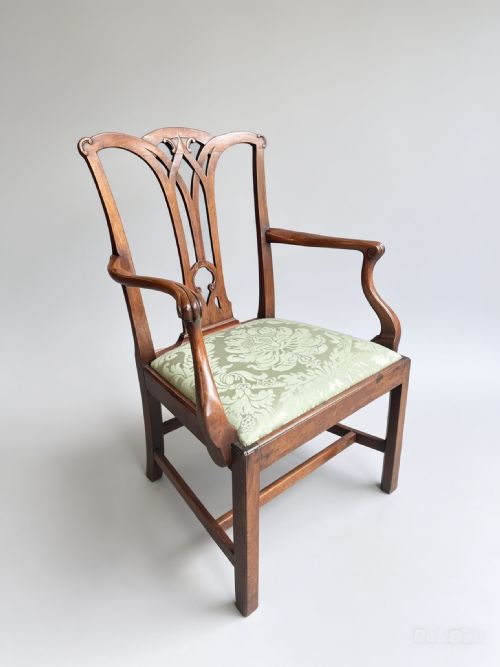
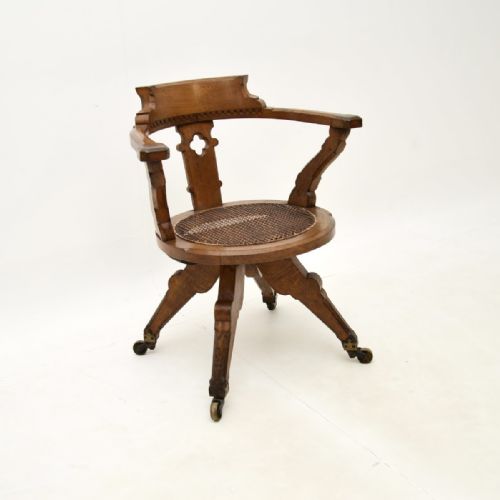
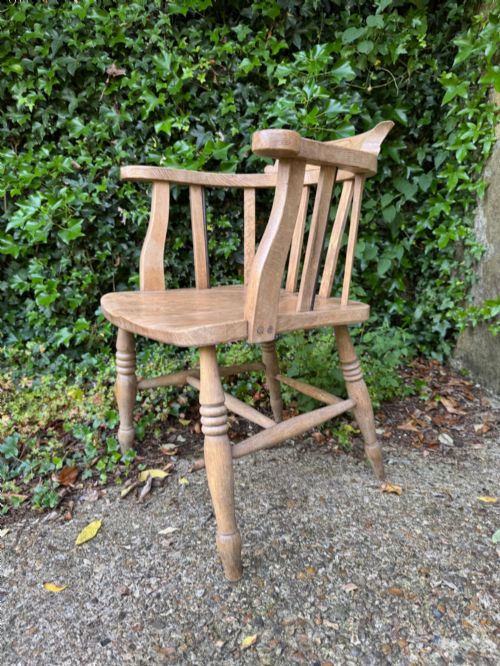
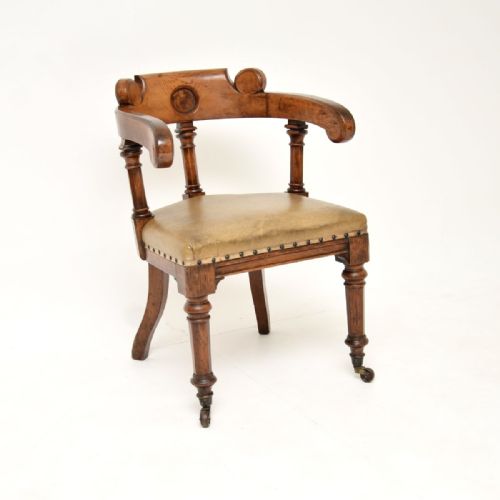
A carved oak desk armchair combines the substantial frame of a sturdy seat with functional workspace utility, often featuring carved details on the backrest and arm supports. Buyers seeking a carved oak desk armchair encounter numerous Victorian and Edwardian examples, alongside pieces from the nineteenth and early twentieth centuries.
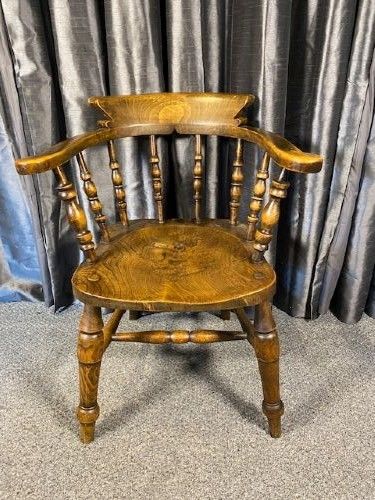
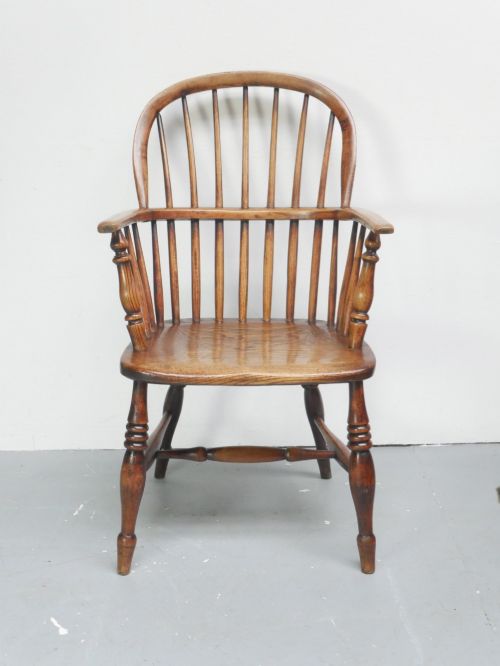
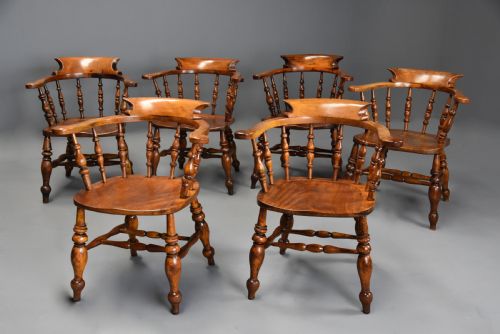
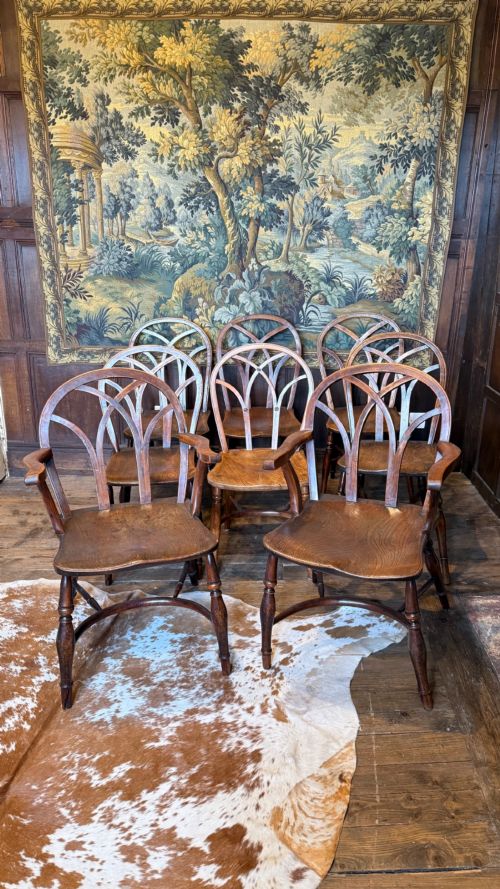
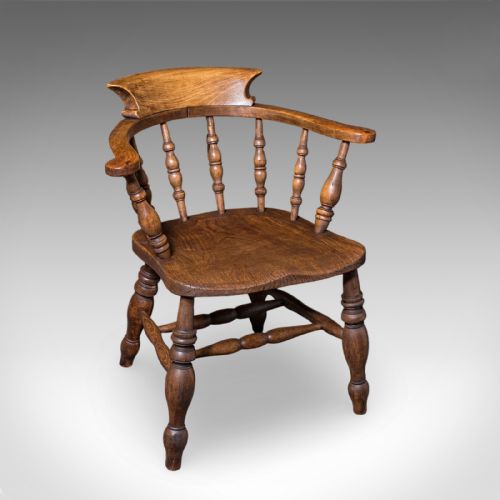
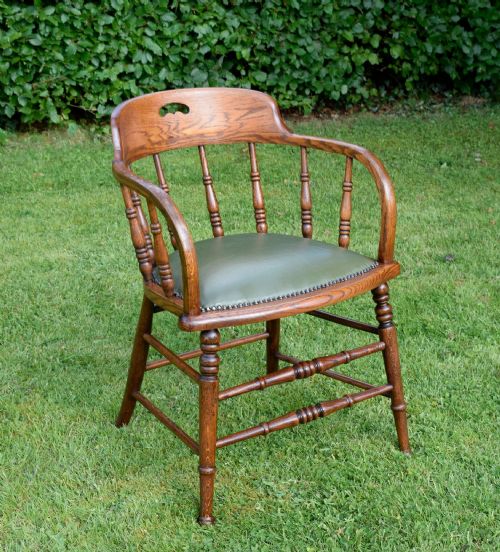
The selection ranges from straightforward oak office chairs to swivel mechanisms and library armchairs. Many incorporate leather or cane seats, while others display regional styles such as Windsor or smoker's bow forms in solid timber.
Materials and construction methods
Makers utilised solid oak for the primary framework, often combining it with secondary woods like elm or ash for structural components. Joinery relied on traditional mortise and tenon methods to ensure the frame withstood daily use at a desk.
Carving was executed by hand, creating motifs from simple geometric patterns to elaborate Gothic revival ornament. Seat pads frequently featured brass studding around leather upholstery, cane webbing, or carved wooden contours.
Several chairs feature tavern scenes carved directly into the timber, offering a spirited distraction from paperwork.
Distinctions in craftsmanship
Quality rests in the crispness of the timber carving and the architectural balance of the frame. Superior examples demonstrate deep, well-defined hand-chiselled details rather than shallow or mechanical stamping.
The choice of timber grain and the integrity of the original joints dictate longevity. Pieces retaining their functional mechanisms, such as early swivel actions, or featuring high-grade leather and brass fittings, represent the finer tier.
Gillows·Bruce James Talbert·S&H Jewell
The Carved Oak Desk Armchair Glossary
- Smoker's bow
- A low-backed Windsor armchair with a rounded continuous armrail, commonly found in nineteenth-century country settings.
- Gothic Revival
- A nineteenth-century style drawing on medieval architectural motifs, featuring pointed arches and heavy carved tracery.
- Bergere
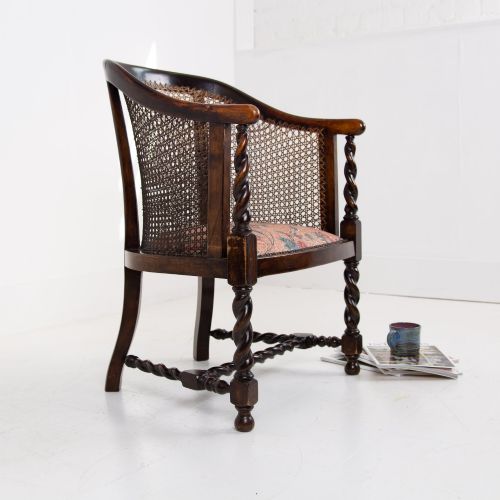
- An enclosed upholstered armchair with exposed wooden framing and cane-panelled sides.
- Curule
- An ancient Roman magistrate seat form featuring crossed curved legs, revived in nineteenth-century seating designs.
- Fiddle back
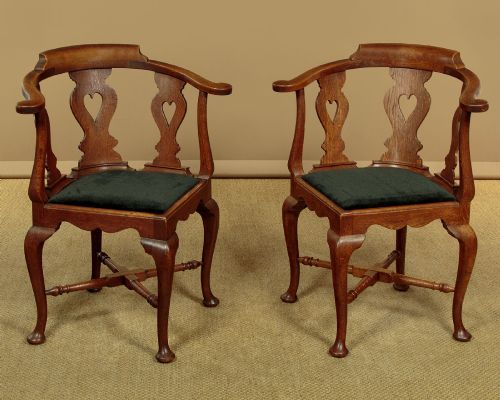
- A chair back featuring a splat shaped like a violin or fiddle.
Carved Oak Desk Armchair: Frequently Asked Questions
How do I date a carved oak desk chair?
Dating relies on stylistic clues, construction methods, and hardware such as brass fixings or early swivel mechanisms. Victorian and Edwardian pieces often display distinct revival motifs or patent stamps.
Examining the underside and joint construction helps determine whether a piece belongs to the nineteenth century or a later period.
Are these chairs comfortable for daily work?
Most period desk armchairs provide solid upright support suited for writing at a traditional desk. Models with wider seats or upholstered pads offer added comfort during extended tasks.
Buyers often choose them for their sturdy proportions and ergonomic proportions typical of nineteenth-century office seating.
How should I care for an antique oak armchair?
Regular dusting with a dry cloth keeps the carved timber surfaces clean and prevents dust buildup in recessed details. Applying a suitable wax polish periodically helps nourish the oak grain without leaving a heavy residue.
Direct sunlight and extreme temperature fluctuations should be avoided to protect the timber and any leather or cane inserts.