





Nineteenth Century Captains Chairs
Nineteenth century captains chairs are robust, low-backed seating designed for steady utility at desks or tables.
Nineteenth Century Captains Chairs
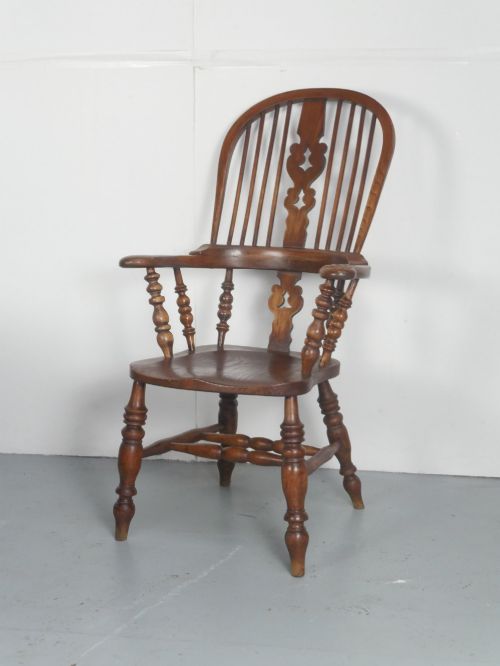
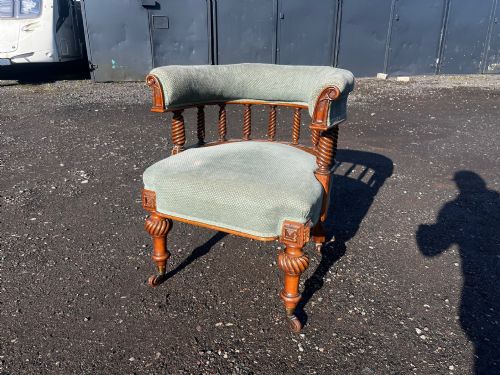
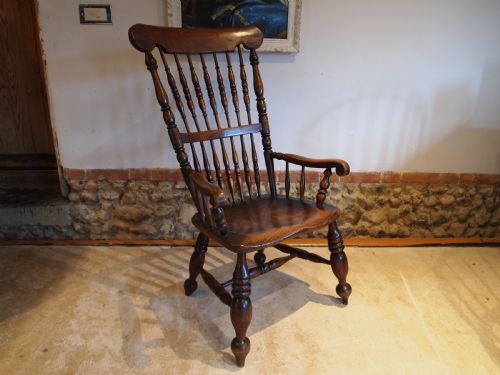
Nineteenth century captains chairs encompass sturdy armchairs and desk chairs originating from the Victorian era. These pieces frequently appear as Windsor variants, smokers bows, and upholstered library armchairs designed for persistent use.
The versions most commonly met on this page belong to the Victorian period, spanning the eighteen fifties to the eighteen nineties. They typically arrive in regional English country styles with low backs and supportive armrests.
Makers utilised various timber combinations, pairing solid elm seats with ash or yew frames. Forms range from revolving desk chairs to tavern and clerks seating.
Materials and construction
Cabinet makers and bodgers constructed nineteenth century captains chairs using native timbers such as elm, ash, oak, walnut, beech, yew, and mahogany. Elm provided durable, splitting-resistant seats, while bent ash or yew formed the curved back rails.
Joinery methods combined traditional Windsor stick-back techniques with turned spindles and brass fittings on revolving models. Certain examples incorporated leather upholstery and padded armrests for additional desk comfort.
Nineteenth Century Captains Chairs Retail Price Guide 2026
Typical asking prices for nineteenth century captains chairs among the pieces listed under this phrase on Sellingantiques today, from the lower quarter to the upper quarter. They describe what is for sale here now, not the wider market.
Some nineteenth century captains chairs doubled as tavern seats, enduring decades of spirited pub debates without losing a spindle.
Judging quality in nineteenth century captains chairs
Quality rests upon the choice of timber and the complexity of the turning on spindles and legs. Yew wood and figured walnut examples sit at the higher end of the range compared to standard elm and beech variants.
Construction integrity and timber preservation dictate the standing of a piece. Original leather upholstery and smooth revolving mechanisms elevate individual desk chairs above altered or later-adapted specimens.
John Shadford
The Nineteenth Century Captains Chairs Glossary
- Smokers bow
- A low-backed Windsor armchair with a continuous curved arm rail, common in nineteenth century pubs and offices.
- Windsor chair
- A chair built with a solid wooden seat into which the legs and back spindles are bored directly.
- Tub chair
- An armchair featuring a rounded, enclosed back that resembles the shape of a deep tub.
- Spindle
- A slender, turned piece of wood used as a vertical support in the backrest of a chair.
Nineteenth Century Captains Chairs: Frequently Asked Questions
What is a captains chair?
A captains chair is a sturdy wooden armchair featuring a low, curved back rail supported by turned spindles.
These chairs were traditionally used at desks, tables, or in public houses for comfortable seating.
How do I identify a Victorian desk chair?
Victorian desk chairs often feature solid timber frames, sometimes with leather upholstery and brass castors.
They appear in revolving formats or static armchair designs dating from the nineteenth century.
Were these chairs used only by captains?
Despite the traditional name, these chairs saw widespread use in offices, libraries, taverns, and country homes.
Clerks, tradesmen, and household residents all utilised them for daily work and reading.
What woods were used for nineteenth century seating?
Carpenters utilised a mix of native hardwoods and softwoods, frequently pairing elm seats with ash, yew, or beech frames.
Mahogany and walnut also appear on more formal library and desk armchairs.