





Victorian Curved Back Chairs
Victorian curved back chairs bring solid nineteenth-century woodwork and enveloping upholstered forms together for everyday domestic seating.
Victorian Curved Back Chairs
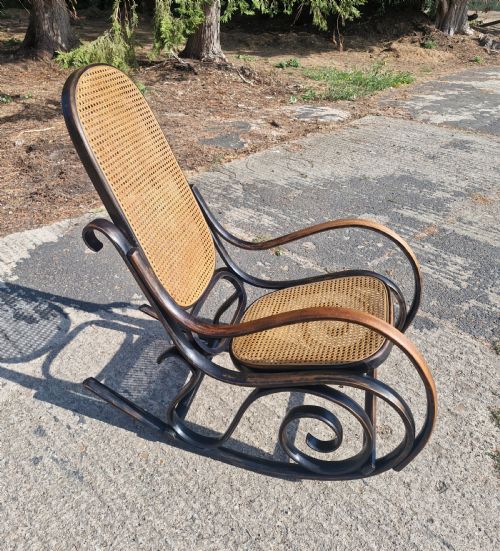
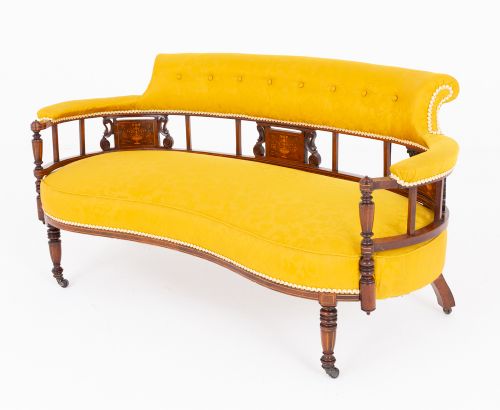
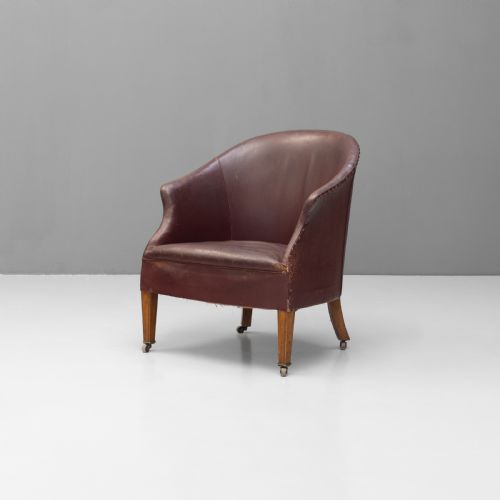
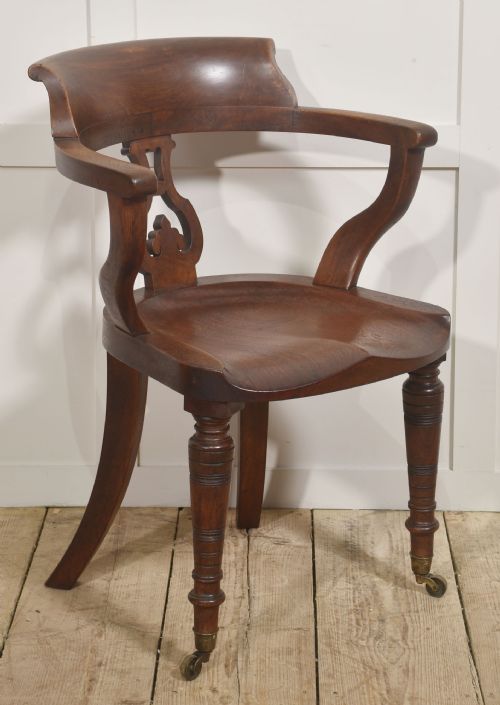
Victorian curved back chairs encompass a wide variety of seating forms designed with rounded structural profiles, appearing frequently as tub chairs, office armchairs, and captain's chairs. These pieces emerge from the nineteenth century in woods like mahogany, elm, walnut, and oak, often featuring upholstered pads or full barrel backs. Dining chairs and rocking variations also appear, reflecting the diverse domestic and working spaces of the period.
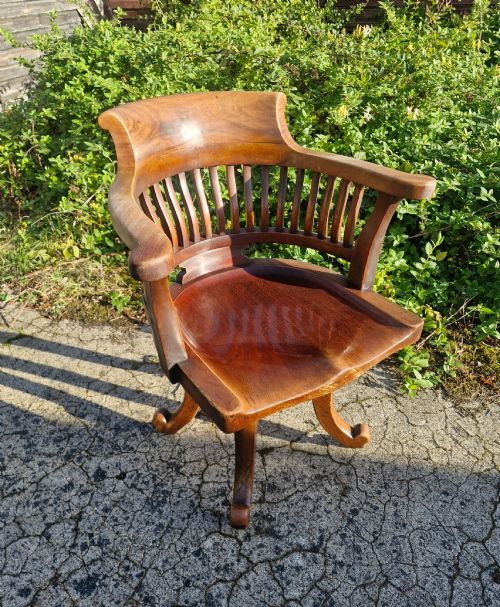
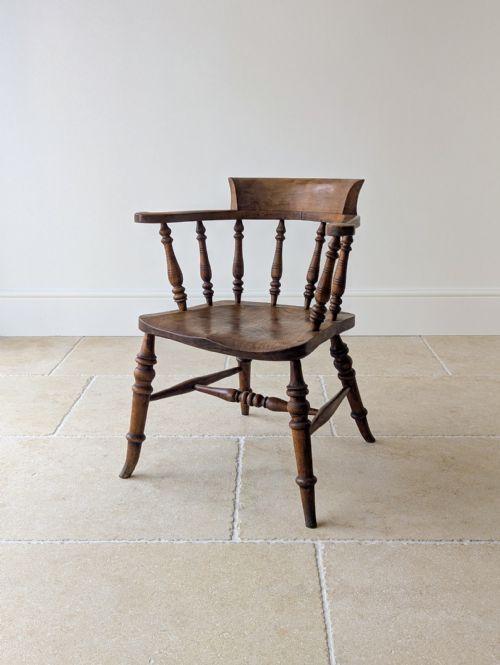
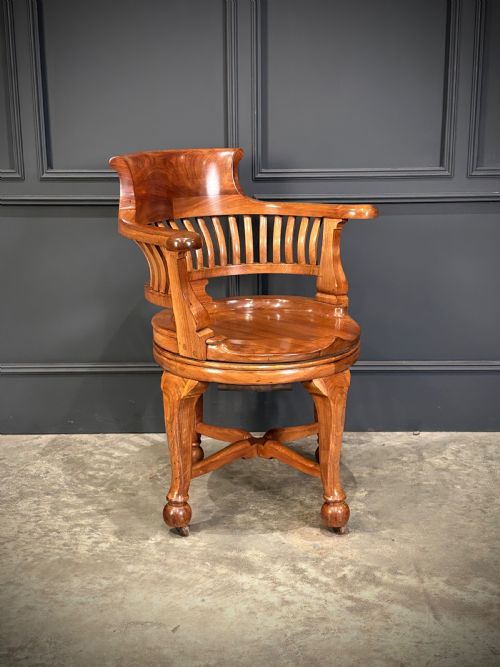
The version most commonly met on this page is the desk or office armchair, often built from elm, beech, or mahogany with a revolving mechanism or a solid curved wooden back rail. These utilitarian and library forms sit alongside upholstered tub chairs covered in leather, velvet, or fabric. Buyers encounter both single study chairs and larger sets intended for dining rooms.
Makers and designers of the period adapted earlier Regency and Georgian outlines into heavier, sturdier Victorian shapes, incorporating Aesthetic Movement influences through designers such as E.W. Godwin. Regional vernacular pieces, including smokers bow armchairs and Windsor chairs, utilise local timbers like yew and elm to create distinct curved silhouettes. This mix provides seating suited to both formal parlours and studies.
Assessments of quality
Quality in these chairs rests upon the selection of timber and the integrity of the curved joinery, where continuous grain or tightly pegged joints ensure lasting strength. Superior examples display refined hand-carving on the back rails and balanced proportions rather than purely utilitarian assembly.
The sophistication of the upholstery work and the original mechanics of revolving desk chairs also separate standard production pieces from finer examples. Finer items retain their structural rigidity and original turning details without excessive replacement of primary components.
Site listings show Victorian curved back chairs constructed in mahogany, elm, walnut, and oak, spanning the nineteenth and early twentieth centuries.
The Victorian Curved Back Chairs Glossary
- Tub chair
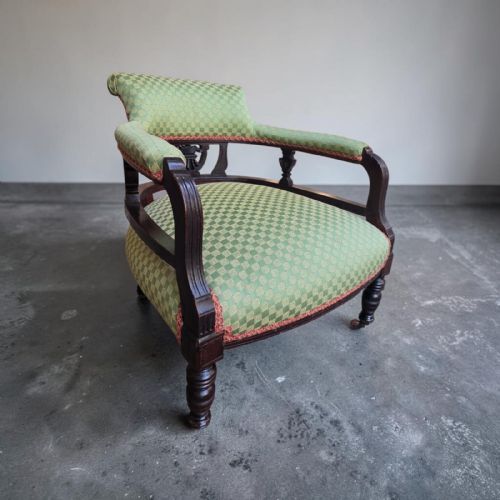
- A heavily upholstered armchair featuring a continuous low curved back and arms that form a single enclosure. This form provides a snug and supportive sit.
- Captain's chair
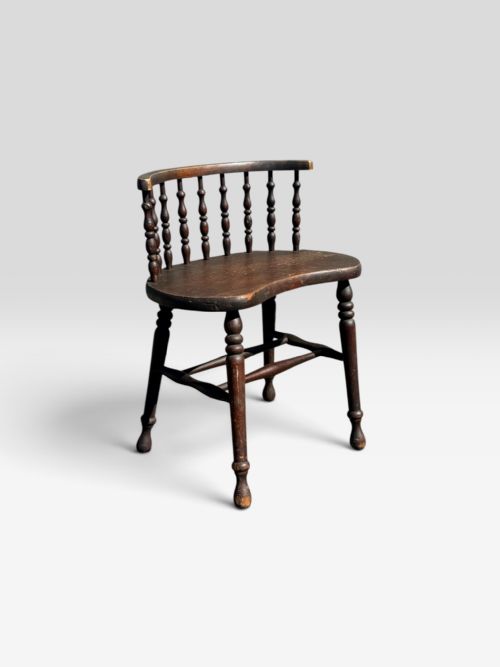
- A wooden armchair with a low curved back rail supported by numerous spindles above a solid timber seat. These pieces were standard fittings in nineteenth-century offices and studies.
- Smokers bow
- A sturdy nineteenth-century Windsor-derived armchair with a low rounded back and turned spindles, commonly built from elm and beech. They served as robust seating in kitchens and public rooms.
- Sabre leg
- A concave sweeping leg shape that tapers toward the foot, frequently found on Regency and early nineteenth-century dining chairs. This profile adds structural grace while supporting the seat frame.
- Strapwork
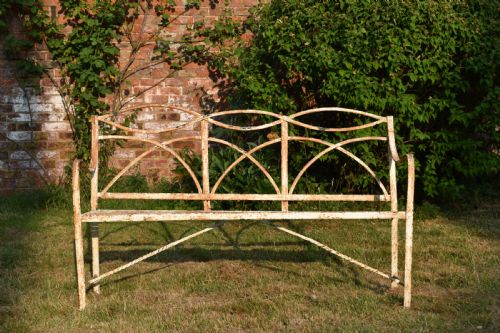
- Flat interlaced bands forming decorative geometric patterns on chair backs or garden benches. It references classical strapwork ornament adapted by nineteenth-century designers.
Victorian Curved Back Chairs: Frequently Asked Questions
How were nineteenth-century desk chairs used?
Nineteenth-century desk chairs provided functional seating for offices, libraries, and studies. Many incorporated swiveling actions or height adjustments to suit working at large partners desks.
Sturdy woods like mahogany, oak, and elm ensured these chairs withstood daily office use. Solid wooden seats or simple leather pads prioritized durability over plush comfort.
What is a captain's chair?
A captain's chair is a low-backed wooden armchair characterised by a curved top rail supported by vertical spindles. The seat is usually shaped from a single piece of solid timber.
These chairs originated in vernacular furniture traditions and became common in institutional and domestic workspaces. Elm and beech were favored for their resistance to splitting under heavy use.
How do I identify an Aesthetic Movement chair?
Aesthetic Movement chairs from the late nineteenth century often display simplified, rectilinear or subtly curved forms inspired by Japanese design. Ebonised finishes and gilt highlights frequently appear on these pieces.
Designers like E.W. Godwin influenced this style, moving away from heavy Victorian ornamentation. The resulting chairs emphasise clean lines and structural honesty.
Where should I place a curved back chair?
Curved back chairs suit studies, bedrooms, and living rooms where their rounded profiles soften room layouts. Tub chairs fit well in corners or beside reading tables.
Revolving desk chairs function naturally alongside antique writing desks. Their ergonomic curves provide practical seating for active workspaces.