

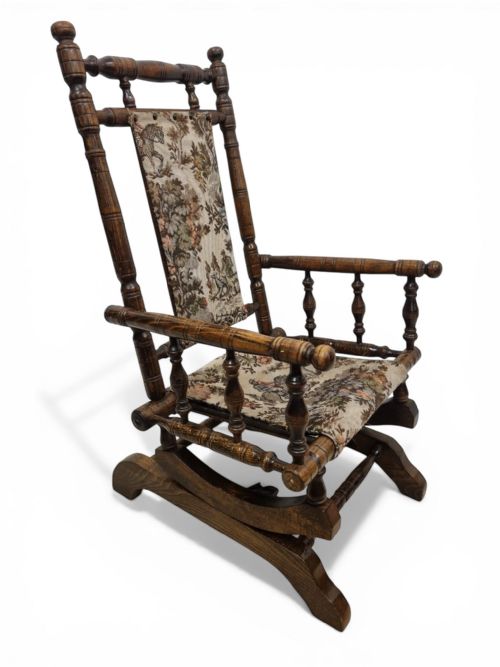


Victorian Nursery Furniture
Victorian nursery furniture gathers the small chairs, cradles, and horses made to scale for children across the nineteenth century.
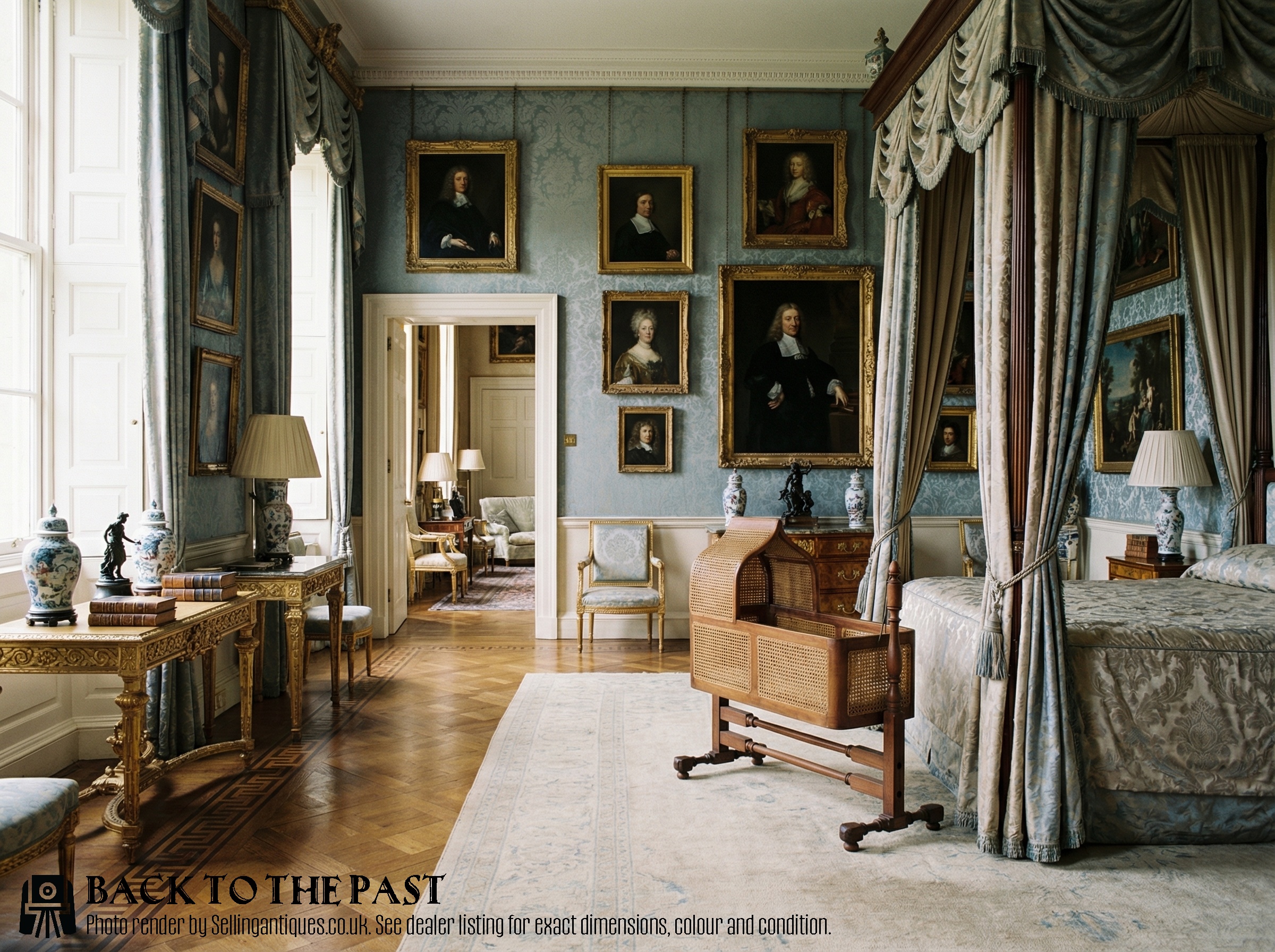
Victorian Nursery Furniture
Victorian nursery furniture comprises seating, sleeping quarters, and play objects designed specifically for children during the nineteenth century. The selection ranges from robust high chairs and rocking horses to intimate cradles, cribs, and small armchairs.
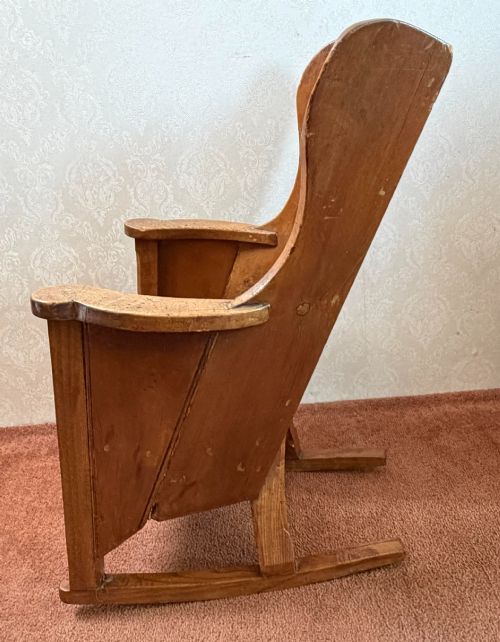
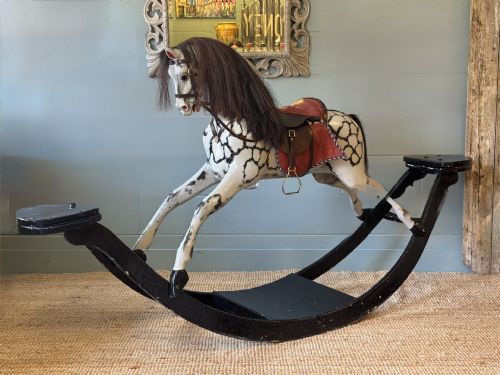
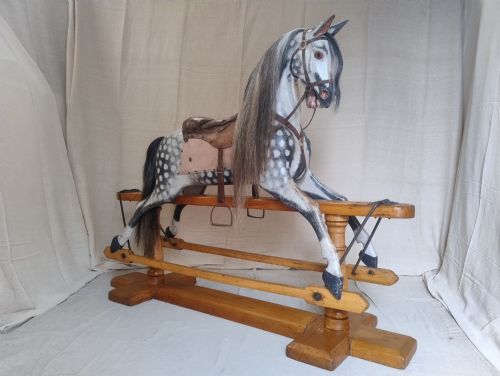
Seating forms appear frequently, including Windsor hoopback chairs, commode chairs, and metamorphic high chairs that alter their configuration. Rocking chairs and rocking horses reflect the domestic leisure and play of the period.
Pieces stem from various decades of the nineteenth century and extend into the Edwardian era, utilising regional woods and formal mahogany styles alike.
Materials and Techniques
Carpenters and makers utilised a mix of domestic timbers such as mahogany, ash, elm, oak, beech, pine, and fruitwood. Windsor and vernacular pieces often combine ash and elm, whilst formal seating employs polished mahogany or rosewood.
Construction methods include traditional turning, steam-bending for Windsor hoops, and panelled joinery for cradles. Seating surfaces incorporate cane, bergere, rush, horsehair, leather, and tapestry upholstery.
Finishes range from plain wood and original paint to cast iron frameworks and ornate carved details on swings and rocking horses.
Victorian Nursery Furniture Retail Price Guide 2026
Typical asking prices for victorian nursery furniture among the pieces listed under this phrase on Sellingantiques today, from the lower quarter to the upper quarter. They describe what is for sale here now, not the wider market.
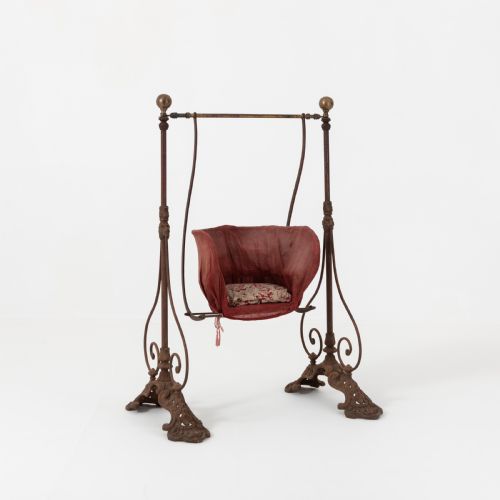
A cast iron swing lets a Victorian child fly indoors without disturbing the garden mud.
Craft and Substance
The distinction between pieces rests on the ambition of the maker and the grade of materials selected for a child's scale. Formal parlour pieces feature turned rosewood frames and buttoned leather, whereas country pieces rely on simple elm and ash construction.
The integrity of secondary materials, such as woven cane seats, horsehair stuffing, and original painted surfaces, dictates the physical character of each survivor. Structural ingenuity, evident in metamorphic high chairs that convert into low seats, elevates certain examples above standard domestic items.
G & J Lines of London·F.H.Ayres·Liberty of London·Heals and son·Ford Maddox Brown
The Victorian Nursery Furniture Glossary
- Metamorphic
- Furniture designed to transform from one object into another, such as a high chair converting into a low armchair and table. This ingenuity served domestic efficiency in nineteenth-century households.
- Windsor
- A chair built with a solid wooden seat into which the legs and back spindles are wedged directly. These frames utilise turned components and steam-bent hoops.
- Bergere
- A type of enclosed upholstered armchair with cane or wicker lattice work on the back and sides. The technique provides lightweight structural support.
- Commode chair
- An enclosed seat fitted with a concealed chamber pot beneath the lift or slide of the upholstery. They served domestic hygiene in nurseries before modern plumbing.
- Vernacular
- Objects made by local regional makers following traditional regional patterns rather than high-style metropolitan designs. These items emphasise utility and local timber availability.
Victorian Nursery Furniture: Frequently Asked Questions
What is a metamorphic high chair?
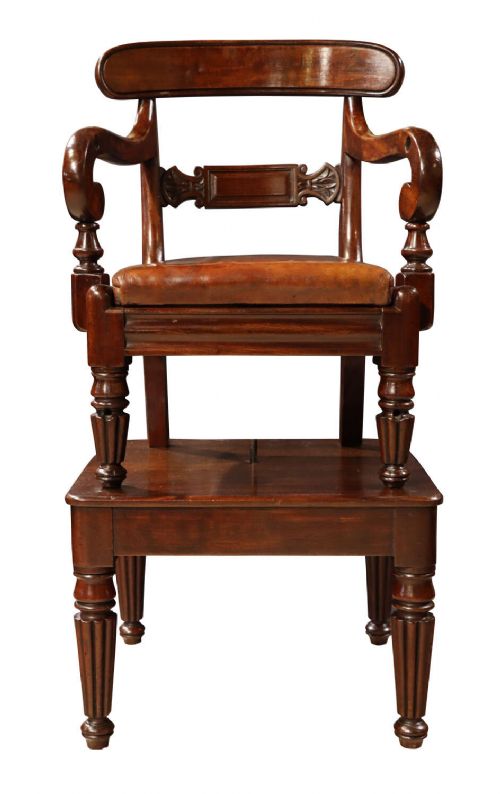
A metamorphic high chair is a convertible piece of seating designed to alter its height and form. Mechanisms allow the tall frame to shift into a low armchair or play table.
This dual utility made them practical for growing children in nineteenth-century nurseries where space and economy mattered.
Are these items safe for modern children?
These pieces were built to nineteenth-century domestic standards and historical safety practices. They function primarily as decorative antiques or collector items rather than modern nursery equipment.
Buyers should assess structural stability carefully before allowing children to use them.
What is the difference between a cradle and a crib?
Cradles are typically panelled wooden structures mounted on rockers to sway lengthwise. Cribs often feature higher sides, sometimes incorporating cane or iron frameworks.
Both served as infant sleeping quarters in domestic bedrooms and nurseries.