






Victorian Novelty Bronzes
Victorian novelty bronzes are imaginative metalwork figures and desk accessories that bring character and humour to a room.
Victorian Novelty Bronzes
Victorian novelty bronzes encompass a diverse range of imaginative metalwork figures and functional desk accessories designed to amuse and entertain.
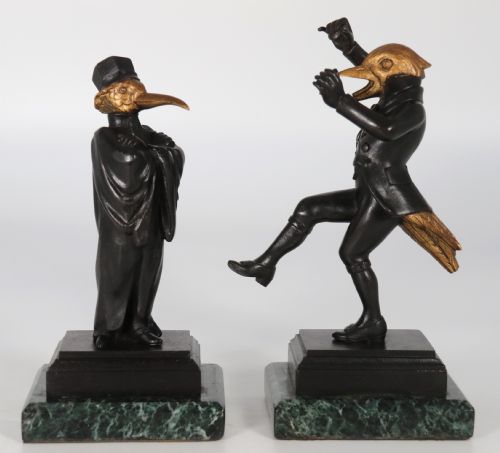
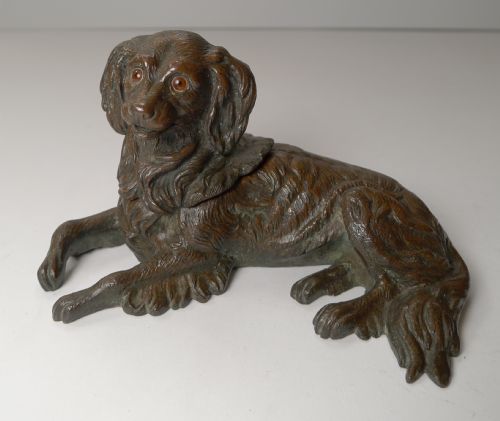
Buyers seeking victorian novelty bronzes will encounter pieces spanning the nineteenth century and the Edwardian era, including depictions of animals, birds, and theatrical characters.
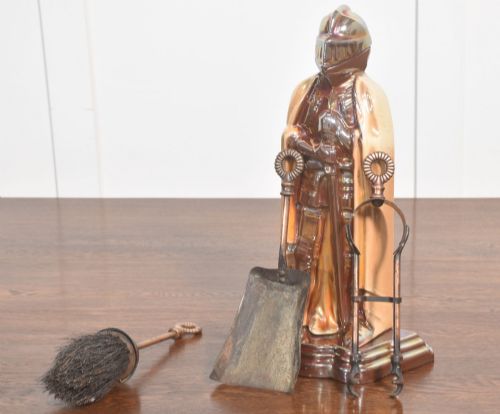
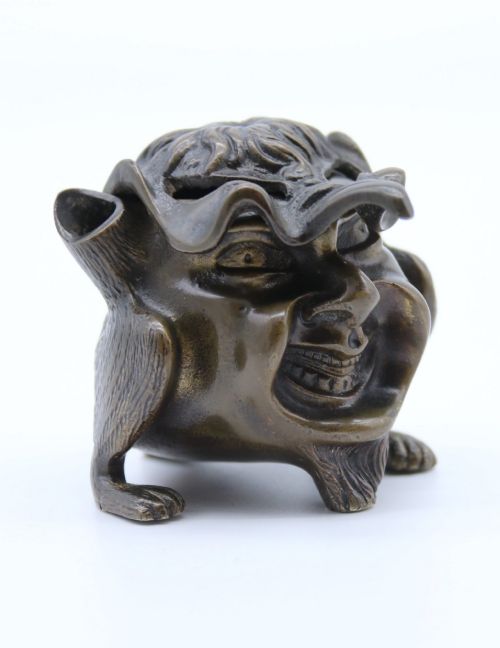
Common forms on this page include figural inkwells, desk tidies, and small sculptures cast in bronze, brass, and patinated spelter.
How they were made
Pieces are primarily produced through metal casting techniques using bronze, brass, and spelter, often enhanced with gilt finishes or painted details.
Mr Fox appears relaxing in his nightgown, ready for bed before tending to his correspondence.
What varies in quality
Quality in these figural pieces rests upon the crispness of the casting and the expressive detail given to faces, feathers, and fur.
The sophistication of the mechanism in functional items like inkwells, clocks, and corkscrews also distinguishes standard production from finer examples.
The Victorian Novelty Bronzes Glossary
- Spelter
- An alloy of zinc and lead often used as a less expensive alternative to bronze during the nineteenth century. It takes patination well to simulate heavier metals.
- Ormolu
- Gilt bronze produced by applying a finely ground gold-mercury amalgam to a bronze base. This technique creates a rich golden surface characteristic of decorative objects.
- Champlevé enamel
- A technique where troughs or cells are hollowed out of the metal surface and filled with vitreous enamel before firing. It provides colourful ornamentation on desk clocks and accessories.
- Animalier
- A nineteenth-century artistic style focusing on the realistic or characterful depiction of animals. It appears frequently in studies of birds, dogs, and monkeys.
Victorian Novelty Bronzes: Frequently Asked Questions
What function did these novelty objects serve?
Many of these pieces served practical purposes on nineteenth-century desks and in homes, combining utility with amusement.
Items such as inkwells, pin cushions, and trinket boxes held writing materials or personal items while displaying playful figural designs.
How are periods and dates identified?
Dates are estimated through stylistic traits, manufacturing techniques, and historical dress or subjects depicted in the metalwork.
References span the Victorian and Edwardian periods, marked by specific design revivals and changing methods of metal casting.
Where should I place these pieces?
These decorative items suit tabletops, mantelpieces, and desks where their small scale allows close appreciation of the detail.
They work well as standalone focal points or integrated into existing collections of nineteenth-century metalwork.
What materials were commonly used?
Cast bronze and brass form the structural basis for the majority of these sculptural items, sometimes paired with glass inserts.
Alternative metals such as spelter also appear alongside surface treatments like gilding and cold painting to add colour and texture.