



Aesthetic Movement Bronzes
These aesthetic movement bronzes bring 19th-century decorative metalwork into your home, offering distinctive forms that collectors seek.
Aesthetic Movement Bronzes
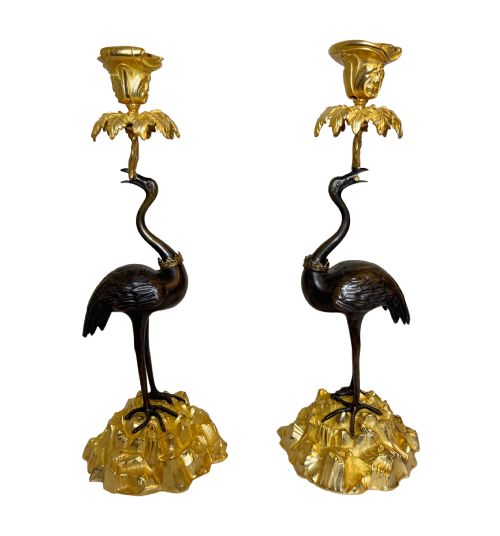
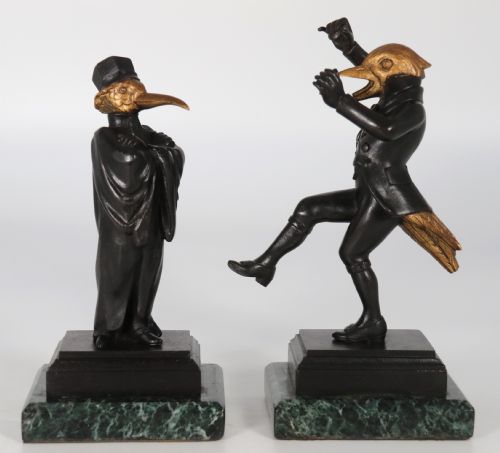
Aesthetic movement bronzes include candlesticks, sculptures, jugs, and table lamps created during the Victorian era. These pieces often feature specific motifs such as flamingos, theatrical birds, or sea serpents rendered in bronze, gilt bronze, and brass.
The objects span styles from strict Aesthetic Movement to Chinoiserie and Victorian Novelty, originating primarily in late 19th-century England. You are most likely to encounter pairs of candlesticks, sculptural table centerpieces, and decorative architectural items.
The forms reflect a departure from earlier heavy Victorian designs toward lighter, more artistic compositions. Materials frequently combine metalwork with other media like glass, marble, or stoneware, as seen in Doulton Slater's patent jugs and walnut fire screens.
How they were made
The construction relies heavily on cast bronze, brass, and gilt bronze, often enhanced with silvered finishes or parcel-gilt details. Makers utilised patinated surfaces to create texture and contrast on sculptural elements such as birds and architectural serpents.
Many items integrate mixed media, combining metal frames with etched glass, solid walnut, and stoneware bodies. This multi-material approach required collaboration between metalworkers and ceramicists, particularly for pieces incorporating patent pottery elements.
The selection includes architectural sea serpents and theatrical birds, proving that 19th-century desks and hearths enjoyed a touch of drama.
What varies in quality
Quality separates through the crispness of the casting and the finesse of the surface chasing. Superior examples retain sharp detail in complex motifs like feathers and sea serpent scales, whereas lesser pieces show softer, blurred contours.
The application of gilding and patination dictates the visual depth of the object. High-grade items display careful multi-tone finishing, such as combined gilt and silvered bronze, rather than uniform or flat surface treatments.
The Aesthetic Movement Bronzes Glossary
- Gilt bronze
- Bronze that has been coated with a thin layer of gold or gold leaf. This finish provides a bright, reflective surface popular in decorative Victorian metalwork.
- Patinated bronze
- Metal treated with chemical solutions to produce a specific surface colour and texture. This technique highlights sculptural details by darkening recessed areas.
- Parcel-gilt bronze
- Objects where only specific portions are gilded while other areas retain the natural or patinated metal. This creates contrast between bright and dark surfaces.
- Chinoiserie
- European artistic style reflecting Chinese and East Asian motifs. It appears in ornamental metalwork through imaginary landscapes and exotic creature designs.
- Tazza
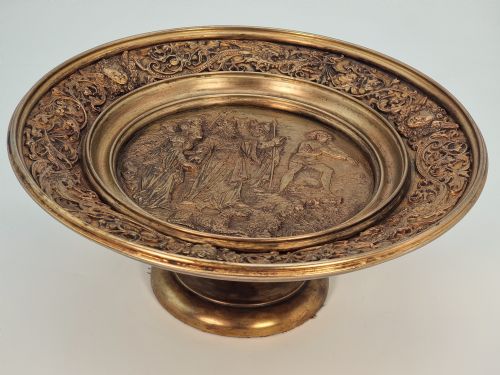
- A shallow bowl or ornament raised on a stem and foot. These serve as decorative centrepieces on tables.
Aesthetic Movement Bronzes: Frequently Asked Questions
What periods do these bronzes date from?
The listings span the late 19th century, specifically the Victorian period between 1870 and 1890. This era encompasses the height of the Aesthetic Movement.
Items from this timeframe frequently display characteristic motifs like birds and sea serpents combined with diverse materials.
How were these decorative items used originally?
Objects such as candlesticks, lamps, and chandeliers provided functional illumination in Victorian rooms. Centrepieces, clocks, and desk accessories served as ornamental furnishings for drawing rooms and studies.
Fire screens with adjustable doors added both decoration and practical warmth management near hearths.
What materials appear alongside the bronze?
Makers combined bronze and brass with glass, marble, solid walnut, and stoneware. Etched glass panels and Doulton pottery bodies frequently complement the metalwork.
This mixed-media construction defines much of the production from the period.
How do I identify Aesthetic Movement pieces?
Look for stylised natural motifs, avian subjects like flamingos or theatrical birds, and influences from Japanese and Chinese design. The forms prioritise artistic decoration over purely utilitarian shapes.
Dates around the 1880s and 1890s align closely with this design philosophy.