




Pair of Victorian Statuettes
A pair of victorian statuettes brings dual presence to a room, offering matching figures cast in bronze or shaped in porcelain.
Pair of Victorian Statuettes
A pair of victorian statuettes comprises twin decorative figures designed to be displayed together as matching ornaments. When you search for a pair of victorian statuettes, you encounter dual arrangements of porcelain, bronze, earthenware and cast iron.
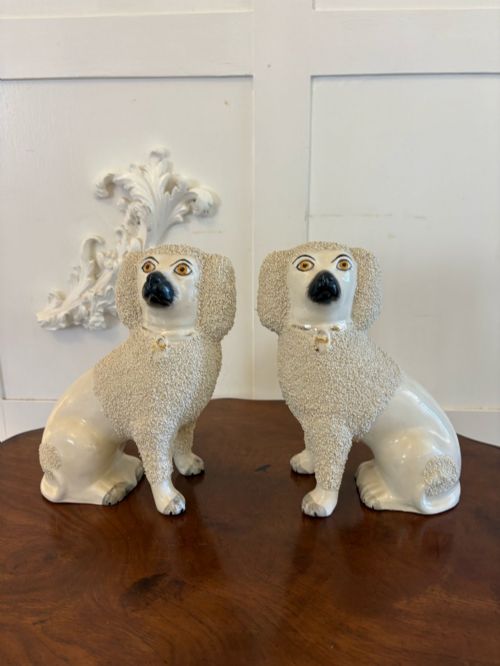
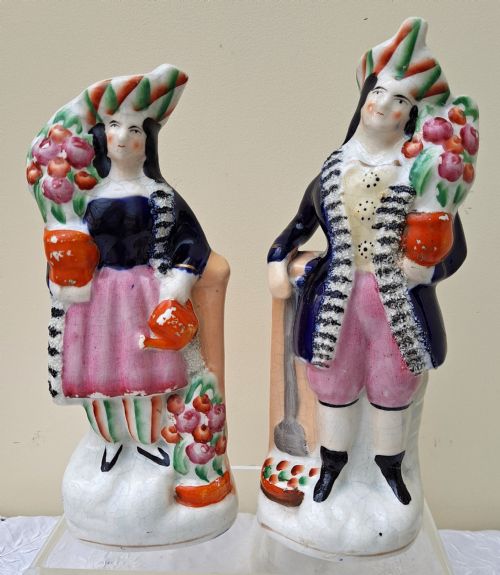
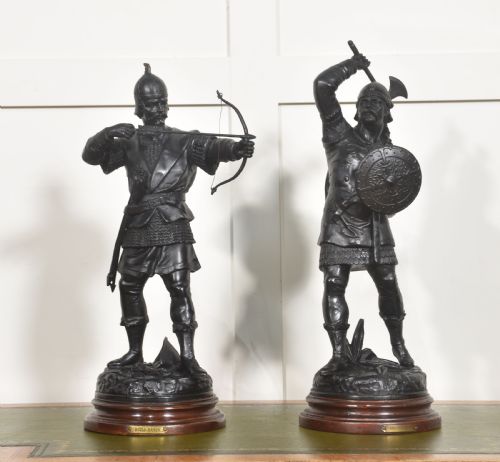
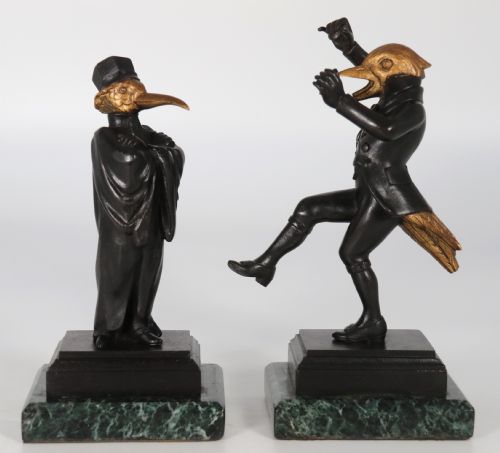
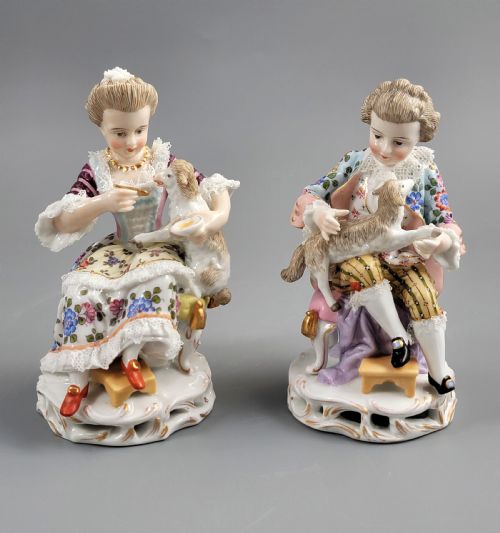
The selections span English pottery figures such as Staffordshire poodles, whippets and gardeners alongside Continental porcelain groups from factories like Sitzendorf and Carl Thieme. Alongside ceramic pairs, bronze casts of classical figures, animals and theatrical birds appear frequently.
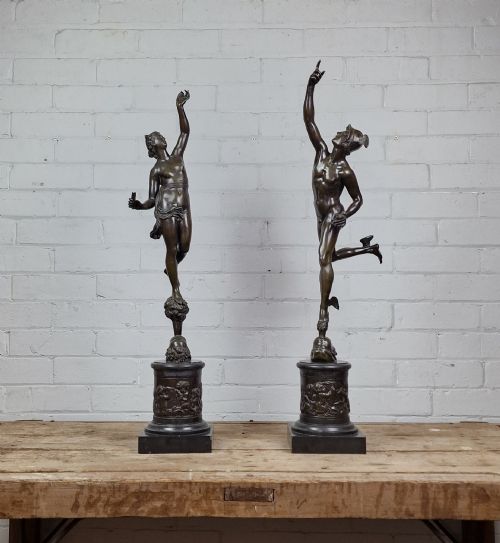
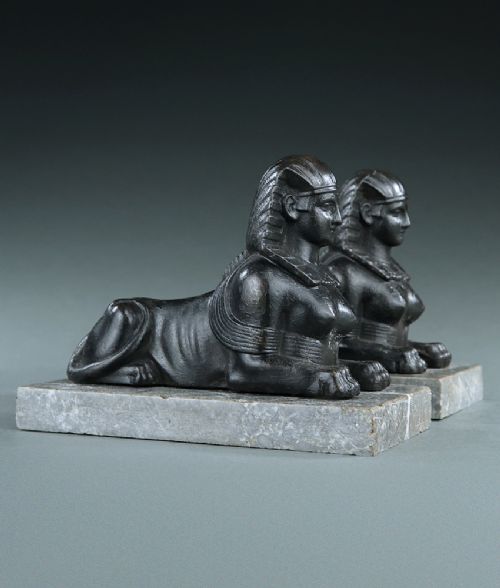
The objects take many forms, from quill holders and desk accessories to large decorative figures on rustic bases and Grand Tour bronzes mounted on marble. These works reflect Victorian historicism, Rococo Revival, Neoclassical and Egyptian Revival tastes.
How they were made
Ceramic pairs are shaped from porcelain, bisque porcelain, earthenware or majolica, often finished with hand-painted enamel colours and gold leaf accents or white glaze. Staffordshire pottery uses earthenware press-moulding with painted and glazed surfaces, while Continental porcelain factories utilise fine paste compositions and detailed hand-painting.
Metal statuettes involve casting in bronze, brass, cast iron or spelter, sometimes combined with ormolu mounts or set onto heavy marble bases. Metal founders employ lost-wax or sand-casting techniques to capture fine details in figures of soldiers, animals and mythological subjects.
Listings feature materials spanning porcelain, earthenware, bronze, brass, cast iron, spelter and marble.
What varies in quality
Hand-painted decoration creates distinct differences in appeal, where delicate brushwork on porcelain surfaces and careful chasing on metal casts distinguish the finest workshops. The presence of clear factory marks and well-finished bases further marks superior execution across these sculptural pairs.
Alfred Grevin·Sitzendorf Porcelain·Carl Thieme Dresden·Ernst Bohne Sohn·Helena Wolfsohn·Royal Worcester·Rozenburg·Emile Victor Blavier
The Pair of Victorian Statuettes Glossary
- Bisque porcelain
- Unglazed porcelain with a matte, biscuit-like surface that resembles marble. It is fired once before decoration, highlighting sculptural form.
- Spelter
- An alloy of zinc used as an economical alternative to bronze. It is softer than bronze and typically given a patinated metallic finish.
- Staffordshire figures
- Earthenware pottery figures made in the Staffordshire potteries. They were popular domestic ornaments during the nineteenth century.
- Grand Tour
- A cultural journey undertaken by wealthy Europeans, bringing back souvenirs such as small bronze figures. These bronzes often depict classical subjects.
- Majolica
- A type of earthenware coated with an opaque tin-glaze and painted with metallic oxide colours. It produces rich, glossy tones on Victorian ceramic figures.
Pair of Victorian Statuettes: Frequently Asked Questions
How were pair of victorian statuettes displayed in homes?
These figures typically decorated mantelpieces, side tables and pedestals in matching arrangements, often placed symmetrically at either end of a shelf.
Many functional versions, such as inkstands or quill holders, combined decorative sculpture with practical desk accessories.
What materials are common in pair of victorian statuettes?
The pieces appear in various mediums, most notably glazed and bisque porcelain, Staffordshire earthenware, cast bronze, brass and spelter.
Some metal examples include marble bases, while porcelain pieces frequently incorporate enamel painting and gold leaf detailing.
How do I identify the period of these statuettes?
Dating relies on stylistic clues like historicist revival themes, maker marks stamped on the base, and manufacturing techniques characteristic of the nineteenth century.
Porcelain bodies and bronze patination also provide strong indications of whether a piece dates from the mid or late nineteenth century.
What subjects do these statuettes typically represent?
The subjects range widely from domestic animals and rustic human figures to classical mythology, historical soldiers and theatrical caricatures.
Popular themes reflect Victorian interests in travel, literature, agriculture and exotic revival styles.