




Victorian Needlepoint Textile
These pieces are a victorian needlepoint textile, bringing domestic craft and historic wool and silk work into modern rooms.
Victorian Needlepoint Textile
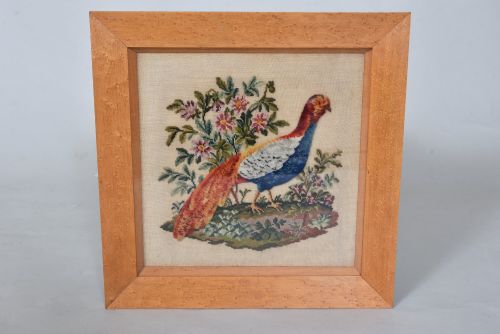
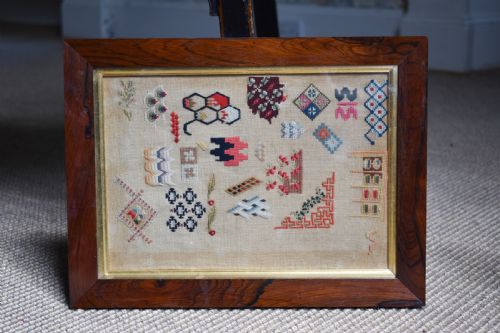
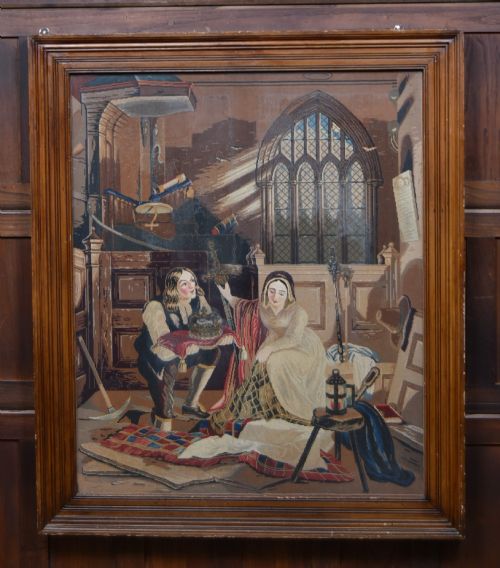
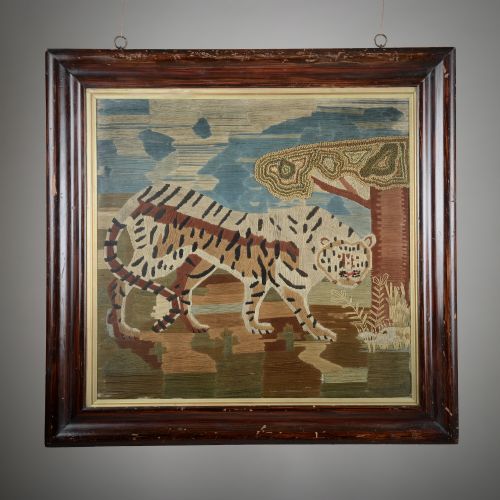
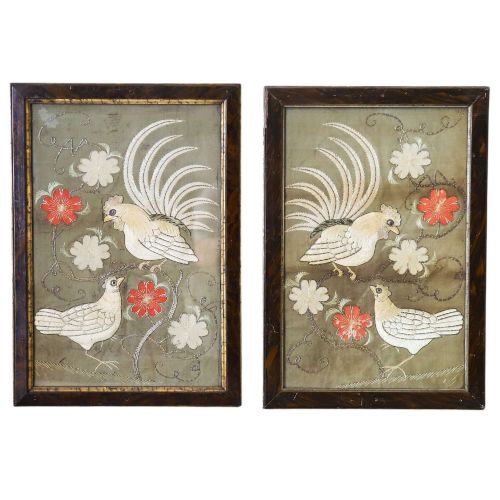
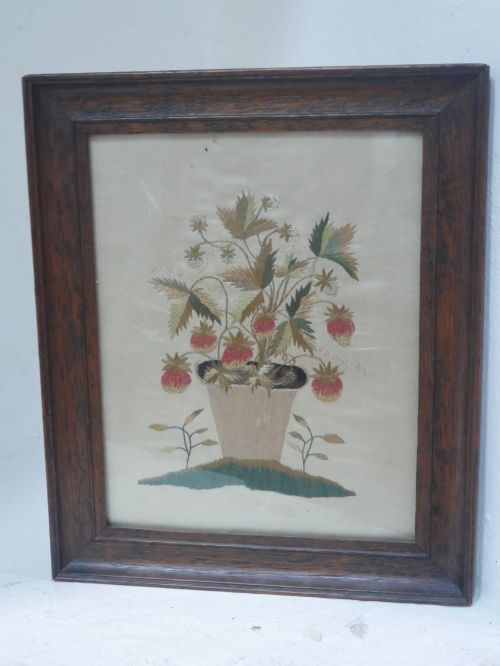
A victorian needlepoint textile encompasses framed pictures, samplers, and decorative panels produced across the nineteenth century. These items range from detailed wool work panels and silk embroideries to traditional samplers worked by young girls.
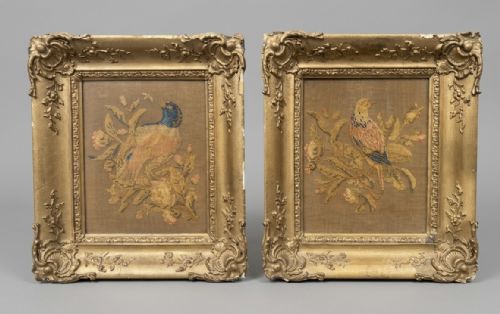
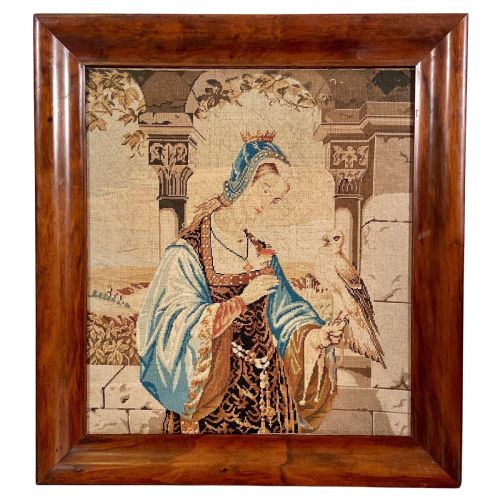
The objects frequently appear mounted in original frames of burr maple, rosewood, or gilt wood. Common pictorial themes include animals, sporting scenes, royal commemorations, and classical portraits.
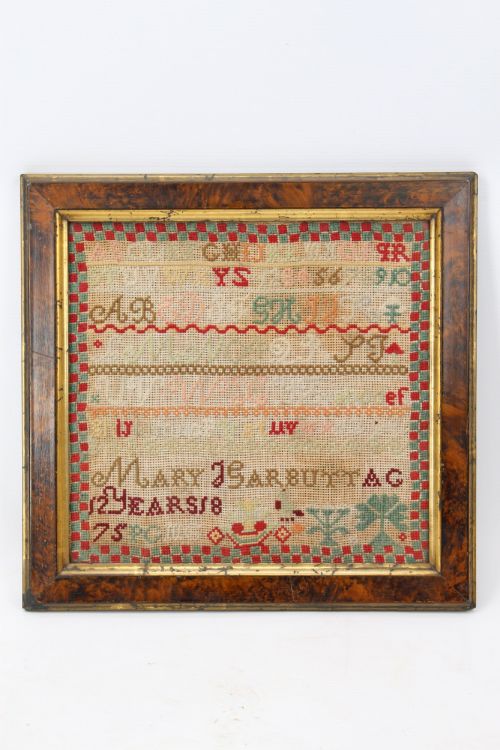
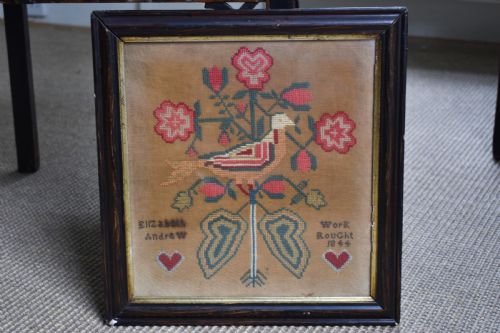
Sampler forms capture personal milestones, recording names, ages, and dates alongside alphabets and religious motifs. Other examples take the form of functional items like bell pulls and upholstered stools.
Materials and construction
Makers utilised wool, silk, and glass beads stitched onto canvas, linen, or woolen grounds. Wool work dominates the surviving examples, often worked in gros-point or Berlin work techniques to achieve dense pictorial surfaces.
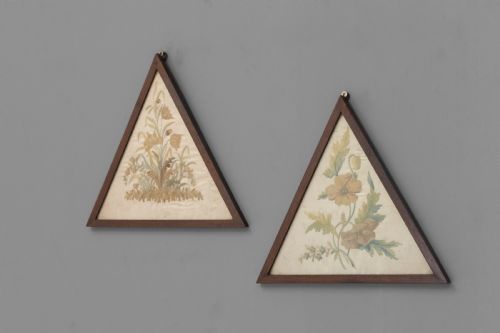
Silk embroidery provides finer detail for figurative panels and commemorative pieces. Many textile works incorporate glass beads for highlights and are finished in wooden frames featuring original glazing.
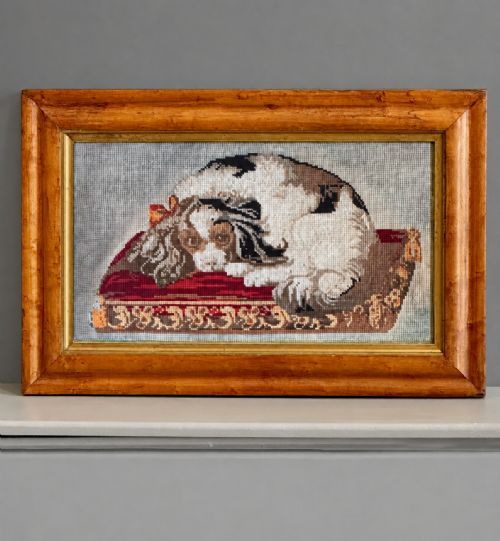
One young maker recorded her progress in 1875 while another stitched a plump King Charles spaniel.
Judging quality
Quality rests upon the fineness of the stitchwork, the complexity of the design, and the preservation of the colour. Finer wools and silks combined with well-executed shading separate ambitious pictorial panels from basic exercises.
The survival of the original frame, whether burr maple, rosewood, or gilded wood, contributes significantly to the integrity of the piece. Samplers display greater merit when the lettering, dates, and maker details remain crisp and legible.
The Victorian Needlepoint Textile Glossary
- Berlin work
- A style of nineteenth-century needlepoint worked from printed and hand-coloured squared paper patterns. This technique allowed makers to produce elaborate pictorial designs using wool on canvas.
- Sampler
- A piece of needlework produced to demonstrate or test skill in various stitches and alphabets. These works frequently record the name and age of the maker alongside dates.
- Woolie
- A form of embroidered picture created by nineteenth-century sailors, typically depicting ships using wool yarn. These pieces frequently utilise long and short stitches to build maritime scenes.
- Gros-point
- A type of needlepoint embroidery worked on canvas using a coarse cross stitch. It provides a durable and textured surface suited to larger wall pictures and furnishings.
- Bell pull
- A vertical hanging strip attached to a mechanical bell system in grand houses. They were frequently worked in hand-embroidered silk and wool with decorative brass mounts.
Victorian Needlepoint Textile: Frequently Asked Questions
How do I date a sampler?
Many samplers include embroidered dates and the age of the maker, which provides a direct point of reference.
Style, framing materials, and the type of linen or canvas also help confirm the nineteenth-century period.
What is Berlin work?
Berlin work refers to needlepoint stitched from printed paper grids that became popular during the nineteenth century.
It allowed makers to create complex shaded pictures using bright wools.
How were these textiles displayed?
Most framed textile works and samplers hung on interior walls as decorative art in period homes.
Some examples formed functional items such as fire screens, bell pulls, and furniture panels.
Are sailors woolies different?
Sailors woolies are specific embroidered pictures made by nineteenth-century sailors while at sea.
They usually depict naval vessels using wool yarn on canvas grounds.