


Wool Needlework Sampler
These wool needlework sampler pieces bring historic domestic handwork into modern rooms, offering charming textile art crafted by hands from centuries past.
Wool Needlework Sampler
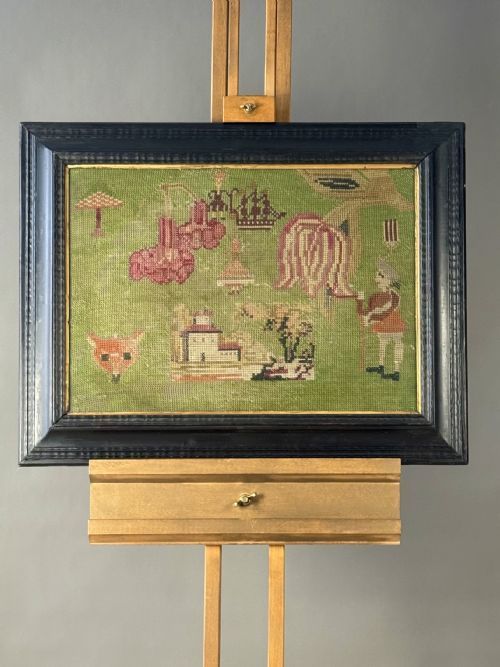
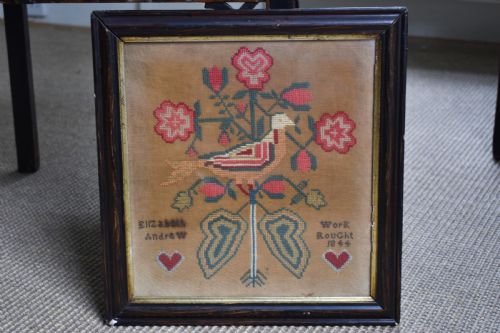
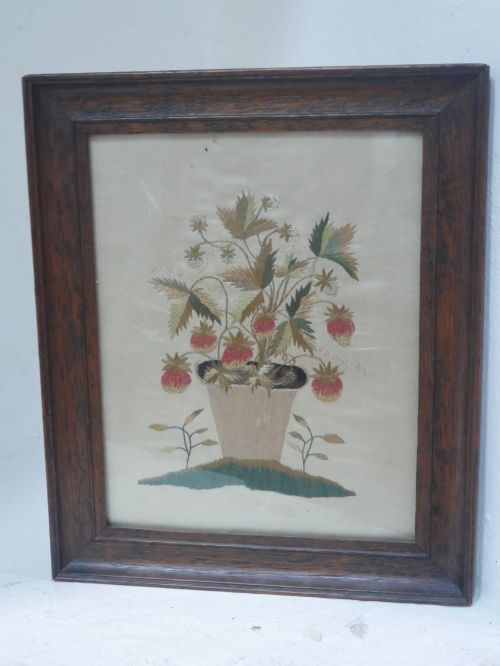
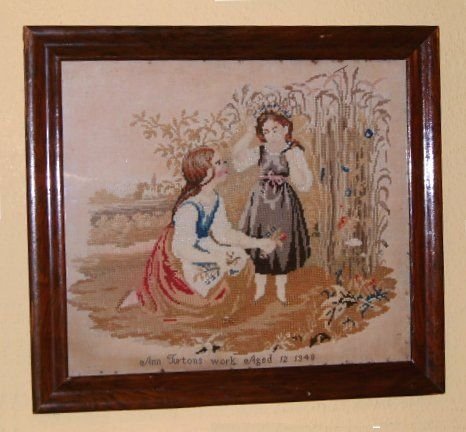
A wool needlework sampler represents a rich tradition of decorative textile art spanning from the eighteenth century through the twentieth century. When exploring this selection, buyers encounter framed wall art that preserves historical stitching techniques, ranging from folk art pieces to detailed botanical and religious depictions. These textiles capture personal histories, such as youth practice works bearing names and ages, alongside pictorial scenes like pots of strawberries and girls feeding swans.
The objects frequently appear mounted in period frames, particularly rosewood or gilded wood, which complement the wool and linen backgrounds. Pieces from the eighteenth century sit alongside Victorian examples and later twentieth century folk works, showing a continuity in domestic handicraft. Each framed artwork functions as a window into past domestic life, showcasing the patience and skill of historical needleworkers.
How they were made
Makers utilised wool and silk threads stitched onto linen or canvas foundations, creating durable pictorial surfaces that survive centuries. The integration of gros point and petit point techniques allowed artisans to achieve varying levels of textural detail and shading within a single composition.
Finished textiles were subsequently mounted behind glass within wooden frames, utilising materials like rosewood and gilded wood to protect the delicate needlework from environmental damage.
Listings feature wool, linen, canvas, rosewood, and gilded wood across eighteenth century, Victorian, and twentieth century periods.
What varies in quality
The complexity of the stitching defines the upper tier of these works, where detailed gros point and petit point display intricate pictorial depth. Superior examples combine varied thread colours with sophisticated composition, whereas simpler pieces rely on basic folk art stitches.
Framing also distinguishes the selection, with original rosewood or period wooden surrounds adding substantial character compared to later replacement mounts.
The Wool Needlework Sampler Glossary
- Sampler
- A piece of needlework produced as a demonstration or test of skill in various stitches. These historical cloths often record alphabets, motifs, and maker details.
- Gros point
- A counted-thread embroidery stitch worked on canvas that creates a bold, durable texture. It forms the primary background or heavy pictorial elements in many wool works.
- Canvas
- An open-weave foundation fabric used to support heavy wool stitching. It provides the structural grid necessary for traditional needlepoint execution.
- Folk art
- Artistic work produced from an indigenous culture or peasant society, characterised by a naive style. These pieces prioritise expressive charm over strict academic proportion.
Wool Needlework Sampler: Frequently Asked Questions
How old are these samplers?
The pieces span multiple periods, stretching from eighteenth century works through Victorian examples up to early twentieth century folk pieces.
Each era brings distinct stylistic choices and framing methods, reflecting the changing domestic tastes of the makers.
Are they supplied with frames?
Many examples arrive housed in their original or period frames, frequently constructed from rosewood or gilded wood.
These enclosures help preserve the fragile textiles behind glass while providing a complete decorative object ready for hanging.
What is the difference between gros point and petit point?
Gros point utilises a larger stitch over a coarser canvas grid, resulting in robust textures suited for background elements.
Petit point employs a much finer stitch to achieve intricate detail and realistic shading in focal points like figures or flowers.
How should I hang needlework art?
Textiles require protection from direct sunlight to prevent the wool and silk threads from fading over time.
Displaying them on interior walls away from excessive moisture ensures the fabric and wooden frames remain stable.