


Folk Art Needlework Picture
A folk art needlework picture brings hand-stitched character and domestic history directly to your wall.
Folk Art Needlework Picture
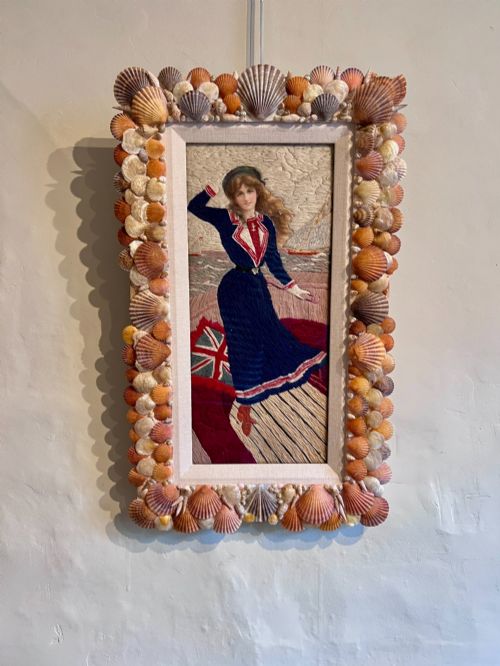
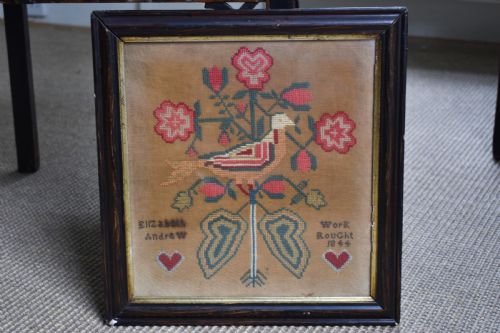
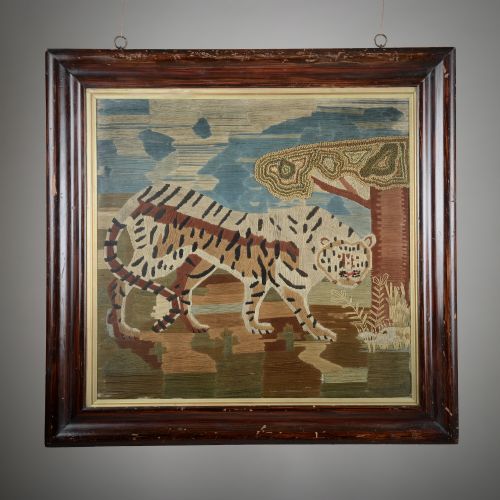
A folk art needlework picture is a hand-worked textile piece created using wool, linen, canvas, and thread, often depicting narrative scenes or portraits. These works range from early nineteenth-century embroidered pictures and samplers to maritime woolwork pieces known as woolies and later twentieth-century stitched compositions.
The versions most commonly met on this page date from the Victorian period and the nineteenth century, including maritime folk art and traditional samplers. They capture domestic handcraft and occupational stitching, spanning British and American origins.
How they were made
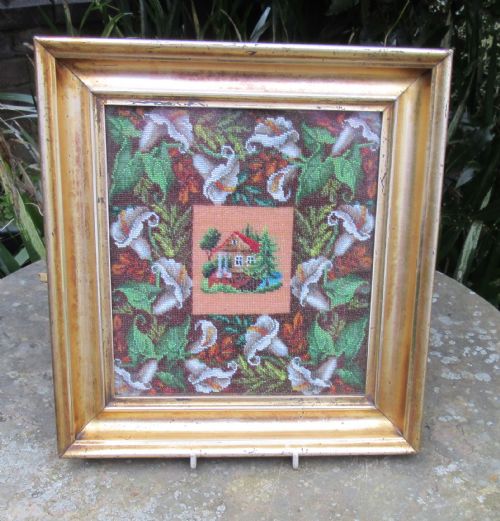
Needlework pictures are constructed by hand-stitching wool thread and fabric onto a base of linen or canvas using various embroidery techniques. Many examples incorporate diverse materials, including glass for protection, wooden frames, fabric elements, and occasionally seashells or beadwork.
Makers utilised simple hand tools to build up dense pictorial surfaces, creating textures through varied stitch densities and thread weights. The resulting textiles were mounted behind glass within wooden frames to preserve the delicate fibres and threads.
Materials recorded across the selection include wood, wool, linen, glass, canvas, seashells, and fabric.
What varies in quality
The artistic execution and the complexity of the subject matter largely define the standing of a folk art needlework picture. Pieces depicting narrative stories, specific maritime subjects, or unusual motifs show greater pictorial ambition than standard samplers.
The preservation of the original materials and the tightness of the stitching also influence the character of the work. Early examples with distinct wool thread work and intact contemporary frames hold more visual presence.
The Folk Art Needlework Picture Glossary
- Woolie
- A traditional embroidery created by sailors using coloured wool thread, typically depicting naval vessels or maritime figures. These works form a distinct sub-genre of nineteenth-century folk art.
- Sampler
- A piece of needlework produced to demonstrate proficiency in various stitches and alphabets. They often include dates, maker names, or moral verses.
- Canvas
- A heavy woven fabric used as the foundational ground for needlework pictures and tapestries. It provides the rigid support needed for dense stitching.
- Beadwork
- The application of small glass or seed beads to a textile surface to create decorative patterns and pictures. This technique adds reflective quality and varied texture to the artwork.
Folk Art Needlework Picture: Frequently Asked Questions
What is a woolie?
A woolie is a specific type of nineteenth-century embroidery produced by sailors at sea, typically depicting maritime vessels or figures.
These pieces were constructed using wool thread on canvas backgrounds and are celebrated as a distinct form of maritime folk art.
How do I date a needlework picture?
Dating relies on stylistic clues, materials, and framing methods evident in the piece, alongside any stitched dates or names.
Nineteenth-century works often use specific wool weights and canvas types that differ from twentieth-century examples.
Where should I hang textile art?
Textile art should be displayed away from direct sunlight to prevent the fading of wool threads and fabrics.
Keeping pieces out of damp areas helps preserve the natural fibres of the linen and canvas grounds.
Are all samplers signed?
Many samplers include the name of the maker, initials, or a date incorporated directly into the stitched design.
However, a significant number of nineteenth-century examples and sailors woolies remain anonymous.