


Beige Embroidery Wall Art
Beige embroidery wall art brings together historic needlework and natural textiles, offering subtle tones and intricate hand-stitched detail for interior display.
Beige Embroidery Wall Art
Beige embroidery wall art encompasses historic samplers, framed textiles, and traditional needlework pieces created across several centuries. These works feature organic backgrounds of linen, cotton, or canvas decorated with wool, silk, and thread.
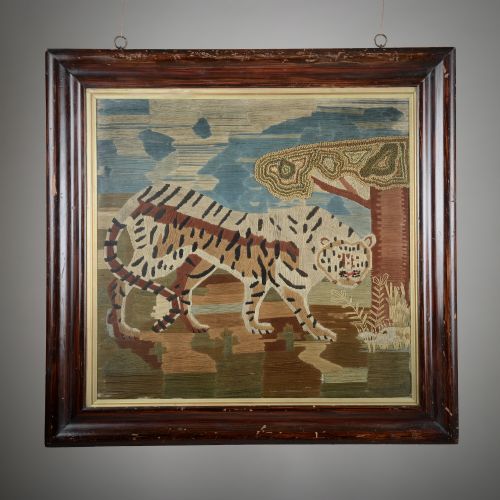
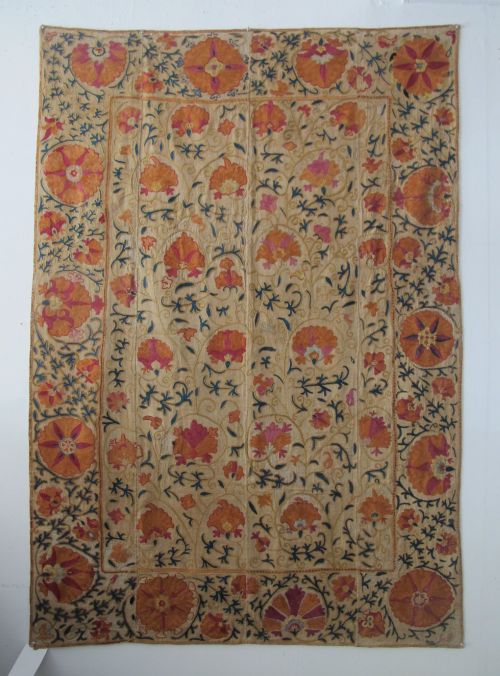
The selections available here range from Georgian schoolgirl samplers and Victorian folk art to Central Asian suzanis and Japanese silk panels. Each format offers a distinct regional style and method of domestic display.
Buyers encounter everything from tightly stitched genealogical records to large pictorial depictions of animals and botanical motifs. The common thread remains the use of neutral fabric grounds paired with skilled hand-embroidery.
Materials and construction methods
Makers utilised natural woven textiles such as linen, cotton, and canvas as the foundational background for their needlework. These pale fabrics provide the understated beige tones that define the visual weight of each piece.
Stitching was executed using wool, silk, and cotton threads in a variety of techniques ranging from traditional cross-stitch and needlepoint to dense regional embroidery. Many examples are preserved behind glass within wooden frames to protect the delicate fibres.
The selection includes English samplers, Central Asian suzanis, and Japanese silk panels.
Factors that distinguish individual works
Quality rests in the precision of the stitching and the complexity of the design layout, where tighter execution yields a sharper pictorial result. Pieces with well-documented maker details or regional attributions hold greater historical significance.
The preservation of the original textile ground and the vibrancy of the remaining thread colours determine the overall visual impact. Superior framing under glass helps maintain the physical integrity of fragile silk and wool components over time.
The Beige Embroidery Wall Art Glossary
- Sampler
- A piece of needlework produced as a demonstration or test of skill, often featuring alphabets, numerals, and decorative motifs. These works frequently record the name of the maker and the date of completion.
- Suzani
- A type of embroidered tribal textile originating from Central Asia, traditionally made with silk or cotton thread on a pale ground. They often display large-scale floral and geometric patterns.
- Needlepoint
- A form of embroidery where yarn or thread is stitched through a stiff open-weave canvas background. This technique completely covers the foundation material to create a dense pictorial surface.
- Folk art
- Artistic work produced from an indigenous cultural tradition or by untrained craftspeople using accessible local materials. These items reflect community aesthetics rather than academic fine art standards.
Beige Embroidery Wall Art: Frequently Asked Questions
How should I hang antique textile art?
Protect textile pieces from direct sunlight to prevent the fading of silk and wool threads against the beige background fabrics. Ensure that any framing utilises conservation-grade glass that keeps the surface from touching the glazing directly.
Hang the artwork on interior walls where humidity and temperature remain relatively stable throughout the year. Regular inspection behind the glass helps monitor the condition of the historic fibres.
What periods do these embroideries come from?
The pieces span from the late eighteenth century through the Edwardian era and into the early twentieth century. Examples include Georgian schoolgirl samplers alongside nineteenth-century Central Asian and Japanese works.
Each period reflects distinct educational or cultural traditions, from British domestic needlework to international textile production.
What materials make up the background fabrics?
The neutral grounds consist primarily of natural textiles such as linen, cotton, and canvas. These woven surfaces provide the pale beige backdrop that contrasts with the embroidered motifs.
Over time, these organic materials acquire a natural patina that adds warmth to the framed composition.
How do I identify a sampler?
Samplers typically display rows of alphabets, numbers, and practice stitches arranged symmetrically across the fabric. Many examples include the stitched signature of the maker and a specific date.
Schoolgirl samplers from the Georgian period often incorporate pious verses or genealogical details alongside floral borders.