
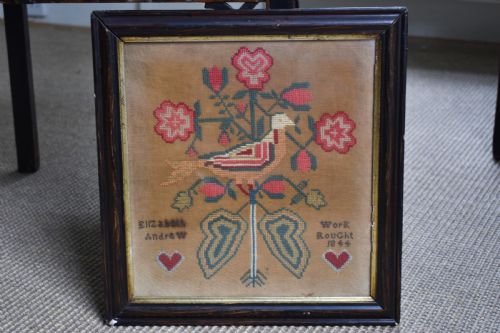
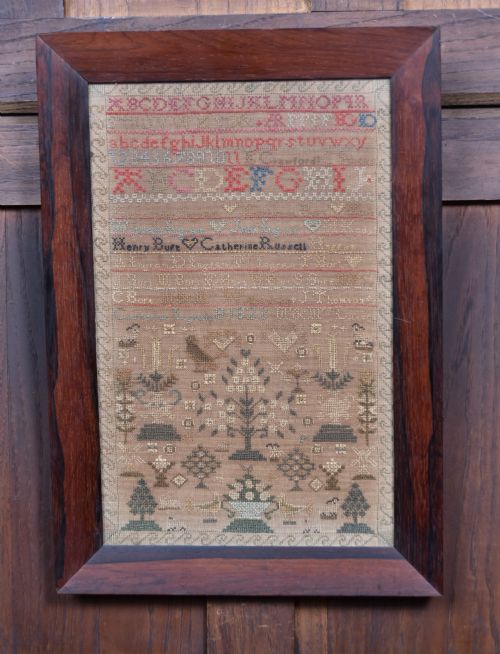


Brown Framed Needlepoint Sampler
These brown framed needlepoint sampler pieces are textile records of skill, history, and domestic labour that bring tactile warmth to any wall.
Brown Framed Needlepoint Sampler
A brown framed needlepoint sampler represents a tradition of decorative textile art preserved behind protective glass within timber surrounds. When you search for this phrase, you encounter works spanning the seventeenth, eighteenth, and nineteenth centuries, including Victorian love tokens and commandment panels.
Makers such as Ann B Gilies, Jane Pattinson, and others signed their needlework, capturing domestic histories in wool, silk, and thread upon linen and canvas. These textiles offer a direct connection to historical domestic education and personal expression.
How they were made
These works utilise wool, silk, and thread stitched meticulously onto linen or canvas grounds. Makers employed gros and petit point techniques to build detailed pictorial and textual compositions.
The completed textiles are housed within wood frames, including burr wood and rosewood profiles, fitted with glass to protect the delicate fibres from dust and atmospheric damage.
What varies in quality
Quality rests in the complexity of the stitchwork and the preservation of the fibres within their frames. Pieces utilising fine silk threads and varied stitches like petit point display a higher degree of execution than simpler wool work.
The integrity of the timber frame and the clarity of the original glass also contribute to the overall standing of the piece. Samplers that retain legible signatures, dates, and clear provenance hold greater documentary interest.
Ann B Gilies·Jane Pattinson
The Brown Framed Needlepoint Sampler Glossary
- Needlepoint
- A type of embroidery where yarn is stitched through a stiff open-weave canvas. It forms the primary structural technique for these historical panels.
- Sampler
- A demonstration piece created to showcase a maker's proficiency in various stitches and alphabets. They frequently include alphabets, numerals, and moral verses.
- Gros point
- A coarse counted-thread embroidery stitch worked on canvas. It provides durable background coverage and bold texture in wool work.
- Fire screen
- A freestanding panel designed to shield a person's face from the heat of an open fireplace. Many incorporate framed needlework panels as decorative centerpieces.
Brown Framed Needlepoint Sampler: Frequently Asked Questions
How old are these samplers?
The pieces span multiple centuries, with examples originating from the seventeenth, eighteenth, and nineteenth centuries. Victorian and early nineteenth-century items appear most frequently in current selections.
Dates are often stitched directly into the textile alongside the maker's name, providing a reliable guide to their age.
What materials were used?
Maker materials typically include wool, silk, and thread worked upon linen or canvas grounds. The resulting textile is then mounted in wood frames, such as rosewood or burr wood, beneath glass.
This combination of organic fibres and timber surrounds requires stable environmental conditions to prevent degradation.
How were they displayed?
Historical needlework was framed for wall hanging to protect the delicate stitching from dirt and handling. Some specialised forms, such as fire screens, served a dual decorative and functional purpose in period interiors.
Glass fronts ensured the thread colours remained vibrant over generations.
Can I hang them in sunlight?
Direct sunlight causes natural dyes in wool and silk to fade significantly over time. It is best to position these textiles away from windows and direct heat sources.
Proper placement preserves the contrast and tone of the original stitching.