




Victorian Needlepoint Screen
A victorian needlepoint screen blocks the hearth's fierce glare while bringing hand-worked colour and texture to a sitting room.
Victorian Needlepoint Screen
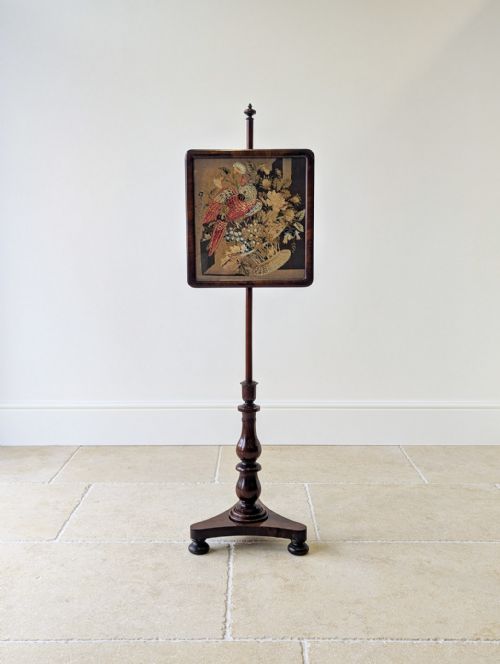
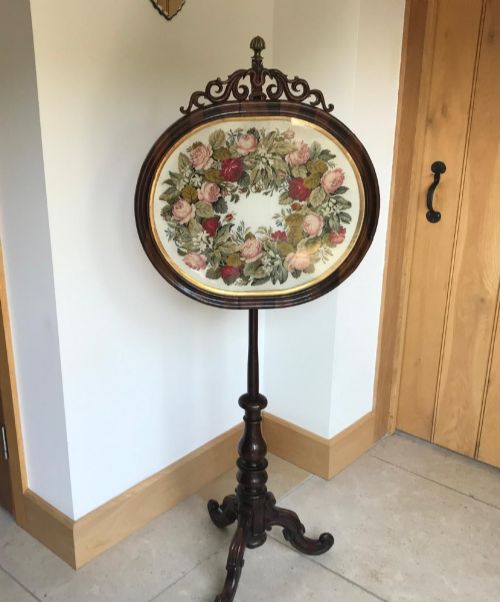
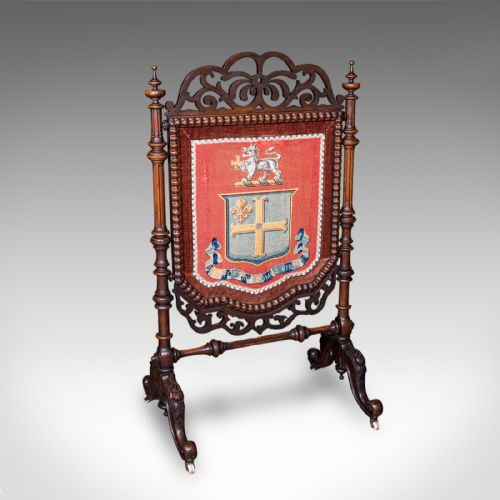
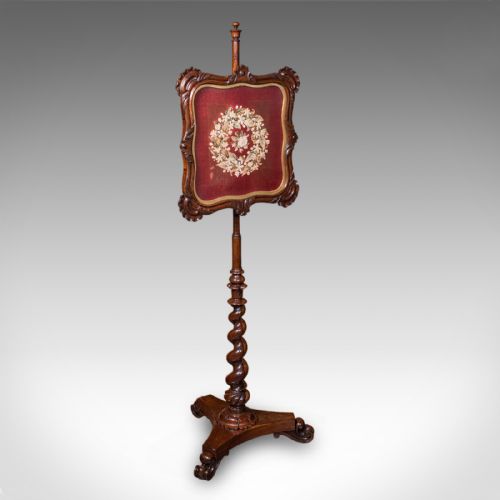
When buyers search for a victorian needlepoint screen, they encounter both standing fire guards and multi-panel room dividers. The most frequent form on this page is the pole screen, featuring an adjustable needlework panel mounted on a slender wooden shaft with a tripod base. These items served a practical domestic purpose in nineteenth-century homes by deflecting heat from open fires away from a person's face.
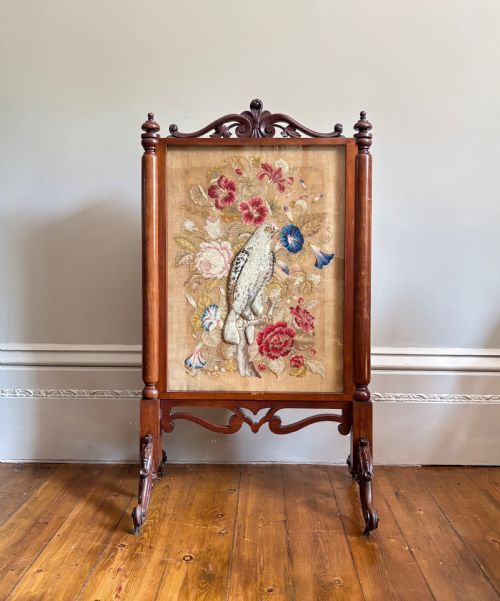
The selection also includes cheval frames and folding room dividers spanning several panels. Woods such as rosewood, mahogany, and walnut dominate the structural framing, paired with canvas panels worked in wool, tapestry, and Berlin work. While the majority of pieces align with the Victorian era and the preceding Regency period, occasional examples stretch from Georgian designs into twentieth-century metamorphic tables.
How they were made
Cabinetmakers shaped dense hardwoods like rosewood, mahogany, and walnut into turned poles, carved tripod bases, and standing frames. Brass adjustments allowed panels to slide vertically on pole screens, helping users control the height of the heat reflector.
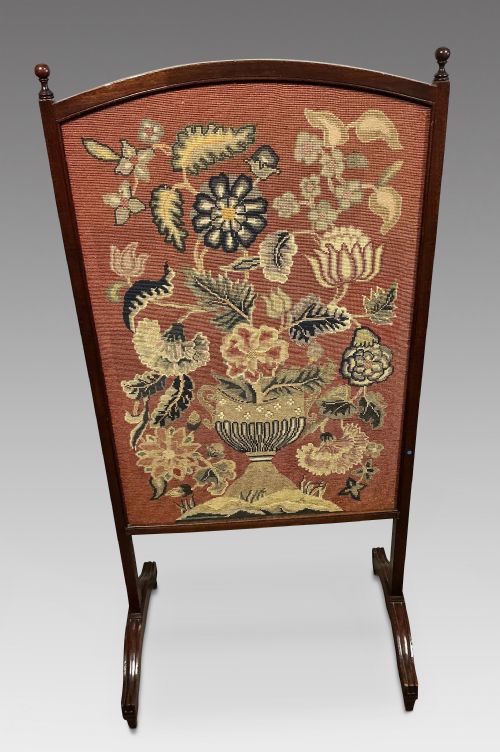
The textile panels themselves relied on canvas or wool grounds worked by hand in needlepoint, tapestry, or Berlin work. Artisans executed floral motifs, pastoral scenes, armorial bearings, and figural subjects using coloured wools and silks.
Victorian Needlepoint Screen Retail Price Guide 2026
Typical asking prices for victorian needlepoint screen among the pieces listed under this phrase on Sellingantiques today, from the lower quarter to the upper quarter. They describe what is for sale here now, not the wider market.
Listings feature woods such as rosewood, mahogany, walnut, satinwood, and oak paired with wool, canvas, and brass.
What varies in quality
The standard of a victorian needlepoint screen depends heavily on the ambition of the hand-work and the crispness of the timber turning. Pieces with finely detailed woolwork depicting heraldry, animals, or complex pastoral narratives command greater attention than simple geometric patterns.
Timber selection and secondary carving also set examples apart. Heavier woods shaped with bobbin turning, intricate scrollwork, or stable tripod bases reflect superior workshop output compared to simpler domestic framing.
The Victorian Needlepoint Screen Glossary
- Pole screen
- A vertical fire screen with a sliding panel mounted on a central wooden shaft and supported by a tripod base.
- Berlin work
- A style of nineteenth-century needlepoint worked in wool on canvas from printed, coloured grid patterns.
- Cheval screen
- A standing frame supported by two vertical pillars and feet, allowing the panel to tilt.
- Needlepoint
- Embroidery stitched onto an open-weave canvas mesh to completely cover the ground.
- Tapestry
- A thick textile woven or worked by hand to display pictorial or decorative designs.
Victorian Needlepoint Screen: Frequently Asked Questions
What is a pole screen used for?
A pole screen stood near an open fireplace to shield a person's face from the direct heat of the coal or wood fire. The adjustable panel could be raised or lowered along the central shaft.
Beyond regulating heat, these pieces served as decorative room furnishings that displayed fine domestic needlework.
How do I tell a pole screen from a room divider?
A pole screen consists of a single vertical stand with a movable panel, designed primarily for hearthside use. A room divider uses multiple hinged panels to section off space or create privacy.
While both incorporate needlepoint panels, their scale and domestic function differ entirely.
Where should I place a screen in my home?
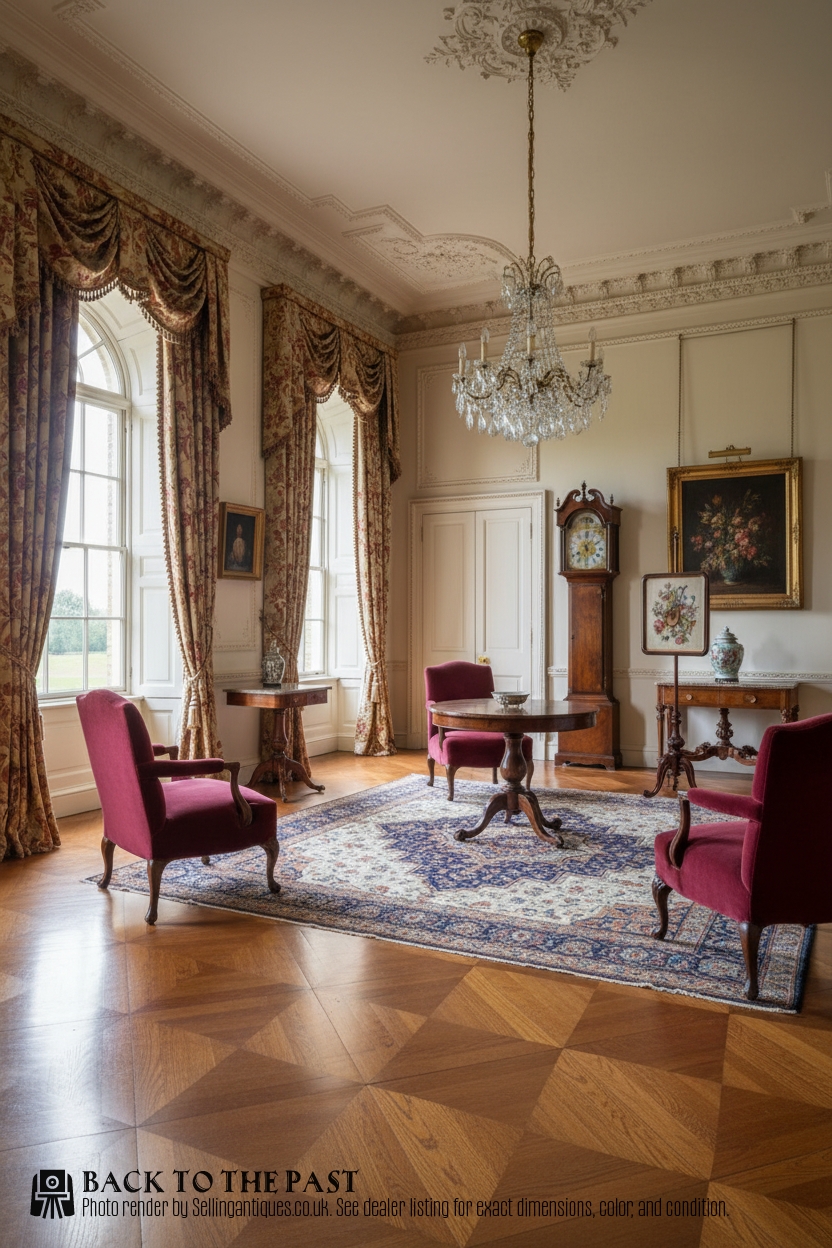
These pieces fit naturally beside a fireplace, in a corner of a drawing room, or against a blank wall as visual art. Folding screens also work well to divide larger open-plan spaces into intimate zones.
Positioning them away from direct sunlight protects the delicate wool and textile panels from fading.
How do I identify the period of a screen?
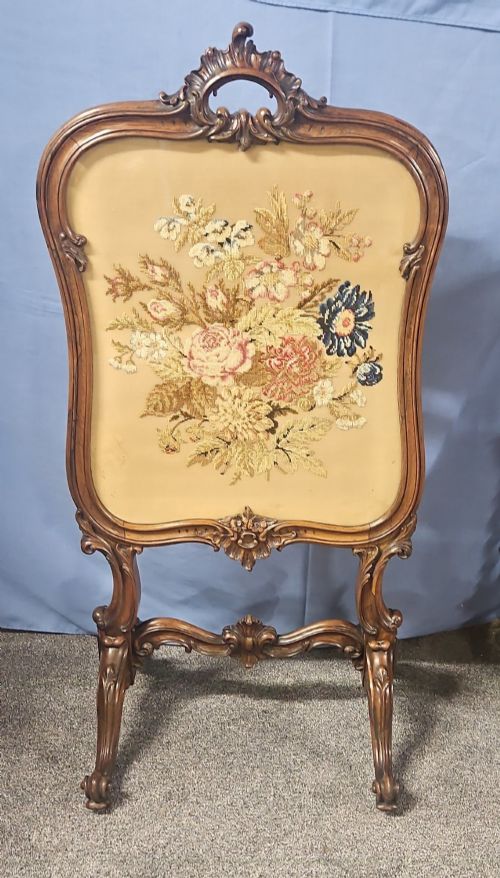
Dating relies on combining the timber, the turning style, and the needlework technique. Regency and William IV pieces often feature bold rosewood tripod bases, while later Victorian versions introduce walnut or carved rococo revival details.
The style of the embroidery often mirrors the prevailing decorative tastes of the mid-nineteenth century.