

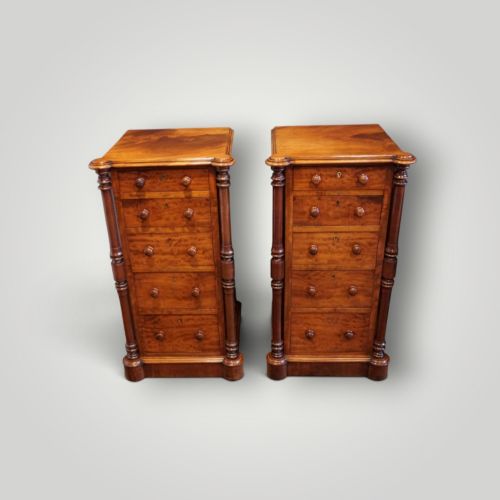
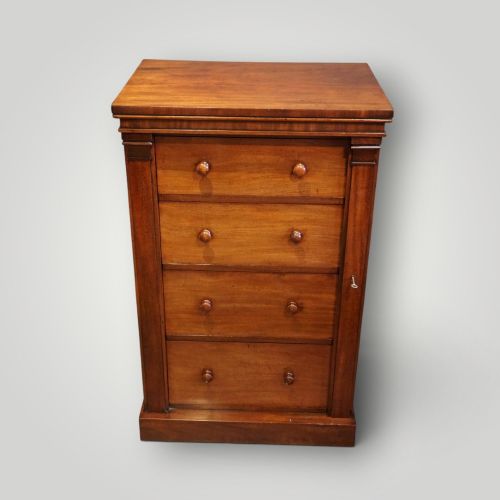
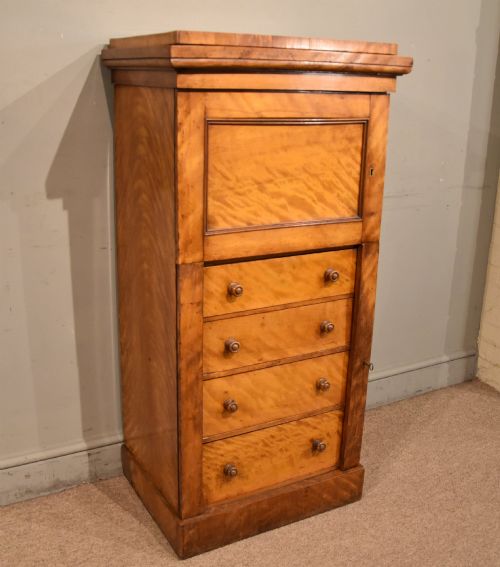
Victorian Narrow Drawers
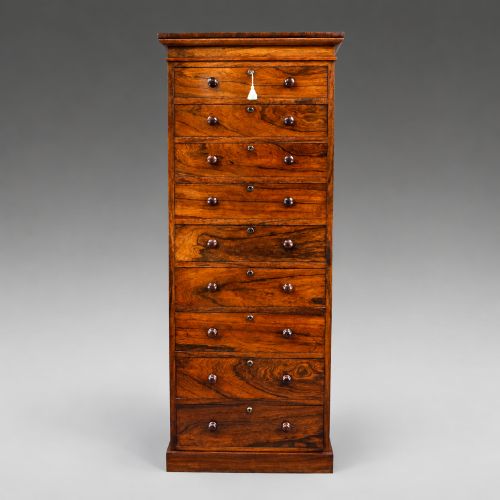
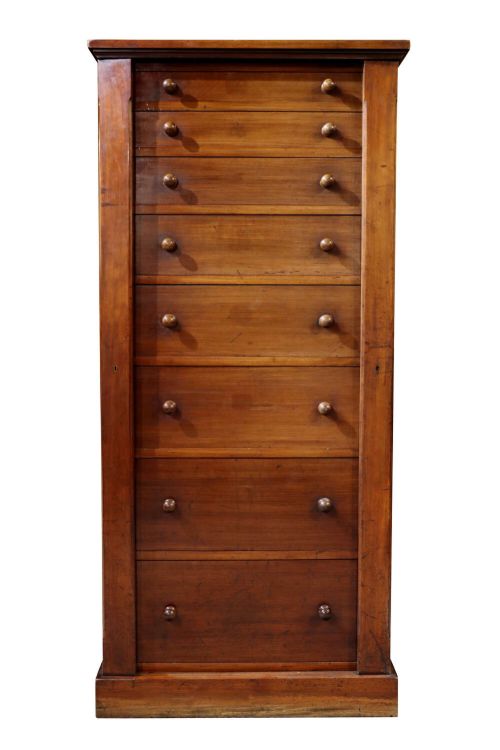
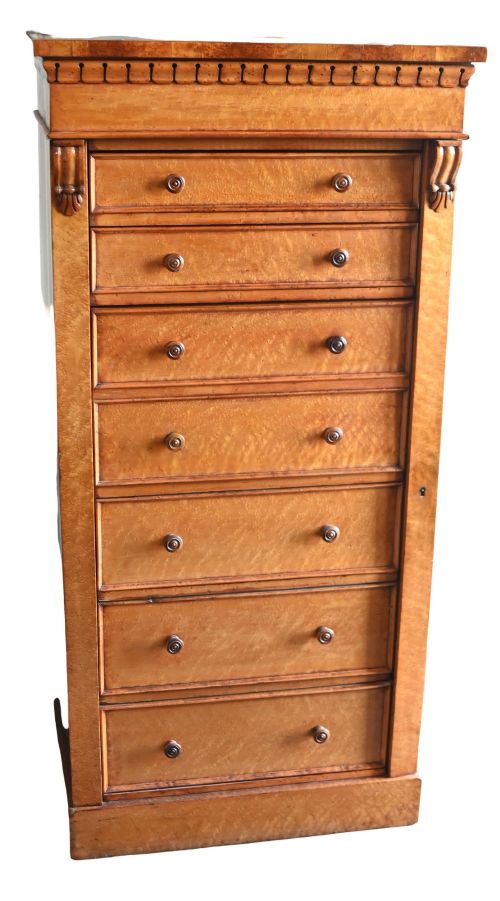
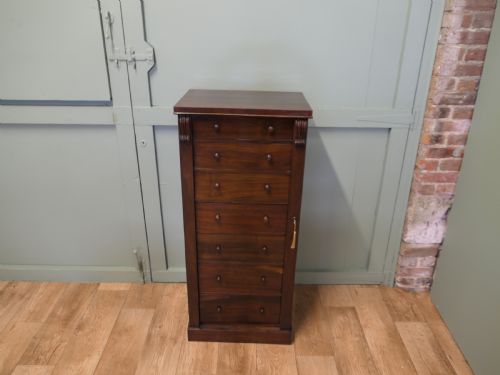
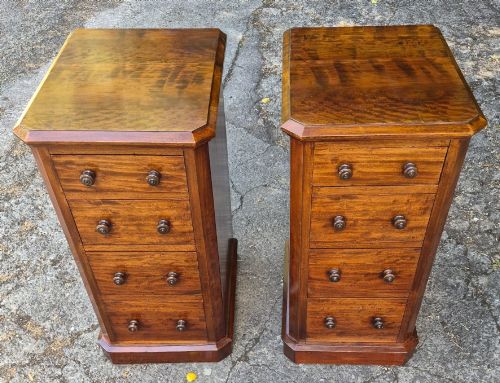
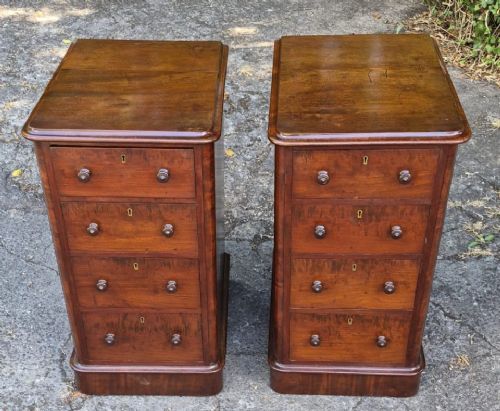
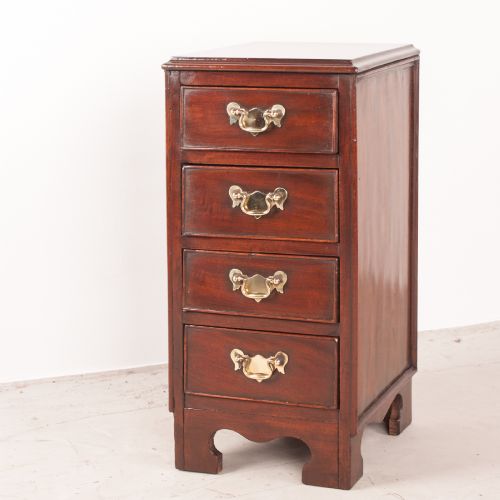
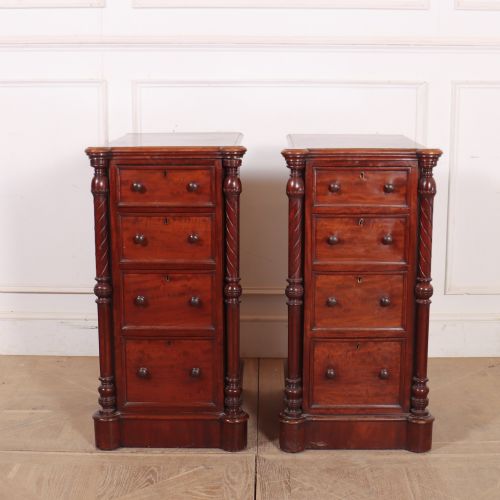
These Victorian narrow drawers offer practical storage in compact footprints, spanning tall Wellington chests and bedside cabinets crafted to suit modest spaces.
Victorian Narrow Drawers
Victorian narrow drawers encompass tall Wellington chests, slender bedside cabinets and compact pedestal chests designed for smaller domestic rooms. The selection on this page relies heavily on nineteenth-century pieces produced in mahogany, walnut and pine.
The format typically manifests as a vertical stack of graduated drawers within a confined width, frequently featuring locking mechanisms or hinged side stiles. Pieces range from formal reception room furniture to utilitarian bedroom storage.
Makers from the period adapted standard cabinetry proportions to fit tight alcoves, producing both single items and matched pairs. Buyers will encounter various regional interpretations alongside standard metropolitan workshops.
Materials and Construction
Makers utilised dense timbers such as mahogany, walnut and rosewood for primary visible surfaces, often selecting figured veneers for drawer fronts. Pine served internally for drawer carcasses and linings, whilst secondary woods like oak provided structural strength.
Joinery techniques relied on hand-cut dovetails for drawer construction and substantial mortise and tenon frames. Specialised locking mechanisms, notably those by Hobbs, secured the vertical rows of drawers via a hinged locking stile.
Listings feature timbers including mahogany, walnut, burr walnut, rosewood, satinwood, pine, oak and brass.
Distinctions in Quality
Quality reveals itself in the selection of timber veneers, where highly figured burr walnut or matched mahogany grain indicates higher workshop ambition. Subtle details such as original turned knobs, brass fittings and functioning proprietary locks distinguish superior examples from standard utility pieces.
Structural integrity depends on the precision of the dovetail joinery and the smooth running of drawers within their individual housings. Lesser pieces display simplified pine secondary woods and replaced hardware, whereas finer specimens retain their original locking stiles and keys.
Warings Liverpool·Gillows·Druce and Co
The Victorian Narrow Drawers Glossary
- Wellington chest
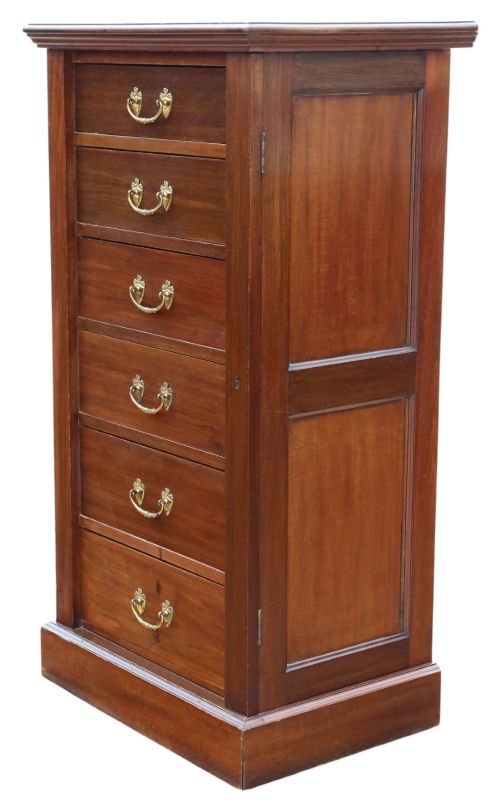
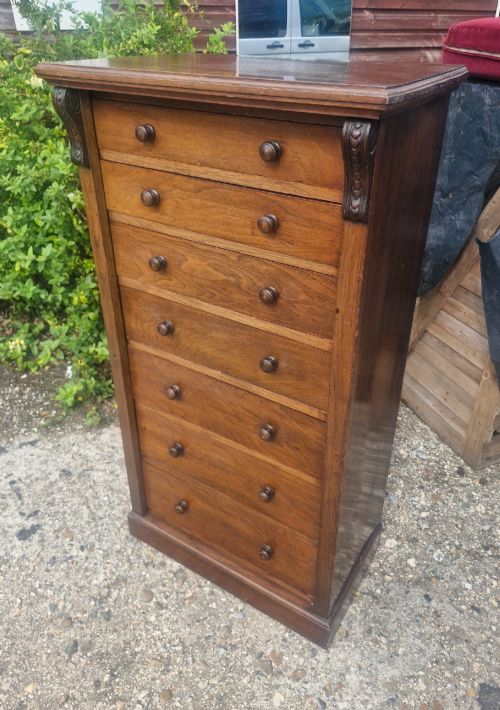
- A tall, narrow chest of drawers secured by a hinged locking bar on one side that fastens with a key. This specific form typically contains six or seven stacked drawers.
- Hobbs lock
- A proprietary brand of high-security brass lock frequently fitted to nineteenth-century cabinet furniture. Makers stamped these mechanisms into the metal faceplates.
- Secretaire
- A desk form incorporating a fitted drop-front writing drawer concealed within the upper section of a chest. It allows a tall piece to function as both storage and a writing surface.
- Marquetry
- Decorative inlay work using various tinted woods to create geometric or pictorial patterns on cabinet surfaces. It appears on select panelled fronts and tops.
- Stile
- A vertical framing member of a cabinet or the locking bar on a vertical chest. It provides structural support and houses mechanism components.
Victorian Narrow Drawers: Frequently Asked Questions
What is a Wellington chest?
A Wellington chest is a tall, narrow set of drawers characterised by a hinged locking stile on the right side that fastens over the drawer edges. This mechanism kept confidential papers secure in nineteenth-century studies.
The form originates from the nineteenth century and generally contains between six and seven graduated drawers within a slender footprint. Its vertical emphasis makes it suitable for corners and tight bedroom walls.
How do I secure narrow drawers?
Many period narrow chests and Wellington models utilise a single locking bar that pivots or lifts away to release the entire stack of drawers. Turning the key in the side stile locks every drawer simultaneously.
Individual drawer locks also appear on bedside chests and cabinets without the side locking bar. Ensure you verify whether a key is present if you require active locking functionality.
Where were these pieces used?
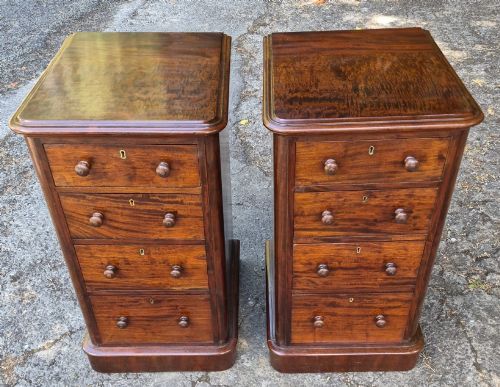
These compact items served primarily in bedrooms as bedside storage or in dressing rooms for accessories. Their modest width allowed them to fit between windows or into narrow alcoves.
Tall variants also stood in studies and halls to hold correspondence, documents and daily items. Their vertical storage maximised floor space in crowded Victorian townhouses.